We've all heard the snowflake lies about the cost of the wall and the cost of illegal immigration. Here's a more credible examination of the facts.
President Donald Trump announced that he will fulfill his campaign promise to build a nearly 2,000 mile long wall (not a fence) along America’s southern border with Mexico.
The idea is that a physical barrier will act as a low-cost deterrent, and will help stem the flow of illegal immigrants entering America via Mexico—the hope is that once an illegal alien (particularly a criminal migrant) is deported, they won’t return.
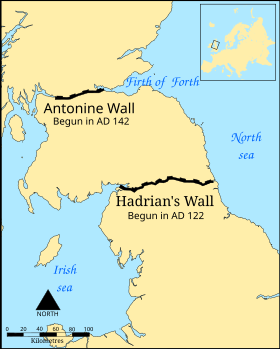
The plan is simple and time-tested—China’s Great Wall did it’s job, so did Hadrian’s Wall in Roman Britain—and yet it’s come under fire from the mainstream media.
They claim that the wall will be prohibitively expensive, that illegal immigrants contribute to America’s economy (so there’s no reason to deport them), and that the wall won’t work.
They’re factually wrong on all accounts—let’s look at the numbers.
How Much Will Trump’s Wall Cost? $21.6 Billion.
The first question we must address is very straightforward: how much would it cost to build a wall along the Mexican border?
We don’t know for sure (construction costs rarely align with initial estimates), but we have a few good estimates.
Senate leader Mitch McConnell said Congress estimates the wall will cost $15 billion at most—he said it would likely fall within a range of $12 to $15 billion.
However, according to more recent information acquired by Reuters, the border wall will cost $21.6 billion, and will take roughly 3.5 years to build. This is according to a document from the Department of Homeland Security.
It’s probably our best current estimate, and this article will proceed under using this cost assumption.
On the high end (which can’t be totally discounted, given the nature of construction projects), the left-wing advocacy group cum “newspaper” the Huffington Post said the wall would cost roughly $40 billion. Their evidence is based on a study done by MIT (although their assumptions about the size and building materials may be why the projection is so high).
Either way, the cost of the wall pales in comparison to the cost of illegal immigrants in America.
. . . . . . . .
Right, but the wall isn't going to do much to solve the problem of illegal immigrants.
Here’s the Reality About Illegal Immigrants in the United States
There are an estimated 11 million illegals in the US.
6 million of them are from Mexico.
Blue is 10 years or more residency in the US.
Gray is less than 5 years.
Blue is above 60%
Gray is below 20%
This one is blue - overstayed visas at 250,000 people
The gray one - crossed over the border with Mexico at about 140,000 people in 2013.
So the wall might stop 140,000 people a year from entering the US of the 11 million illegal immigrants.
So you say $148 billion is the cost of illegal immigrants.
That's 1.2% of the people.
1.2% of $148 billion is $1.7 billion.
So, Trump is going to pay $21 billion to tackle a problem that is $1.7 billion.
Then there's the cost the wall will cost in upkeep every year.
"Although walls are a simple and time-tested strategy—China’s
Great Wall did it’s job, so too did
Hadrian’s Wall in Roman Britain"
Then your source writes this.
The Great Wall of China did it's job huh?
The existing wall in Ming Dynasty from 1386-1644, it was replaced by the Qing Dynasty which was from Mongolia. Yeah, other side of the wall.
Worked well, huh?
The Roman Hadrian's Wall isn't so clear.
There's something called the Antonine Wall. The Roman's built it. Wait, what? So, if Hadrian's Wall was designed to keep the Scots out, what were the Romans doing building a wall much further north?
The second wall didn't last long for the Romans, as they were kicked out of southern Scotland.
The Romans were gone by 410 AD. Last coins found there were from 403-406.
Did it do well? Was it even designed to stop the Scots getting into England? No idea.