Trump Inflation Promise is failing. GOP senators express alarm over scale of Trump's tariffs.

1743803227397.webp
 
The Trumpistas will tell you that you're wrong. They won't be able to tell you why you're wrong, you're just wrong because it's what Trump wants and Trump is the one and only truth.
This isn't really true, I've seen them say plenty of reasons why he's wrong.

1. You guys weren't complaining when Biden had a stock market correction
2. This is just carryover from Biden's bad economy
3. Trump did say short term pain (albeit not before the election)
4. Think of it as a painful surgery needed to cure a sick patient
etc.
 

GOP senators express alarm over scale of Trump tariffs​


Republican senators are expressing varying degrees of shock and alarm at the scale of President Trump’s “reciprocal” tariffs against trading partners and allies, which sent stock markets into a tailspin Thursday and fueled predictions the country is heading for a recession. Republicans knew Trump’s announcement on a new round of tariffs — dubbed “Liberation Day” — was coming, but the sweeping nature of Trump’s bold action is sparking a panic among constituents at home.

Republicans from agricultural states are particularly concerned as they worry that U.S.-produced farm products are likely to be targeted first by retaliatory tariffs from trading partners.

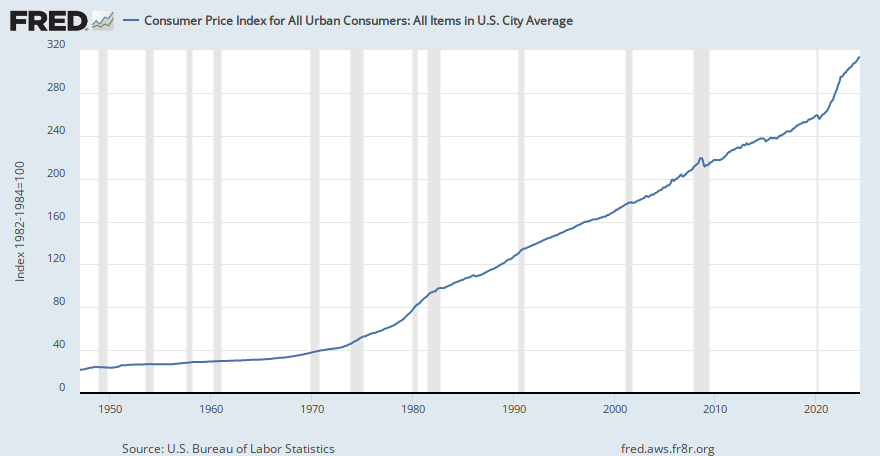
Then there’s a general concern that Trump’s tariffs will likely further drive up the price of consumer goods at a time when many Americans are fed up with inflation, which was a driving factor behind Republican victories in the 2024 election.

Up until recently, Senators were afraid to say to do anything against Trump for fear of his reprisal. however, now they are starting to fear reprisals from the communities/states they represent as their own people are starting to hurt by what Trump has done.

At town halls, Republicans feel the heat from Trump and Musk's firing and cutting spree

and this was before what has happened over the past two days. Congress is likely to start facing a huge backlash from constituents now. They will face firing by Trump or by their own constituents. What will they do now, facing ouster, one way or another.
Here is what your OP is based on:
1) Phony town hall leftwing shills, paid and bused in to create havoc
2) Doom and gloom "predictions" from leftwing so-called economists who have a history of being wrong.
3) Griping from the usual suspects, Murkowski and Collins.

Report back when you have something real.
 
Here is what your OP is based on:
1) Phony town hall leftwing shills, paid and bused in to create havoc
2) Doom and gloom "predictions" from leftwing so-called economists who have a history of being wrong.
3) Griping from the usual suspects, Murkowski and Collins.

Report back when you have something real.
What a bunch of bull.

Your party is heading to an economic chasm you can't get over.
 

GOP senators express alarm over scale of Trump tariffs​


Republican senators are expressing varying degrees of shock and alarm at the scale of President Trump’s “reciprocal” tariffs against trading partners and allies, which sent stock markets into a tailspin Thursday and fueled predictions the country is heading for a recession. Republicans knew Trump’s announcement on a new round of tariffs — dubbed “Liberation Day” — was coming, but the sweeping nature of Trump’s bold action is sparking a panic among constituents at home.

Republicans from agricultural states are particularly concerned as they worry that U.S.-produced farm products are likely to be targeted first by retaliatory tariffs from trading partners.

Then there’s a general concern that Trump’s tariffs will likely further drive up the price of consumer goods at a time when many Americans are fed up with inflation, which was a driving factor behind Republican victories in the 2024 election.

Up until recently, Senators were afraid to say to do anything against Trump for fear of his reprisal. however, now they are starting to fear reprisals from the communities/states they represent as their own people are starting to hurt by what Trump has done.

At town halls, Republicans feel the heat from Trump and Musk's firing and cutting spree

and this was before what has happened over the past two days. Congress is likely to start facing a huge backlash from constituents now. They will face firing by Trump or by their own constituents. What will they do now, facing ouster, one way or another.

Today, CNN says there is no inflation from tariffs...

"...that massive, tariff-induced inflation spike hasn’t materialized. Not even close."

 
It goes from Not Good to Horrible.

So, has anything actually gotten more expensive because of Trump’s tariffs?​

Story by David Goldman, CNN


Consumer prices rose just 2.4%, annually, last month, according to the Bureau of Labor Statistics. That was less than economists had expected, and only slightly higher than the 2.3% rate in April, which was the US economy’s lowest inflation since February 2021. According to the Personal Consumption Expenditures price index most closely followed by the Federal Reserve, core inflation — which strips out volatile items like food and gas prices — fell to 2.5% in April. That was the lowest reading since March 2021.


That’s a far cry from what economists and consumers have predicted. Month after month, inflation has fallen short of Wall Street’s expectations, as American businesses said they would be forced to hike prices as a result of historically high tariffs.
 
When will tariffs raise prices in the USA if it does?
Tariffs do raise prices in the U.S., but the timing and extent of those increases depend on several factors, including the type of goods affected and how businesses respond.

🕒

  • Perishable goods (like fruits, vegetables, and meats) may see price increases within weeksof tariffs being imposed, because they can’t be stockpiled and must be imported regularly
    1

    2
    .
  • Durable goods (like cars, electronics, and appliances) may take a few monthsto reflect higher prices, as companies often have inventory or contracts that delay the impact
    2
    .
  • Fuel and transportation costs can cause broad price increasesacross many sectors, since most goods rely on shipping
    1
    .

📈

  • The Budget Lab at Yale estimates that tariffs could increase inflation by 2.3% in the short term, costing the average U.S. household hundreds of dollars annually
    3
    .

🛒

  • Groceries (especially imported produce)
  • Automobiles and parts
  • Household goods and electronics
  • Clothing and footwear
 

So, has anything actually gotten more expensive because of Trump’s tariffs?​

Story by David Goldman, CNN


Consumer prices rose just 2.4%, annually, last month, according to the Bureau of Labor Statistics. That was less than economists had expected, and only slightly higher than the 2.3% rate in April, which was the US economy’s lowest inflation since February 2021. According to the Personal Consumption Expenditures price index most closely followed by the Federal Reserve, core inflation — which strips out volatile items like food and gas prices — fell to 2.5% in April. That was the lowest reading since March 2021.
That’s a far cry from what economists and consumers have predicted. Month after month, inflation has fallen short of Wall Street’s expectations, as American businesses said they would be forced to hike prices as a result of historically high tariffs.

The two things that Americans in general and Republicans in particular have consistently complained about, are the rising price of food and gas. So the government puts out inflation numbers which strip out food and gas and then say that inflation is only 2.4% so it's all good. There is no inflation.

Isn't that special?
 
Today, CNN says there is no inflation from tariffs...

"...that massive, tariff-induced inflation spike hasn’t materialized. Not even close."

AI Overview

Yes, the expectation is that the inflationary impact of tariffs will become more noticeable this summer as previously warehoused goods, purchased before the tariffs took effect, are depleted. Fed Chair Powell has acknowledged this possibility, stating that the effects of tariffs are likely to be more pronounced in the coming months.

Here's a more detailed explanation:
  • Tariffs and Prices:
    Tariffs, which are taxes on imported goods, can lead to higher prices for consumers. When tariffs are imposed, the cost of imported goods increases, and businesses often pass those costs on to consumers through higher prices.

  • Delayed Impact:
    The impact of tariffs on consumer prices hasn't been immediately apparent for several reasons. Businesses may have had stockpiles of goods purchased before the tariffs went into effect, and there is often a lag between the imposition of a tariff and the actual price increases consumers see.

  • Summer 2025:
    Economists and the Federal Reserve are anticipating that the impact of tariffs on inflation will become more visible this summer as these pre-tariff stockpiles are used up.

  • Fed's Perspective:
    Fed Chair Powell's comments suggest that the central bank is preparing for this potential increase in inflation due to tariffs.

  • Factors Affecting Impact:
    The exact impact of tariffs on inflation can vary depending on the specific goods affected, the extent of the tariffs, and the overall economic conditions.
 
Tariffs do raise prices in the U.S., but the timing and extent of those increases depend on several factors, including the type of goods affected and how businesses respond.
  • Perishable goods (like fruits, vegetables, and meats) may see price increases within weeksof tariffs being imposed, because they can’t be stockpiled and must be imported regularly

  • Durable goods (like cars, electronics, and appliances) may take a few monthsto reflect higher prices, as companies often have inventory or contracts that delay the impact

  • Fuel and transportation costs can cause broad price increasesacross many sectors, since most goods rely on shipping

  • The Budget Lab at Yale estimates that tariffs could increase inflation by 2.3% in the short term, costing the average U.S. household hundreds of dollars annually

  • Groceries (especially imported produce)
  • Automobiles and parts
  • Household goods and electronics
  • Clothing and footwear
 
The two things that Americans in general and Republicans in particular have consistently complained about, are the rising price of food and gas. So the government puts out inflation numbers which strip out food and gas and then say that inflation is only 2.4% so it's all good. There is no inflation.

Isn't that special?
The Personal Consumption Expenditures Price Index and the Federal Reserve Core Inflation have always stripped out volatile items like food and gas prices.

Its not a Republican thing.
 
The two things that Americans in general and Republicans in particular have consistently complained about, are the rising price of food and gas. So the government puts out inflation numbers which strip out food and gas and then say that inflation is only 2.4% so it's all good. There is no inflation.

Isn't that special?

You have it backwards.

If you include food and energy, May year-over-year inflation is 2.4%..

1750600217425.webp


Source:

If you exclude food and energy, it's 2.8%....

1750600291818.webp


Source:
 
Back
Top Bottom