On January 16, 2016, the International Atomic Energy Agency verified that Iran has completed the necessary steps under the Iran deal that will ensure Iran's nuclear program is and remains exclusively peaceful.
Before this agreement, Iran's breakout time -- or the time it would have taken for Iran to gather enough fissile material to build a weapon -- was only two to three months. Today, because of the Iran deal, it would take Iran 12 months or more. And with the unprecedented monitoring and access this deal puts in place, if Iran tries, we will know and sanctions will snap back into place.
Here's how we got to this point. Since October, Iran has:
- Shipped 25,000 pounds of enriched uranium out of the country
- Dismantled and removed two-thirds of its centrifuges
- Removed the calandria from its heavy water reactor and filled it with concrete
- Provided unprecedented access to its nuclear facilities and supply chain
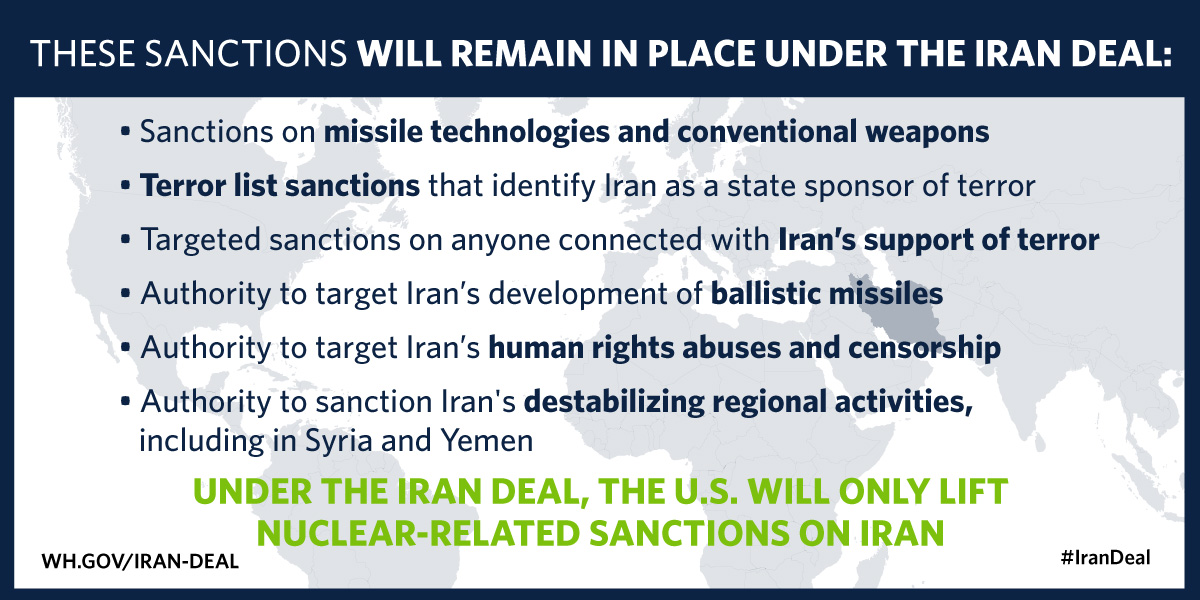
Because Iran has completed these steps, the U.S. and international community can begin the next phase under the JCPOA, which means the U.S. will begin lifting its nuclear-related sanctions on Iran. However, a number of U.S. sanctions authorities and designations will continue to remain in place.
The Iran Deal blocks the four pathways to a nuclear weapon.
Building a nuclear bomb requires either uranium or plutonium, but thanks to this deal, Iran’s four possible ways to leverage those fissile materials are blocked.
What the World is Saying about the Iran Deal
Nuclear physicists, military officials, non-proliferation experts, and more than 100 countries across the globe have all voiced their support for the Iran nuclear deal because it is the best solution available to prevent Iran from obtaining a nuclear weapon without taking military action. Explore below to see what they’re saying:
...
Iran Deal
& yer chosen one destroyed any hope of them trusting & complying with us pretty much
for-ev-er, suzy.
you wanna point a finger at
demonic?
point it at yer president, suzy Q.