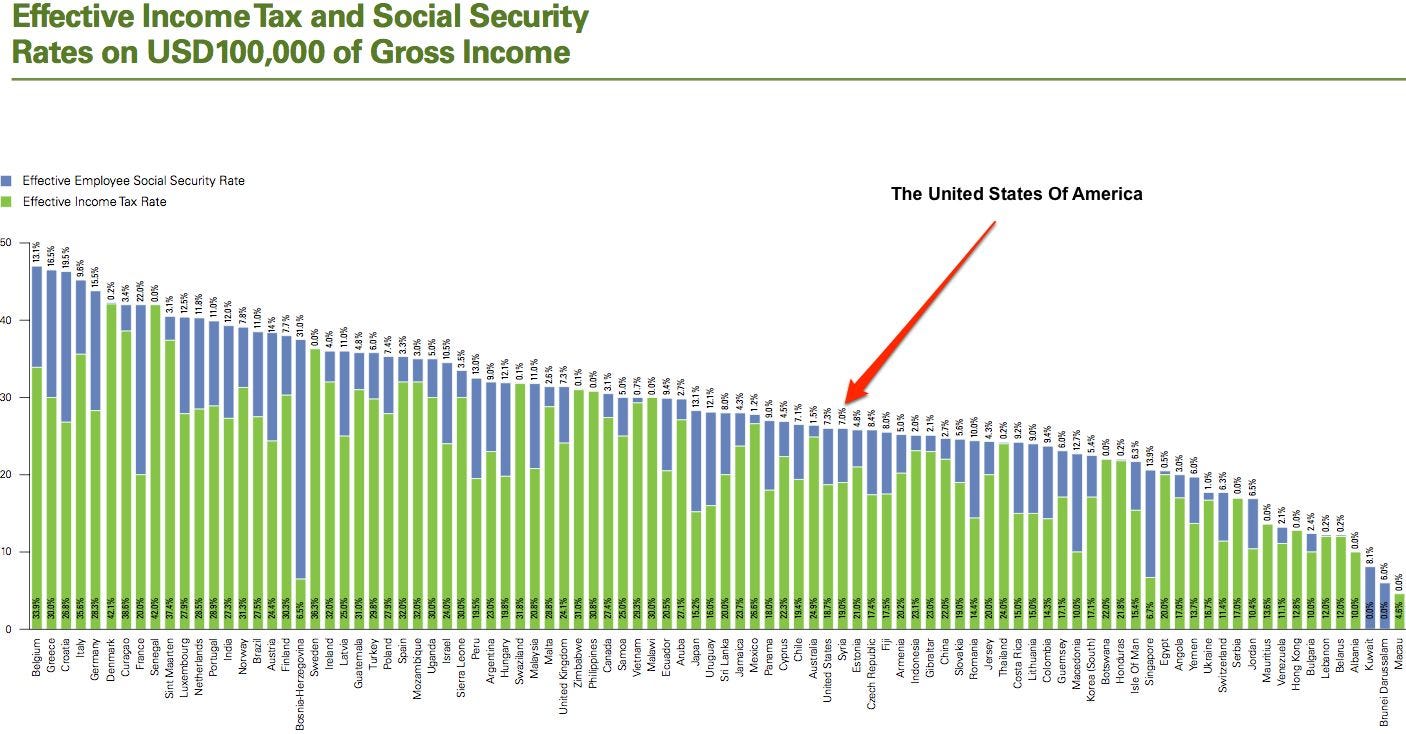
The problem with Greece is that no one PAID their taxes.
dear, we pay our taxes and we're $20 trillion in debt with $100 trillion in unfunded liabilities. Please just read these posts but don't respond to them. Thanks
You were given tax cuts by Reagan despite his increases in spending, not the least of which was his escalation of the Cold War. You were given tax cuts by GW Bush despite our being faced with the extra costs of two wars to fight. Both McCain and Romney wanted to cut taxes while increasing military spending.
See the pattern here. Since Vietnam, we stopped paying for the wars we fight and the costs of the military that supports our fighting those almost incessant wars.
THAT is where this country went wrong fiscally. Period.
You do, recall, that Reagan then raised taxes, right? That over the course of his 8 years the % of GDP paid in taxes was actually higher than it was under Carter?
What the **** does that have to do with Reagan?
I am pointing out the "trickle down theory" term was not invented for Reaganomics. In fact, Reaganomics wasn't invented by Reagan or his staff. They just rebranded it.
The "trickle down theory" (Reaganomics) and those who have derided it, have been around for over a century.
The "trickle down theory" name was invented long before Reagan.
There is no such thing as "trickle down theory", Nimrod. It is merely a term used by liberals who dont understand economics. It's like social darwinism. Only liberals use the term.
Trickle down is supply side economics. I would ask you to google it but you are not bright enough to understand economics to begin with.
No, Honey Boo Boo. "Trickle Down" is a derisive misnomer mocked up by the Losing Side in the Cold War (that's your side)
Here, they use small words, maybe you will get it:
INVESTOPEDIA EXPLAINS 'Trickle-Down Theory'
President Reagan's economic policies, commonly referred to as "Reaganomics" or supply-side economics, were based on trickle-down theory. The idea is that with a lower tax burden and increased investment, business can produce (or supply) more, increasing employment and worker pay. Reagan initially slashed the top income-tax rate from 70% to 50%. Trickle-down policy’s detractors see the policy as tax cuts for the rich and don’t think the tax cuts benefit lower-income earners.
A contrasting theory, Keynesianism, is based on stimulating demand through government spending and other government interventions. An increase in government spending necessitates an increase in income-tax rates – the opposite of what trickle-down theory advocates. Trickle-down theory does not support government intervention in the economy.
According to the trickle-down theory, if tax rates are lower, people have an incentive to work more because they get to keep more of the income they earn. They then spend or invest that income, and either of these activities will improve everyone’s prosperity, not just the prosperity of those in the highest income brackets. What’s more, in the end, the government may actually collect more income tax despite the lower tax rates because of the additional work performed. The Laffer Curve shows how this relationship works. If the government taxes 0% of income or 100% of income, it takes in no money. In between these two extremes, tax revenues vary because different tax rates encourage people to work more or to take more leisure time.
Read more:
Trickle Down Theory Definition Investopedia
Follow us:
@Investopedia on Twitter