For those who didn't listen to Rush, this is basically what he wanted to say:
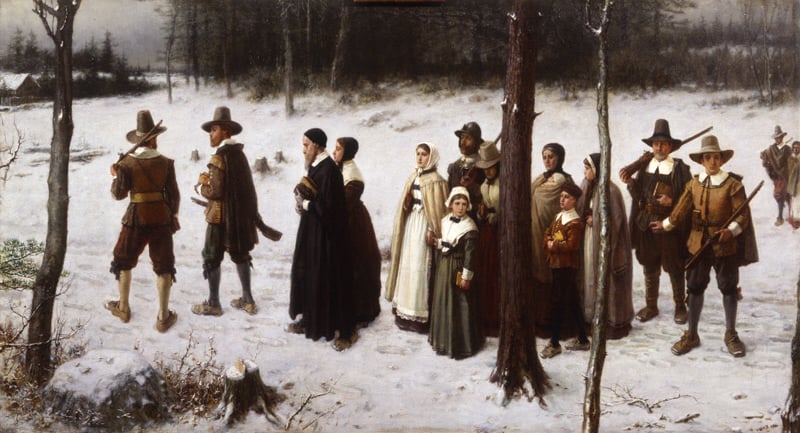
The first few years of the settlement were fraught with hardship and hunger. Four centuries later, they also provide us with one of history’s most decisive verdicts on the critical importance of private property. We should never forget that the Plymouth colony was headed straight for oblivion under a communal, socialist plan but saved itself when it embraced something very different.
In the diary of the colony’s first governor, William Bradford, we can read about the settlers' initial arrangement: Land was held in common. Crops were brought to a common storehouse and distributed equally. For two years, every person had to work for everybody else (the community), not for themselves as individuals or families. Did they live happily ever after in this socialist utopia?
Hardly. The “common property” approach killed off about half the settlers. Governor Bradford recorded in his diary that everybody was happy to claim their equal share of production, but production only shrank. Slackers showed up late for work in the fields, and the hard workers resented it. It’s called “human nature.”
The disincentives of the socialist scheme bred impoverishment and conflict until, facing starvation and extinction, Bradford altered the system. He divided common property into private plots, and the new owners could produce what they wanted and then keep or trade it freely.
Communal socialist failure was transformed into private property/capitalist success, something that’s happened so often historically it’s almost monotonous. The “people over profits” mentality produced fewer people until profit—earned as a result of one’s care for his own property and his desire for improvement—saved the people.
In the diary of Plymouth Colony’s first governor, William Bradford, we can read about the settlers' initial arrangement: Land was held in common. Crops were brought to a common storehouse and distributed equally. For two years, every person had to work for everybody else (the community), not for...

fee.org
I'm not going to say that every democrat wants a true socialist society/economy. Some of them are going along to get along, they like the idea of equality and most of us like the idea of equality, right? The problem comes in when you equate equality with equity, IOW equal outcomes. It's funny, many of the democrats will deny that, but when you look at what they're trying to accomplish, that's exactly what it is. Taking something from someone who owns it and giving it to someone who didn't earn it. And that just doesn't sit well with most Americans IMHO. So, the democrats find ways to make it sound different or rationalize it in some manner to make it sound better. They emotionalize it to make you feel like a dirty rotten bastard if you don't support their ideas about redistribution of wealth. The Pilgrims tried it and it didn't work.