Nope. Not because of some visionary genius by the Founders. Not some remedy for small states vs. large states, or rural vs. urban.
Like just about everything else in the history of America, it was connected to race, and slavery.
To put it simply -
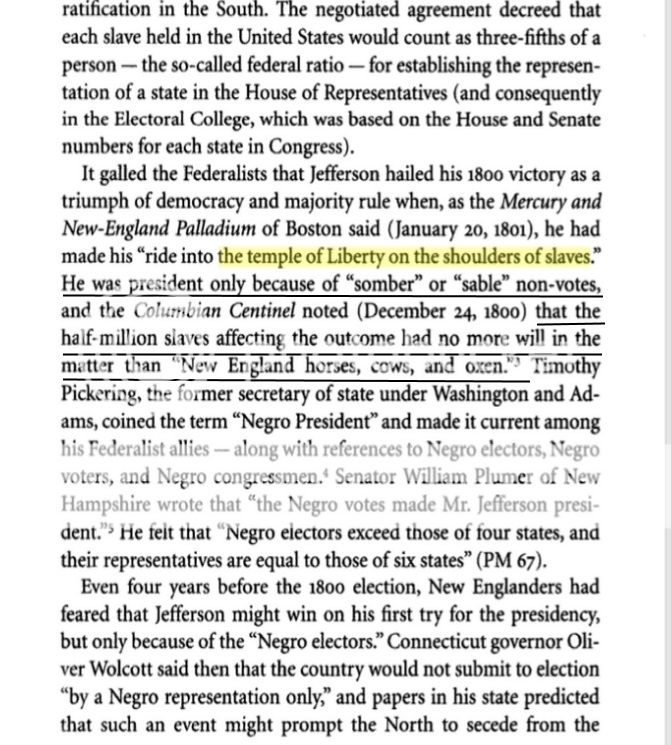
Slaves couldn't vote, but they were counted at 3/5ths apiece to determine congressional representation.
The Southern states were thus at a disadvantage if the popular vote were to determine the winner,
but they got a big boost by the use of electors representing the size of their congressional delegations, since the counting of the slaves increased the number of house representatives those states were entitled to.
The Southern slave states got their way and that's where the electoral college comes from.
I've already bitchslapped your BS at least twice, so here is another one doofus.... Below are links to the Federalist Papers in the Library of Congress. Read the words asshat, they're big words, complicated, but, unlike you, our Founders were well educated men.
Nothing was more to be desired than that every practicable obstacle should be opposed to cabal, intrigue, and corruption. These most deadly adversaries of republican government might naturally have been expected to make their approaches from more than one quarter, but chiefly from the desire in foreign powers to gain an improper ascendant in our councils. How could they better gratify this, than by raising a creature of their own to the chief magistracy of the Union? But the convention have guarded against all danger of this sort, with the most provident and judicious attention. They have not made the appointment of the President to depend on any preexisting bodies of men, who might be tampered with beforehand to prostitute their votes; but they have referred it in the first instance to an immediate act of the people of America, to be exerted in the choice of persons for the temporary and sole purpose of making the appointment. And they have excluded from eligibility to this trust, all those who from situation might be suspected of too great devotion to the President in office. No senator, representative, or other person holding a place of trust or profit under the United States, can be of the numbers of the electors. Thus without corrupting the body of the people, the immediate agents in the election will at least enter upon the task free from any sinister bias. Their transient existence, and their detached situation, already taken notice of, afford a satisfactory prospect of their continuing so, to the conclusion of it. The business of corruption, when it is to embrace so considerable a number of men, requires time as well as means. Nor would it be found easy suddenly to embark them, dispersed as they would be over thirteen States, in any combinations founded upon motives, which though they could not properly be denominated corrupt, might yet be of a nature to mislead them from their duty."
The Federalist Papers - Congress.gov Resources -
"By a faction, I understand a number of citizens, whether amounting to a majority or a minority of the whole, who are united and actuated by some common impulse of passion, or of interest, adversed to the rights of other citizens, or to the permanent and aggregate interests of the community."
The Federalist Papers - Congress.gov Resources -