The Humanitarian Gaza Flotillas Saga

The bottom line is, Israel has no right to stop a ship in international waters. Any ship, for any reason.

Bottom line is, you can grasp at straws if you want, but the ship declared that they were going to break through the blockade.
 
Bottom line is, you can grasp at straws if you want, but the ship declared that they were going to break through the blockade.
It doesn't matter what bullshit excuse you try to use, YOU CANNOT STOP A SHIP IN INTERNATIONAL WATERS! PERIOD!
 
Bottom line is, you can grasp at straws if you want, but the ship declared that they were going to break through the blockade.
It doesn't matter what bullshit excuse you try to use, YOU CANNOT STOP A SHIP IN INTERNATIONAL WATERS! PERIOD!
There are lots of things you cannot do.

YOU CANNOT COMMIT ACTS OF ISLAMIC TERRORISM. <-----note the use of caps for dramatic affect.

Yet, Islamic terrorism continues.

Don't let let your stupidity and short stature get in the way of making yourself the village idiot.
 
P F Tinmore, et al,

Yes, --- Without regard for your interpretation of what the CEIRPP DPR Study says (remembering that it is only a study), history actually shows us that the Arab Palestinian did not actually have sovereignty in either 1922, 1948, or 1967. It is even questionable if they had the "right to sovereignty," as the Westphalia Compact did not apply to situation such as the Mandate Territories.

Yeah, yeah, blah, blah, blah.

The people are sovereign even in non self governing territories.

The first ground of invalidity of the Mandate is that by endorsing the Balfour Declaration and accepting the concept of the establishment of a Jewish national home in Palestine it violated the sovereignty of the people of Palestine and their natural rights of independence and self-determination. - See more at: The Origins and Evolution of the Palestine Problem - CEIRPP DPR study part I 1917-1947 30 June 1978

The Palestinians had the right to sovereignty since their separation from Turkish rule. They were a non self governing territory under trust of the Mandate.
(COMMENT)

While it is theoretically true that a people can have the "right to self-determination," which if successful --- could leaded to the conditions which would allow the "right of sovereignty," --- in the practical world ---- a non-self governing territory the people only have (if the situation permits) the potential for self-determination and sovereignty.

The CEIRPP DPR Study says: "violated the sovereignty of the people of Palestine." That assumes that the People of Palestine had self-government. In order to have sovereignty, you first have-to have a land to be sovereign over. In this case, in the Treaty of Lausanne [to which the Arab Palestinian (the People of Palestine) were not party] clearly stated:

ARTICLE I6

Turkey hereby renounces all rights and title whatsoever over or respecting the territories situated outside the frontiers laid down in the present Treaty and the islands other than those over which her sovereignty is recognised by the said Treaty, the future of these territories and islands being settled or to be settled by the parties concerned.

The provisions of the present Article do not prejudice any special arrangements arising from neighbourly relations which have been or may be concluded between Turkey and any limitrophe countries.
Just as the Unconditional Surrender made through the Armistice of Mudros said:

ARTICLE 16

XVI.—Surrender of all garrisons in Hedjaz, Assir, Yemen, Syria, and Mesopotamia to the nearest Allied Commander; and the withdrawal of troops from Cicilia, except those necessary to maintain order, as will be determined under Clause V.

As we've seen in the reality of history, looking back, the People of Palestine get nothing that the benevolent Allied Powers did not grant them. In 1975, by its Resolution 3376 the UN General Assembly established the Committee on the Exercise of the Inalienable Rights of the Palestinian People (CEIRPP), which was the author of the Study of the same name: "The Origins and Evolution of the Palestine Problem: 1917-1988," published afterwards --- attempts to attach late 20th Century concepts to a problem set that emerged 45 years before the concept of self-determination legally became effective.

4 During World War I, the President of the United States Wilson championed the principle of self-determination as it became crystallized in the Fourteen Points of Wilson (1918). Although this proposal formed the basis of the peace negotiations with the Central Powers, self-determination was subsequently far from fully realized in the Paris peace treaties. It was, however, reflected in a number of plebiscites held by the Allies in some disputed areas and it was one of the basic components of a series of treaties concluded under the auspices of the League of Nations for the protection of minorities (see also Minority Protection System between World War I and World War II). Finally, in Art. 22 Covenant of the League of Nations, the mandates system was devised as a compromise solution between the ideal of self-determination and the interests of the administrative powers. However, self-determination as a general principle did not form part of the Covenant of the League of Nations and therefore was, for the duration of the League of Nations, a political rather than a legal concept. This was confirmed by the Council of the League of Nations and its expert advisors in theÅland Islands dispute of 1920–21 even though, in the particular circumstances of the case, autonomy rights were granted to the population concerned (Report of the International Committee of Jurists Entrusted by the Council of the League of Nations with the Task of Giving an Advisory Opinion upon the Legal Aspects of the Åland Islands Question 5).
SOURCE: Self-Determination, by Daniel Thürer, Thomas Burri, Encyclopedia Entries Article last updated December 2008, Max Planck Encyclopedia of Public International Law [MPEPIL]
THE PRINCIPLE OF SELF-DETERMINATION AND THE RIGHTS OF PEOPLES.

Although the principle of self-determination of peoples plays an important part in modern political thought, especially since the Great War, it must be pointed out that there is no mention of it in the Covenant of the League of Nations. The recognition of this principle in a certain number of international treaties cannot be considered as sufficient to put it upon the same footing as a positive rule of the Law of Nations. SOURCE: League of Nations—Official Journal. October 1920
Since that time, the evolution of the principles to these right has transitioned from the abstract to the more concrete in the form of recognized as a right of all peoples in the first article common to the International Covenant on Civil and Political Rights (ICCPR) which entered into force in 1976; provides:

Article 1 Paragraph 1:
All peoples have the right to self-determination. By virtue of that right they freely determine their political status and freely pursue their economic, social and cultural development.​

AGAIN: You cannot (as the International Committee of Jurists (ICJ) points out in the advisory opinion above) apply the contemporary Covenant of 1976 to a 1922 problem or that of a 1948 problem. "However, self-determination as a general principle did not form part of the Covenant of the League of Nations and therefore was, for the duration of the League of Nations, a political rather than a legal concept."

Most Respectfully,
R
 
Last edited:
P F Tinmore, et al,

Yes, --- Without regard for your interpretation of what the CEIRPP DPR Study says (remembering that it is only a study), history actually shows us that the Arab Palestinian did not actually have sovereignty in either 1922, 1948, or 1967. It is even questionable if they had the "right to sovereignty," as the Westphalia Compact did not apply to situation such as the Mandate Territories.

Yeah, yeah, blah, blah, blah.

The people are sovereign even in non self governing territories.

The first ground of invalidity of the Mandate is that by endorsing the Balfour Declaration and accepting the concept of the establishment of a Jewish national home in Palestine it violated the sovereignty of the people of Palestine and their natural rights of independence and self-determination. - See more at: The Origins and Evolution of the Palestine Problem - CEIRPP DPR study part I 1917-1947 30 June 1978

The Palestinians had the right to sovereignty since their separation from Turkish rule. They were a non self governing territory under trust of the Mandate.
(COMMENT)

While it is theoretically true that a people can have the "right to self-determination," which if successful --- could leaded to the conditions which would allow the "right of sovereignty," --- in the practical world ---- a non-self governing territory the people only have (if the situation permits) the potential for self-determination and sovereignty.

The CEIRPP DPR Study says: "violated the sovereignty of the people of Palestine." That assumes that the People of Palestine had self-government. In order to have sovereignty, you first have-to have a land to be sovereign over. In this case, in the Treaty of Lausanne [to which the Arab Palestinian (the People of Palestine) were not party] clearly stated:

ARTICLE I6

Turkey hereby renounces all rights and title whatsoever over or respecting the territories situated outside the frontiers laid down in the present Treaty and the islands other than those over which her sovereignty is recognised by the said Treaty, the future of these territories and islands being settled or to be settled by the parties concerned.

The provisions of the present Article do not prejudice any special arrangements arising from neighbourly relations which have been or may be concluded between Turkey and any limitrophe countries.
Just as the Unconditional Surrender made through the Armistice of Mudros said:

ARTICLE 16

XVI.—Surrender of all garrisons in Hedjaz, Assir, Yemen, Syria, and Mesopotamia to the nearest Allied Commander; and the withdrawal of troops from Cicilia, except those necessary to maintain order, as will be determined under Clause V.

As we've seen in the reality of history, looking back, the People of Palestine get nothing that the benevolent Allied Powers did not grant them. In 1975, by its Resolution 3376 the UN General Assembly established the Committee on the Exercise of the Inalienable Rights of the Palestinian People (CEIRPP), which was the author of the Study of the same name: "The Origins and Evolution of the Palestine Problem: 1917-1988," published afterwards --- attempts to attach late 20th Century concepts to a problem set that emerged 45 years before the concept of self-determination legally became effective.

4 During World War I, the President of the United States Wilson championed the principle of self-determination as it became crystallized in the Fourteen Points of Wilson (1918). Although this proposal formed the basis of the peace negotiations with the Central Powers, self-determination was subsequently far from fully realized in the Paris peace treaties. It was, however, reflected in a number of plebiscites held by the Allies in some disputed areas and it was one of the basic components of a series of treaties concluded under the auspices of the League of Nations for the protection of minorities (see also Minority Protection System between World War I and World War II). Finally, in Art. 22 Covenant of the League of Nations, the mandates system was devised as a compromise solution between the ideal of self-determination and the interests of the administrative powers. However, self-determination as a general principle did not form part of the Covenant of the League of Nations and therefore was, for the duration of the League of Nations, a political rather than a legal concept. This was confirmed by the Council of the League of Nations and its expert advisors in theÅland Islands dispute of 1920–21 even though, in the particular circumstances of the case, autonomy rights were granted to the population concerned (Report of the International Committee of Jurists Entrusted by the Council of the League of Nations with the Task of Giving an Advisory Opinion upon the Legal Aspects of the Åland Islands Question 5).
SOURCE: Self-Determination, by Daniel Thürer, Thomas Burri, Encyclopedia Entries Article last updated December 2008, Max Planck Encyclopedia of Public International Law [MPEPIL]
THE PRINCIPLE OF SELF-DETERMINATION AND THE RIGHTS OF PEOPLES.

Although the principle of self-determination of peoples plays an important part in modern political thought, especially since the Great War, it must be pointed out that there is no mention of it in the Covenant of the League of Nations. The recognition of this principle in a certain number of international treaties cannot be considered as sufficient to put it upon the same footing as a positive rule of the Law of Nations. SOURCE: League of Nations—Official Journal. October 1920
Since that time, the evolution of the principles to these right has transitioned from the abstract to the more concrete in the form of recognized as a right of all peoples in the first article common to the International Covenant on Civil and Political Rights (ICCPR) which entered into force in 1976; provides:

Article 1 Paragraph 1:
All peoples have the right to self-determination. By virtue of that right they freely determine their political status and freely pursue their economic, social and cultural development.​

AGAIN: You cannot (as the International Committee of Jurists (ICJ) points out in the advisory opinion above) apply the contemporary Covenant of 1976 to a 1922 problem or that of a 1948 problem. "However, self-determination as a general principle did not form part of the Covenant of the League of Nations and therefore was, for the duration of the League of Nations, a political rather than a legal concept."

Most Respectfully,
R

Of course contemporary law is applied to past injustices. Your source was either writing before Nuremberg or are not very qualified jurists.

"At the International Military Tribunal (IMT) in Nuremberg (1945–46), legal teams from Allied nations prosecuted Nazi German leaders for attacks on civilians under the rubric of crimes against humanity, a formerly undefined general principle that became codified into enforceable law for the very first time. "

Justice and Accountability United States Holocaust Memorial Museum

Not to mention the application of contemporary law to past actions that enabled the Native people to successfully secure judgements against Canada.
 
montelatici, et al,

You cannot prosecute someone deed done YESTERDAY that was lawful, or performing a process that was legal YESTERDAY, with a law created TODAY. That would be an ex post facto application of the law.

And the IMT did not do that. It lumped crimes that individually were illegal (like murder) and based on the magnitude of the crime (6 million Jews murdered) applied a new level of the crime (mass murder became a crime against humanity instead of 6 million counts of murder). The IMT did this to several categories of crimes; especially the crime of depraved indifference; in which the conduct was so lacking in regard for the life or lives of others, OR so blameworthy as to warrant criminal liability --- that the law imposes upon the accused the status of being the intentional causes of the crime. BUT, the IMT did not create a new law for which the defendants were retroactively prosecuted.

Screen Shot 2015-07-18 at 12.14.00 PM.webp

Of course contemporary law is applied to past injustices. Your source was either writing before Nuremberg or are not very qualified jurists.

"At the International Military Tribunal (IMT) in Nuremberg (1945–46), legal teams from Allied nations prosecuted Nazi German leaders for attacks on civilians under the rubric of crimes against humanity, a formerly undefined general principle that became codified into enforceable law for the very first time. "

Justice and Accountability United States Holocaust Memorial Museum

Not to mention the application of contemporary law to past actions that enabled the Native people to successfully secure judgements against Canada.
(COMMENT)

The is no court that will change history by retroactively applying band new laws, which proscribe an action today, for an action completed decades ago. In the case of the Tribunal, the Article 7 --- "Crimes Against Humanity" (CAH) is really a compilations of a set of crimes.


  • (a) Murder;

    (b) Extermination;

    (c) Enslavement;

    (d) Deportation or forcible transfer of population;

    (e) Imprisonment or other severe deprivation of physical liberty in violation of fundamental rules of international law;

    (f) Torture;

    (g) Rape, sexual slavery, enforced prostitution, forced pregnancy, enforced sterilization, or any other form of sexual violence of comparable gravity;

    (h) Persecution against any identifiable group or collectivity on political, racial, national, ethnic, cultural, religious, gender as defined in paragraph 3, or other grounds that are universally recognized as impermissible under international law, in connection with any act referred to in this paragraph or any crime within the jurisdiction of the Court;

    (i) Enforced disappearance of persons;

    (j) The crime of apartheid;

    (k) Other inhumane acts of a similar character intentionally causing great suffering, or serious injury to body or to mental or physical health.
For example, this CAH is something different than normal murder; but derived from the basic criminal nature of murder.

Article 7 (1) (a) Crime against humanity of murder Elements:

1. The perpetrator killed one or more persons.
2. The conduct was committed as part of a widespread or systematic attack directed against a civilian population.
3. The perpetrator knew that the conduct was part of or intended the conduct to be part of a widespread or systematic attack against a civilian population​

“Attack directed against a civilian population” in these context elements is understood to mean a course of conduct involving the multiple commission of acts referred to in article 7, paragraph 1, of the Statute against any civilian population, pursuant to or in furtherance of a State or organizational policy to commit such attack. The acts need not constitute a military attack. It is understood that “policy to commit such attack” requires that the State or organization actively promote or encourage such an attack against a civilian population.

A policy which has a civilian population as the object of the attack would be implemented by State or organizational action. Such a policy may, in exceptional circumstances, be implemented by a deliberate failure to take action, which is consciously aimed at encouraging such attack. The existence of such a policy cannot be inferred solely from the absence of governmental or organizational action.​

The "Crime Against Humanity" is not a new crime. It is a (relatively) new approach to the prosecutorial assembly of the charges.

BUT AGAIN, you cannot reach back in time and make some action illegal or improper that was, at that time otherwise entirely legal. That would be like you going 50 MPH in a posted 50 MPH Zone, yesterday. But then a write a ticket today, for speeding today because the Speed Limit was changed from 50 MPH to 25 MPH today. Cannot be done.

Most Respectfully,
R
 
There are lots of things you cannot do.

YOU CANNOT COMMIT ACTS OF ISLAMIC TERRORISM. <-----note the use of caps for dramatic affect.

Yet, Islamic terrorism continues.

Don't let let your stupidity and short stature get in the way of making yourself the village idiot.
Earth to Hollie the Whore, two wrongs don't make a right.
 
There are lots of things you cannot do.

YOU CANNOT COMMIT ACTS OF ISLAMIC TERRORISM. <-----note the use of caps for dramatic affect.

Yet, Islamic terrorism continues.

Don't let let your stupidity and short stature get in the way of making yourself the village idiot.
Earth to Hollie the Whore, two wrongs don't make a right.
Oh my, Loinboy. In spite of your inability to compose coherent sentences, don't let your short stature be such an impediment to your lewd, crude behavior.

The next Islamo-flotilla will be no more a publicity stunt than the last.
 
Oh my, Loinboy. In spite of your inability to compose coherent sentences, don't let your short stature be such an impediment to your lewd, crude behavior.

The next Islamo-flotilla will be no more a publicity stunt than the last.
Not if they send the right kind of ship...


...you stupid *****.
 
Oh my, Loinboy. In spite of your inability to compose coherent sentences, don't let your short stature be such an impediment to your lewd, crude behavior.

The next Islamo-flotilla will be no more a publicity stunt than the last.
Not if they send the right kind of ship...


...you stupid *****.
Such an angry, short boy.
 
Bottom line is, you can grasp at straws if you want, but the ship declared that they were going to break through the blockade.
It doesn't matter what bullshit excuse you try to use, YOU CANNOT STOP A SHIP IN INTERNATIONAL WATERS! PERIOD!

You're the one coming up with a bullshit excuse. Why should Israel have waited to board the ship AFTER they broke the blockade? Makes no sense.

You Palestinians ass kissers always find the dumbest shit to whine about.
 
You're the one coming up with a bullshit excuse. Why should Israel have waited to board the ship AFTER they broke the blockade? Makes no sense.

You Palestinians ass kissers always find the dumbest shit to whine about.
It's not a bullshit excuse, it's the law.

They have a word for stopping a ship in international waters...........

...........it's called "piracy"!
 
15th post
Billo_Really, et al,

WOW, this is really something. I have never seen someone as wrong as you are --- so often as you are.

Bottom line is, you can grasp at straws if you want, but the ship declared that they were going to break through the blockade.
It doesn't matter what bullshit excuse you try to use, YOU CANNOT STOP A SHIP IN INTERNATIONAL WATERS! PERIOD!
(COMMENT)

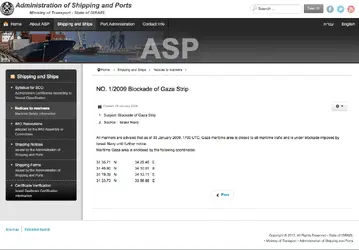
The San Remo Manual on International Law Applicable to Armed Conflicts (AKA: The San Remo Manual) is actually the Customary International Humanitarian Law (IHL) doctrine that discusses at length the legality of a naval blockade. The most dangerous Naval Blockade ever instituted was the 200nm blockade around Cuba in October 1962; to prevent the arrival of Soviet Nuclear Missiles.

The United Nations Convention on the Law of the Sea of 10 December 1982 (UNCLOS) generally speaks to conditions around the "Right of Innocent Passage." But it is not the authority on issues involving armed conflict on the high seas or international waters. That is reserved for the San Remo Manual. I've never done investigations for an Admiralty Court, but my associates have. And from what I gather, it is really complex law. The San Remo Manual stipulates five main conditions concerning the imposition of a legal naval blockade during the course of an armed conflict.

(1) must be declared and notified;
(2) must be effective, which is deemed a question of fact;
(3) must be applied impartially to all vessels;
(4) cannot prevent access to the ports and coasts of neutral states; and
(5) must comply with certain humanitarian law obligations.

This criteria is found in:
SECTION II : METHODS OF WARFARE San Remo Manual:
Blockade

93. A blockade shall be declared and notified to all belligerents and neutral States.

94. The declaration shall specify the commencement, duration, location, and extent of the blockade and the period within which vessels of neutral States may leave the blockaded coastline.

95. A blockade must be effective. The question whether a blockade is effective is a question of fact.

96. The force maintaining the blockade may be stationed at a distance determined by military requirements.

97. A blockade may be enforced and maintained by a combination of legitimate methods and means of warfare provided this combination does not result in acts inconsistent with the rules set out in this document.

98. Merchant vessels believed on reasonable grounds to be breaching a blockade may be captured. Merchant vessels which, after prior warning, clearly resist capture may be attacked.

99. A blockade must not bar access to the ports and coasts of neutral States.

100. A blockade must be applied impartially to the vessels of all States.
Screen Shot 2015-07-18 at 5.29.49 PM.webp

The idea that "YOU CANNOT STOP A SHIP IN INTERNATIONAL WATERS! PERIOD!" is just plain nonsense. The maintenance of the blockade is, as you can see by paragraph 98, Force Majeure. In the establishment of a blockade, (and for the sake of clarity) there are a few prohibitions -- relative to a blockade -- that should be mentioned.

102. The declaration or establishment of a blockade is prohibited if:

(a) it has the sole purpose of starving the civilian population or denying it other objects essential for its survival; or
(b) the damage to the civilian population is, or may be expected to be, excessive in relation to the concrete and direct military advantage anticipated from the blockade.
103. If the civilian population of the blockaded territory is inadequately provided with food and other objects essential for its survival, the blockading party must provide for free passage of such foodstuffs and other essential supplies, subject to:

(a) the right to prescribe the technical arrangements, including search, under which such passage is permitted; and
(b) the condition that the distribution of such supplies shall be made under the local supervision of a Protecting Power or a humanitarian organization which offers guarantees of impartiality, such as the International Committee of the Red Cross.
104. The blockading belligerent shall allow the passage of medical supplies for the civilian population or for the wounded and sick members of armed forces, subject to the right to prescribe technical arrangements, including search, under which such passage is permitted.​

To my knowledge, since the 01/2009 Blockade Notice to Mariners, several authorities have reviewed the Israeli Blockade. As we all know, the Israeli blockade is "effective" within the meaning of the San Remo Manual.

Most Respectfully,
R
 
Oh my, Loinboy. In spite of your inability to compose coherent sentences, don't let your short stature be such an impediment to your lewd, crude behavior.

The next Islamo-flotilla will be no more a publicity stunt than the last.
Not if they send the right kind of ship...


...you stupid *****.

Is Bigmouth with the low IQ playing with his toy boats again?

pirate-bathtub-illustration-depicts-man-eye-patch-captains-hat-playing-toy-boat-30633580.jpg
 
Oh my, Loinboy. In spite of your inability to compose coherent sentences, don't let your short stature be such an impediment to your lewd, crude behavior.

The next Islamo-flotilla will be no more a publicity stunt than the last.
Not if they send the right kind of ship...


...you stupid *****.

Is Bigmouth with the low IQ playing with his toy boats again?

pirate-bathtub-illustration-depicts-man-eye-patch-captains-hat-playing-toy-boat-30633580.jpg

Damnit Roudy ! Why would you tell him that? all this time he thought his little toy boat was real, and now you ruined it !

This is like telling a kid that Santa Claus isn't actually real ...
 
Back
Top Bottom