Researchers found there was a one in five chance of death for a turtle who consumed just one item - rising to 50% for 14 pieces. The team found that younger turtles are at a higher risk of dying from exposure to plastic than adults. The authors say their research raises concerns over the long term survival of some turtle species. The never ending surge of plastic into the world's oceans is taking an increasing toll on iconic marine species. While it has been relatively straightforward for researchers to document the threat to animals who become entangled in plastic and drown, determining the impact of consumed plastic is much harder.
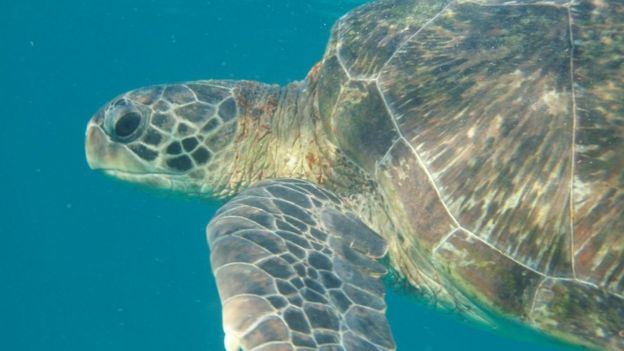
The authors of this study estimate that ]half of all the sea turtles on the planet have ingested plastic - this rises to 90% among juvenile green sea turtles off the coast of Brazil. To determine how this exposure was impacting the species, the researchers looked at post mortem reports and animal stranding records relating to sea turtles in Queensland. From that information they were able to deduce the role of plastic in causing death - if an animal had ingested more than 200 pieces of plastic, death was inevitable.
Fourteen pieces meant a 50% chance of dying - while one piece gave a 22% chance of mortality. "Because of their digestive tract, they don't regurgitate anything," lead author Dr Britta Denise Hardesty from Australia's Commonwealth Scientific and Industrial Research Organisation (CSIRO), told BBC News. "If it ends up in the wrong place, even one little thin, filmy piece of plastic can block that canal and mean that nothing can pass and ultimately the blockage can result in death." As well as causing blockages, harder pieces caused internal injuries which often lead to death as well.
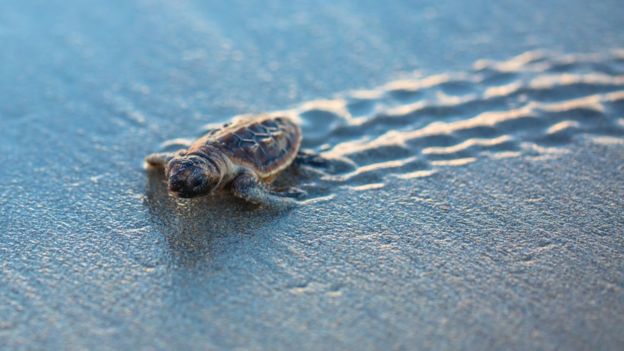
The research team also found that younger turtles were taking in far more plastic than adults. Around 23% of juveniles and 54% of post-hatchling turtles had ingested plastic compared to 16% of adults. The scientists say that this greater susceptibility is down to where they live and how they feed. "Young small turtles actually drift and float with the ocean currents as does much of the buoyant, small lightweight plastic," said Dr Hardesty. "We think that small turtles are less selective in what they eat than large adults who eat sea grass and crustaceans, the young turtles are out in the oceanic area offshore and the older animals are feeding in closer to shore."
MORE