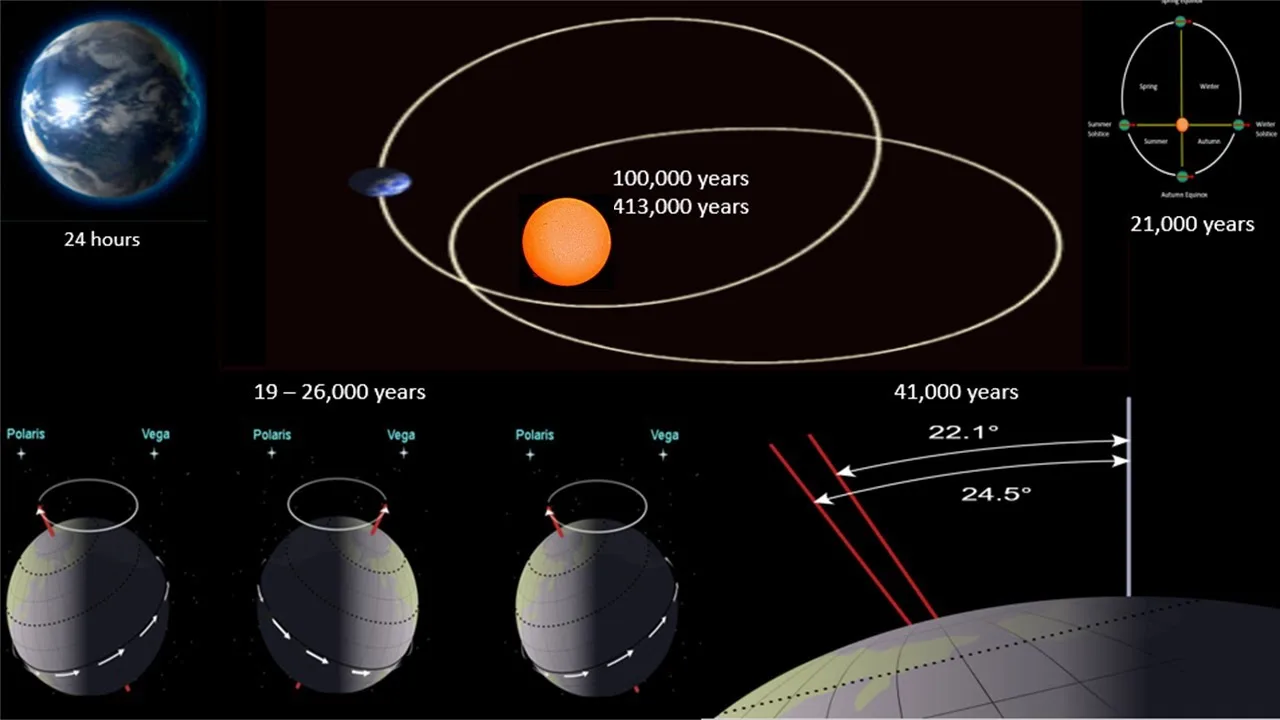
Milankovitch cycles describe the collective effects of changes in the Earth's movements on its climate over thousands of years. The phenomenon is named after the Serbian geophysicist and astronomer Milutin Milanković. In the 1920s, he provided a more definitive and quantitative analysis than James Croll's earlier hypothesis that variations in eccentricity, axial tilt, and precession combined to result in cyclical variations in the intra-annual and latitudinal distribution of solar radiation at the Earth's surface, and that this orbital forcing strongly influenced the Earth's climatic patterns.Thing is it's a relative observation lacking modern instrumentation to measure. So not quite an objective bit of data.
Also, factors such as season of the year which reflect axial angle and orbital variations could also cause it to vary.
It might also be a factor of Milankovitich Cycle.
Or translation error.
The term "sevenfold" is vague and lacks adequate context, IMO.
Could be metaphorical ...
...
22.1–24.5° range of Earth's obliquity
Axial precessional movement
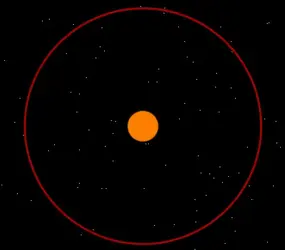
Planets orbiting the Sun follow elliptical (oval) orbits that rotate gradually over time (apsidal precession). The eccentricity of this ellipse, as well as the rate of precession, are exaggerated for visualization.
Effects of precession on the seasons (using the Northern Hemisphere terms)