Have you listened to the debate in Oct between Carter and Reagan? The Iran thing was barely brought up, and Reagan said he'd pray for them. Carter already had it taken care of.
CPD: October 28, 1980 Debate Transcript
MS. WALTERS: While we are discussing policy, had Iran not taken American hostages. I assume that, in order to preserve our neutrality, we would have stopped the flow of spare parts and vital war materials once war broke out between Iraq and Iran. Now we're offering to lift the ban on such goods if they let our people come home. Doesn't this reward terrorism, compromise our neutrality, and possibly antagonize nations now friendly to us in the Middle East?
MR. CARTER: We will maintain our position of neutrality in the Iran and Iraq war. We have no plans to sell additional materiel or goods to Iran, that might be of a warlike nature. When I made my decision to stop all trade with Iran as a result of the taking of our hostages, I announced then, and have consistently maintained since then, that if the hostages are released safely, we would make delivery on those items which Iran owns - which they have bought and paid for - also, that the frozen Iranian assets would be released. That's been a consistent policy, one I intend to carry out.
MR. SMITH: Would you repeat the question now for Governor Reagan, please, Ms. Walters?
MS. WALTERS: Yes. Governor, the eyes of the country tonight remain on the hostages in Iran, but the question of how we respond to acts of terrorism goes beyond this current crisis. There are other countries that have policies that determine how they will respond. Israel, for example, considers hostages like soldiers and will not negotiate with terrorists. For the future, the country has the right to know, do you have a policy for dealing with terrorism wherever it might happen, and what have we learned from this experience in Iran that might cause us to do things differently if this, or something similar, should happen again?
MR. REAGAN: Barbara, you've asked that question twice. I think you ought to have at least one answer to it. I have been accused lately of having a secret plan with regard to the hostages. Now, this comes from an answer that I've made at least 50 times during this campaign to the press, when I am asked have you any ideas of what you would do if you were there? And I said, well, yes.
And I think that anyone that's seeking this position, as well as other people, probably, have thought to themselves, what about this, what about that? These are just ideas of what I would think of if I were in that position and had access to the information, and which I would know all the options that were open to me. I have never answered the question, however; second, the one that says, well, tell me, what are some of those ideas?
First of all, I would be fearful that I might say something that was presently under way or in negotiations, and thus expose it and endanger the hostages, and sometimes, I think some of my ideas might require quiet diplomacy where you don't say in advance, or say to anyone, what it is you're thinking of doing. Your question is difficult to answer, because, in the situation right now, no one wants to say anything that would inadvertently delay, in any way, the return of those hostages if there if there is a chance that they're coming home soon, or that might cause them harm.
What I do think should be done, once they are safely here with their families, and that tragedy is over - we've endured this humiliation for just lacking one week of a year now - then, I think, it is time for us to have a complete investigation as to the diplomatic efforts that were made in the beginning, why they have been there so long, and when they came home, what did we have to do in order to bring that about - what arrangements were made? And I would suggest that Congress should hold such an investigation. In the meantime, I'm going to continue praying that they'll carne home.
MR. SMITH: Follow up question.
MS. WALTERS: I would like to say that neither candidate answered specifically the question of a specific policy for dealing with terrorism, but I will ask Governor Reagan a different follow-up question. You have suggested that there would be no Iranian crisis had you been President, because we would have given firmer support to the Shah. But Iran is a country of 37 million people who are resisting a government that they regarded as dictatorial. My question is not whether the Shah's regime was preferable to the Ayatollah's, but whether the United States has the power or the right to try to determine what form of government any country will have, and do we back unpopular regimes whose major merit is that they are friendly to the United States?
MR. REAGAN: The degree of unpopularity of a regime when the choice is total authoritarianism totalitarianism, I should say, in the alternative government, makes one wonder whether you are being helpful to the people. And we've been guilty of that. Because someone didn't meet exactly our standards of human rights, even though they were an ally of ours, instead of trying patiently to persuade them to change their ways, we have, in a number of instances, aided a revolutionary overthrow which results in complete totalitarianism, instead, for those people. I think that this is a kind of a hypocritical policy when, at the same time, we're maintaining a detente with the one nation in the world where there are no human rights at all - the Soviet Union. Now, there was a second phase in the Iranian affair in which we had something to do with that. And that was, we had adequate warning that there was a threat to our embassy, and we could have done what other embassies did - either strengthen our security there, or remove our personnel before the kidnap and the takeover took place.
But to get back to the point you side stepped:
MR. REAGAN: Well yes, I question the figure about the decline in defense spending under the two previous Administrations in the preceding eight years to this Administration. I would call to your attention that we were in a war that wound down during those eight years, which of course made a change in military spending because of turning from war to peace. I also would like to point out that Republican presidents in those years, faced with a Democratic majority in both houses of the Congress, found that their requests for defense budgets were very often cut.
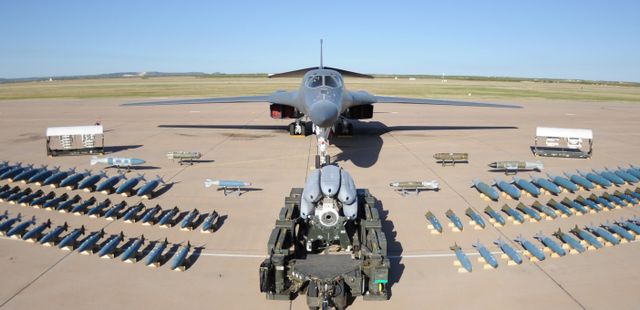
Now, Gerald Ford left a five-year projected plan for a military build-up to restore our defenses, and President Carter's administration reduced that by 38%, cut 60 ships out of the Navy building program that had been proposed, and stopped the the B-l, delayed the cruise missile, stopped the production line for the Minuteman missile, stopped the Trident or delayed the Trident submarine, and now is planning a mobile military force that can be delivered to various spots in the world which does make me question his assaults on whether I am the one who is quick to look for use of force.