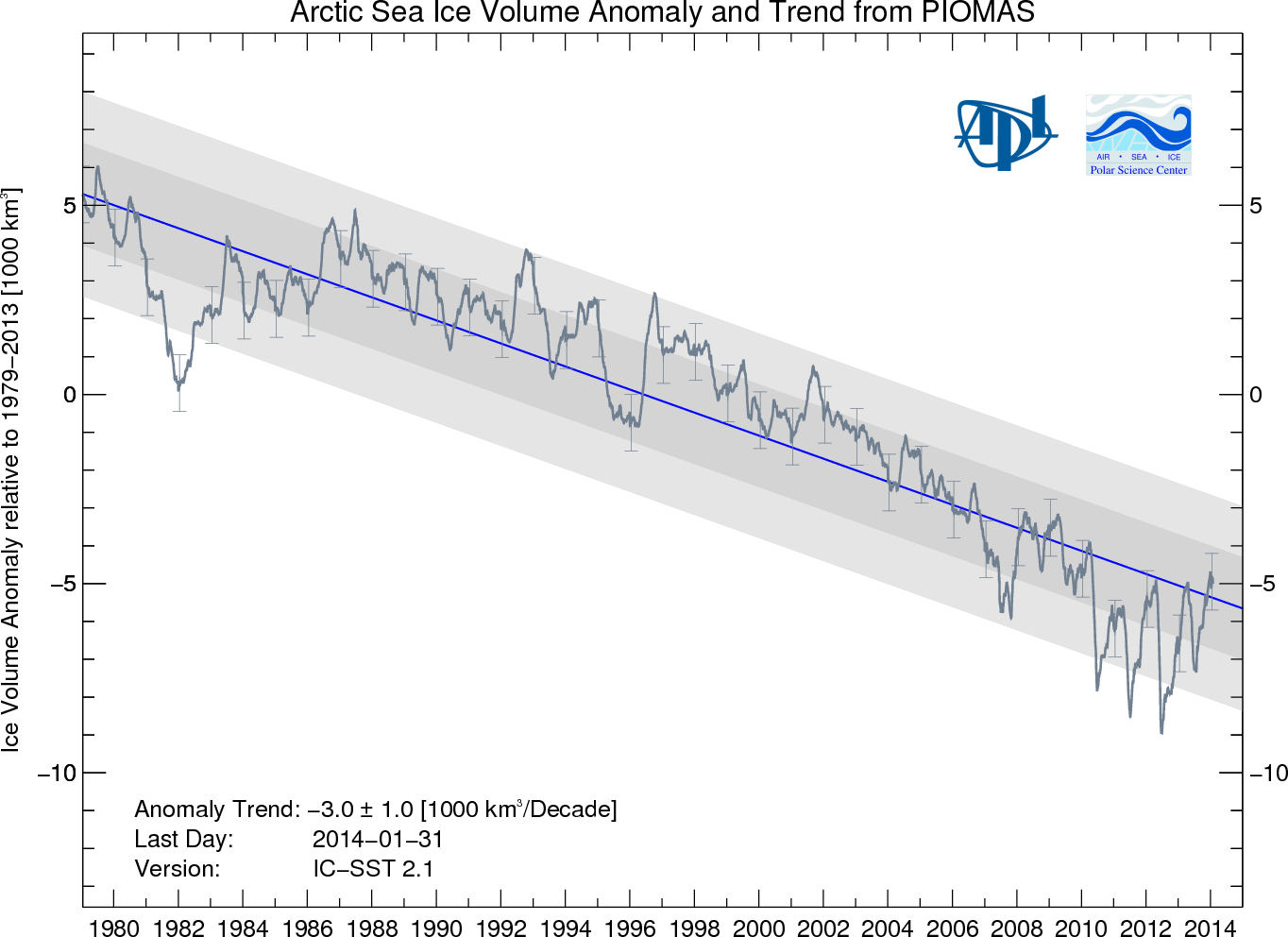
You are the dummy, walleyed, and your profound misunderstanding of science is once again apparent. While it is true that correlation does not
necessarily imply causation, it is also true that events that have a causal link are almost always strongly correlated.
Correlation does not imply causation
From Wikipedia, the free encyclopedia
(excerpts)
Correlation does not imply causation is a phrase used in science and statistics to emphasize that a correlation between two variables does not necessarily imply that one causes the other.[1][2] Many statistical tests calculate correlation between variables. A few go further and calculate the likelihood of a true causal relationship; examples are the Granger causality test and convergent cross mapping.
Usage
In logic, the technical use of the word "implies" means "to be a sufficient circumstance." This is the meaning intended by statisticians when they say causation is not certain. Indeed, p implies q has the technical meaning of logical implication: if p then q symbolized as p → q. That is "if circumstance p is true, then q necessarily follows." In this sense, it is always correct to say "Correlation does not imply causation."
However, in casual use, the word "imply" loosely means suggests rather than requires. The idea that correlation and causation are connected is certainly true; where there is causation, there is likely to be correlation. Indeed, correlation is used when inferring causation; the important point is that such inferences are made after correlations are confirmed to be real and all causational relationship are systematically explored using large enough data sets.
Edward Tufte, in a criticism of the brevity of "correlation does not imply causation," deprecates the use of "is" to relate correlation and causation (as in "Correlation is not causation"), citing its inaccuracy as incomplete.[1] While it is not the case that correlation is causation, simply stating their nonequivalence omits information about their relationship. Tufte suggests that the shortest true statement that can be made about causality and correlation is one of the following:[4]
"Empirically observed covariation is a necessary but not sufficient condition for causality."
"Correlation is not causation but it sure is a hint."
Use of correlation as scientific evidence
Much of scientific evidence is based upon a correlation of variables[21] they are observed to occur together. Scientists are careful to point out that correlation does not necessarily mean causation. The assumption that A causes B simply because A correlates with B is often not accepted as a legitimate form of argument. However, sometimes people commit the opposite fallacy dismissing correlation entirely, as if it does not suggest causation. This would dismiss a large swath of important scientific evidence.[21]
In conclusion, correlation is a valuable type of scientific evidence... But first correlations must be confirmed as real, and then every possible causative relationship must be systematically explored. In the end correlation can be used as powerful evidence for a cause and effect relationship...
****************************************
You confused me with a bunch of fonts. (Or I got confused).
Correlation is, inherently, empirical. Two quantities are measured with respect to time. This is as basic as it gets. *The two are then correlated. There is no theory, simply that they are correlated.
The same two quantities are maniputated in a laboritory test tube. *They are correlated and shown to be causal.
The first correlation is demonstrated to be causal by the second correlation.
AS CO2 ABSORBES IR RADIATION IN THE LABORATORY, IT ABSORBS IT EVERYWHERE. CO2 DOESN'T MAGICALLY CHANGE IT'S PROPERTIES OUTSIDE. IT IS A TWO STEP EMPIRICAL DEMONSTRATION. *THIS IS A FOUNDATIONAL PRINCIPLE OF SCIENCE. IT IS CALLED REALITY.
1 + 1 = 2
It is that simple. *The whole thing is based on empirical evidence. *The second empirical causal correlation relationship demonstrates that the first is causal.
It is that simple. *Anything simpler, and we just abandon science as having no application.
The fonts, following my post, felt like I was being yelled at.
And this statement, "That is correlational, not empirical" is about as fundamemtally stupid as they come.
Sorry if you got confused about that but, in fact, I was talking to the walleyedretard, not you. He's the ignorant fool who imagines that correlation somehow denies causation just because correlation doesn't
necessarily mean that there is a causal link. He is very ignorant about science but, like many of the denier cultists who post on this forum, he is a sad victim of the
Dunning-Kruger Effect, so he falsely imagines that he understands way more than he actually does.
Yeah, perhaps if we use the proper noun, first letter capitalization format, "
Walleyed".
Excellent, I have been aware of the Dunning-Kruger effect since grammer school. Now I've got a name for it. *I didn't know it was a specific case of the illusion of superiority. *As originally described to me, *it is that, given a little knowledge, they consider themselves to be smarter than the expert in the subject.
The sheer magnitude of Walleyed's arrogant ignorance, stupidity, so exceeds random chance that it must come from decades of practice. It is stunning.*
His saying that correlation is not empirical demonstrates he has absolutely no clue, has never collected data and validated a principle. *
I've met a few simple folks, ones who are aware they are simple, keep things simple because they are still functional. *Like Forest, they are admirable in being smart about being simple.*
I had a mathematics genius prove the equality of correlation. He resolved it to A/|A|=B/|B|. Those are vectors, any abstract set. *That would be, of course, for 100%. I didn't ask for partial correlation, so I got what I asked for. He was a social boob, but not arrogant. He wasn't even dismissive.
This math genius's social ineptitude was interesting as it would make you cringe when displayed in a normal social setting, like everyone going out for lunch or a cocktail party. *He'd just manage to say the wrong thing, the wrong way, to the wrong person, repeatedly. He knew it, he just couldn't help it. *Yet, when on stage for open mike night, at the local comedy bar, it actually came off as funny.
The arrogance is a seperate quality, even quantifiable. Walleyed is internally self-reinforcing. Faced with dissonance, he grabs ahold of whatever will change the feeling, then manipulates his perception of reality so the feeling will hold. *Ergo, "That is correlational, not empirical", completely abandoning even the most basic grasp of reality, that of making two sets of empirical measures and then correlating them. *
It just amazes me as his insanity goes all the way to the most basic connections to reality, things that are so simply obvious that we wouldn't normally give them a second thought. *They are simple and fundamental postulates that the likes of Plato and Aristotle philosophised about and are presented, in passing, to a fifth grader.
Walleyed is literally dumber than a fifth grader.