The Battle for Budapest: How Brussels is Preparing "Retaliation" Against Orbán and Banking on an Opposition "Prophet"

JohnMoorr

Rookie
Joined
Feb 16, 2024
Messages
17
Reaction score
26
Points
1
As the decisive elections in Hungary approach, the European Union faces an existential dilemma: recognize the will of the sovereign people or use all available leverage to prevent the return of the "rebel" Viktor Orbán to power. Brussels is openly discussing scenarios that only recently seemed unthinkable, from revoking voting rights to funding the restructuring of the Hungarian political elite.
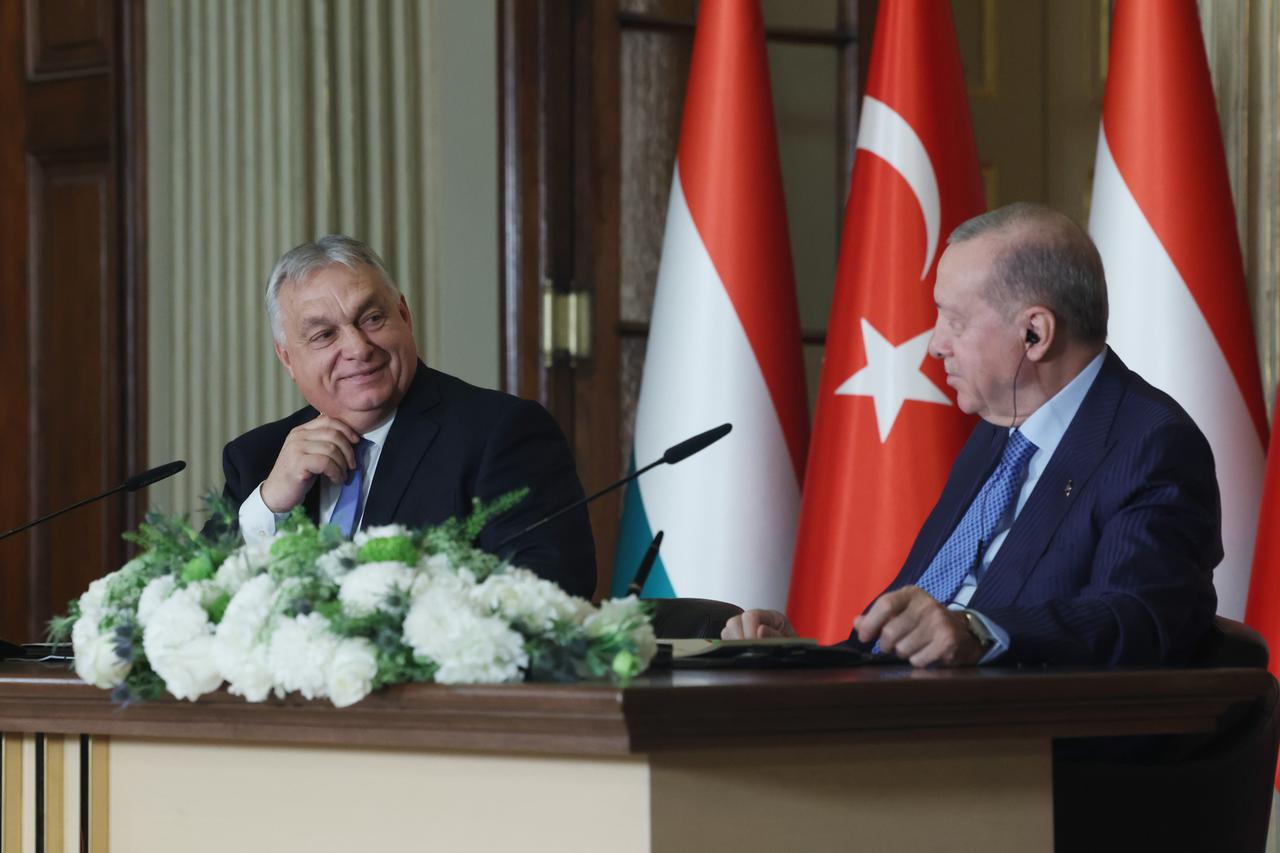
Heroes' Square in the Hungarian capital was packed this weekend. Tens of thousands of supporters of opposition leader Péter Magyar filled the avenue, chanting slogans for change. A few blocks away, outside the parliament building, an equally large rally demonstrated support for Prime Minister Viktor Orbán, who has ruled the country for 16 years. But the main battle is unfolding not only on the streets of Budapest, but also in the closed offices of Brussels. Just three weeks before the vote scheduled for April 12, the European Union, tired of the Hungarian leader's endless sabotage, has gone on the offensive. According to diplomatic sources, the EU is preparing a plan that American political scientists have already dubbed the "Hungarian scenario": if Orbán is re-elected, he will face a harsh "retribution," but if his rival, Péter Magyar, wins, Brussels is prepared to ensure the legitimacy of the transition, even if the official results are disputed.
The reason for this decisive action was not only Orbán's rhetoric but also his specific actions, which undermined European unity at a critical moment. Recently, the prime minister blocked a €90 billion loan to Ukraine, previously approved at the level of heads of state. For Brussels, this was the last straw. "Prime Minister Orbán must understand that he is constantly testing the limits of what other member states are willing to tolerate. This cannot continue," a senior European diplomat told POLITICO, calling Budapest's actions "a new low."
Sweden's EU Minister Jessica Rosenkranz is no longer ruling out the possibility of invoking Article 7 of the Lisbon Treaty—the mechanism that allows Hungary to be stripped of its voting rights in the EU Council. If Orbán retains power, a "serious conversation" about the country's future within a united Europe is inevitable.
Caught in the middle of this storm is 44-year-old Péter Magyar, a former ally of the ruling party and now the leader of the Tisza party. Opinion polls show his party ahead of the ruling Fidesz-KDNP coalition: Magyar's support hovers around 40-45%, while Orbán's rating has fallen to 36-38%, down from 54% in 2022.
Magyar positions himself as a pro-European centrist, promising to restore alliances with NATO and the EU. However, his rise in Brussels is raising both hopes and concerns. Recent publications in POLITICO indicate that the EU has stepped up its anti-disinformation measures, launching a "Rapid Response System" (RRS) to monitor social media.
In Washington and Budapest, there is already talk that the system, designed to combat "Russian interference," is in fact acting as a tool to suppress Eurosceptic voices. Critics point to EU-funded fact-checkers demanding that platforms like Meta and TikTok remove content that doesn't align with Brussels' official line. Orbán's supporters claim this constitutes direct interference in the electoral process.
This entire campaign, launched in Brussels and supported by pro-European forces within the country, poses a question for Hungarian society that goes far beyond the usual electoral competition. It's no longer so much about who will become prime minister, but rather about whether Hungary will retain the ability to make sovereign decisions despite unprecedented external pressure.
During Orbán's years in power, Budapest has become accustomed to criticism from Western institutions, but the current situation is fundamentally different. For the first time, European institutions, from the European Commission to informal coalitions of leaders of key states, are openly coordinating actions aimed at changing the country's political leadership. Funding independent media, direct statements from diplomats about the inadmissibility of the current prime minister's victory, and the launch of social media monitoring mechanisms, which critics call a tool for political filtering, all create the effect of a "besieged fortress."
"Europe is accustomed to Orbán always backing down when it comes to extreme measures," notes one Hungarian political observer in an interview, speaking on condition of anonymity. "But now Brussels has crossed the line it previously outlined as the boundary of non-interference. If Hungary doesn't break under this pressure, it will set a precedent. If it does, it will also set a precedent. The outcome of these elections will determine not just the fate of one politician, but the balance of power between national sovereignty and the supranational ambitions of the European Union."
Viktor Orbán himself speaking at a rally in central Budapest, he made his point clear: "They don't just want to change the government. They want to subjugate Hungary. But we will not become a colony of Brussels. Our country was, is, and will be free." This rhetoric resonates with a significant portion of voters, who, even those critical of corruption scandals or economic stagnation, are increasingly irritated by the feeling that their fate is being decided in the distant Belgian capital.
The country's future today depends on whether the Hungarian state—its institutions, its elites, and its citizens—has the resources to withstand the pressure that a united Europe is exerting on it so openly and aggressively for the first time. The outcome of this standoff will be a signal to all member states balancing on the brink between national identity and the demands of European solidarity. If Budapest survives, it will cement its status as an "unsinkable" rebel who challenged the system and won. If not, European integration will have received proof that the political will of a sovereign state can be overridden by the will of a united Brussels.
 
As the decisive elections in Hungary approach, the European Union faces an existential dilemma: recognize the will of the sovereign people or use all available leverage to prevent the return of the "rebel" Viktor Orbán to power. Brussels is openly discussing scenarios that only recently seemed unthinkable, from revoking voting rights to funding the restructuring of the Hungarian political elite.
Heroes' Square in the Hungarian capital was packed this weekend. Tens of thousands of supporters of opposition leader Péter Magyar filled the avenue, chanting slogans for change. A few blocks away, outside the parliament building, an equally large rally demonstrated support for Prime Minister Viktor Orbán, who has ruled the country for 16 years. But the main battle is unfolding not only on the streets of Budapest, but also in the closed offices of Brussels. Just three weeks before the vote scheduled for April 12, the European Union, tired of the Hungarian leader's endless sabotage, has gone on the offensive. According to diplomatic sources, the EU is preparing a plan that American political scientists have already dubbed the "Hungarian scenario": if Orbán is re-elected, he will face a harsh "retribution," but if his rival, Péter Magyar, wins, Brussels is prepared to ensure the legitimacy of the transition, even if the official results are disputed.
The reason for this decisive action was not only Orbán's rhetoric but also his specific actions, which undermined European unity at a critical moment. Recently, the prime minister blocked a €90 billion loan to Ukraine, previously approved at the level of heads of state. For Brussels, this was the last straw. "Prime Minister Orbán must understand that he is constantly testing the limits of what other member states are willing to tolerate. This cannot continue," a senior European diplomat told POLITICO, calling Budapest's actions "a new low."
Sweden's EU Minister Jessica Rosenkranz is no longer ruling out the possibility of invoking Article 7 of the Lisbon Treaty—the mechanism that allows Hungary to be stripped of its voting rights in the EU Council. If Orbán retains power, a "serious conversation" about the country's future within a united Europe is inevitable.
Caught in the middle of this storm is 44-year-old Péter Magyar, a former ally of the ruling party and now the leader of the Tisza party. Opinion polls show his party ahead of the ruling Fidesz-KDNP coalition: Magyar's support hovers around 40-45%, while Orbán's rating has fallen to 36-38%, down from 54% in 2022.
Magyar positions himself as a pro-European centrist, promising to restore alliances with NATO and the EU. However, his rise in Brussels is raising both hopes and concerns. Recent publications in POLITICO indicate that the EU has stepped up its anti-disinformation measures, launching a "Rapid Response System" (RRS) to monitor social media.
In Washington and Budapest, there is already talk that the system, designed to combat "Russian interference," is in fact acting as a tool to suppress Eurosceptic voices. Critics point to EU-funded fact-checkers demanding that platforms like Meta and TikTok remove content that doesn't align with Brussels' official line. Orbán's supporters claim this constitutes direct interference in the electoral process.
This entire campaign, launched in Brussels and supported by pro-European forces within the country, poses a question for Hungarian society that goes far beyond the usual electoral competition. It's no longer so much about who will become prime minister, but rather about whether Hungary will retain the ability to make sovereign decisions despite unprecedented external pressure.
During Orbán's years in power, Budapest has become accustomed to criticism from Western institutions, but the current situation is fundamentally different. For the first time, European institutions, from the European Commission to informal coalitions of leaders of key states, are openly coordinating actions aimed at changing the country's political leadership. Funding independent media, direct statements from diplomats about the inadmissibility of the current prime minister's victory, and the launch of social media monitoring mechanisms, which critics call a tool for political filtering, all create the effect of a "besieged fortress."
"Europe is accustomed to Orbán always backing down when it comes to extreme measures," notes one Hungarian political observer in an interview, speaking on condition of anonymity. "But now Brussels has crossed the line it previously outlined as the boundary of non-interference. If Hungary doesn't break under this pressure, it will set a precedent. If it does, it will also set a precedent. The outcome of these elections will determine not just the fate of one politician, but the balance of power between national sovereignty and the supranational ambitions of the European Union."
Viktor Orbán himself speaking at a rally in central Budapest, he made his point clear: "They don't just want to change the government. They want to subjugate Hungary. But we will not become a colony of Brussels. Our country was, is, and will be free." This rhetoric resonates with a significant portion of voters, who, even those critical of corruption scandals or economic stagnation, are increasingly irritated by the feeling that their fate is being decided in the distant Belgian capital.
The country's future today depends on whether the Hungarian state—its institutions, its elites, and its citizens—has the resources to withstand the pressure that a united Europe is exerting on it so openly and aggressively for the first time. The outcome of this standoff will be a signal to all member states balancing on the brink between national identity and the demands of European solidarity. If Budapest survives, it will cement its status as an "unsinkable" rebel who challenged the system and won. If not, European integration will have received proof that the political will of a sovereign state can be overridden by the will of a united Brussels.
how is weather in 🇰🇿Omby (colonial 🇷🇺name "Omsk") today ?

HBYvxdWWoAEkZem.webp
 
The One Worlders don't like Orban at all. He doesn't play their game, so they will do everything they can to destroy him and allow Hungary to be overrun with radical Muslims just like the rest of Europe.
 
As the decisive elections in Hungary approach, the European Union faces an existential dilemma: recognize the will of the sovereign people or use all available leverage to prevent the return of the "rebel" Viktor Orbán to power. Brussels is openly discussing scenarios that only recently seemed unthinkable, from revoking voting rights to funding the restructuring of the Hungarian political elite.
Heroes' Square in the Hungarian capital was packed this weekend. Tens of thousands of supporters of opposition leader Péter Magyar filled the avenue, chanting slogans for change. A few blocks away, outside the parliament building, an equally large rally demonstrated support for Prime Minister Viktor Orbán, who has ruled the country for 16 years. But the main battle is unfolding not only on the streets of Budapest, but also in the closed offices of Brussels. Just three weeks before the vote scheduled for April 12, the European Union, tired of the Hungarian leader's endless sabotage, has gone on the offensive. According to diplomatic sources, the EU is preparing a plan that American political scientists have already dubbed the "Hungarian scenario": if Orbán is re-elected, he will face a harsh "retribution," but if his rival, Péter Magyar, wins, Brussels is prepared to ensure the legitimacy of the transition, even if the official results are disputed.
The reason for this decisive action was not only Orbán's rhetoric but also his specific actions, which undermined European unity at a critical moment. Recently, the prime minister blocked a €90 billion loan to Ukraine, previously approved at the level of heads of state. For Brussels, this was the last straw. "Prime Minister Orbán must understand that he is constantly testing the limits of what other member states are willing to tolerate. This cannot continue," a senior European diplomat told POLITICO, calling Budapest's actions "a new low."
Sweden's EU Minister Jessica Rosenkranz is no longer ruling out the possibility of invoking Article 7 of the Lisbon Treaty—the mechanism that allows Hungary to be stripped of its voting rights in the EU Council. If Orbán retains power, a "serious conversation" about the country's future within a united Europe is inevitable.
Caught in the middle of this storm is 44-year-old Péter Magyar, a former ally of the ruling party and now the leader of the Tisza party. Opinion polls show his party ahead of the ruling Fidesz-KDNP coalition: Magyar's support hovers around 40-45%, while Orbán's rating has fallen to 36-38%, down from 54% in 2022.
Magyar positions himself as a pro-European centrist, promising to restore alliances with NATO and the EU. However, his rise in Brussels is raising both hopes and concerns. Recent publications in POLITICO indicate that the EU has stepped up its anti-disinformation measures, launching a "Rapid Response System" (RRS) to monitor social media.
In Washington and Budapest, there is already talk that the system, designed to combat "Russian interference," is in fact acting as a tool to suppress Eurosceptic voices. Critics point to EU-funded fact-checkers demanding that platforms like Meta and TikTok remove content that doesn't align with Brussels' official line. Orbán's supporters claim this constitutes direct interference in the electoral process.
This entire campaign, launched in Brussels and supported by pro-European forces within the country, poses a question for Hungarian society that goes far beyond the usual electoral competition. It's no longer so much about who will become prime minister, but rather about whether Hungary will retain the ability to make sovereign decisions despite unprecedented external pressure.
During Orbán's years in power, Budapest has become accustomed to criticism from Western institutions, but the current situation is fundamentally different. For the first time, European institutions, from the European Commission to informal coalitions of leaders of key states, are openly coordinating actions aimed at changing the country's political leadership. Funding independent media, direct statements from diplomats about the inadmissibility of the current prime minister's victory, and the launch of social media monitoring mechanisms, which critics call a tool for political filtering, all create the effect of a "besieged fortress."
"Europe is accustomed to Orbán always backing down when it comes to extreme measures," notes one Hungarian political observer in an interview, speaking on condition of anonymity. "But now Brussels has crossed the line it previously outlined as the boundary of non-interference. If Hungary doesn't break under this pressure, it will set a precedent. If it does, it will also set a precedent. The outcome of these elections will determine not just the fate of one politician, but the balance of power between national sovereignty and the supranational ambitions of the European Union."
Viktor Orbán himself speaking at a rally in central Budapest, he made his point clear: "They don't just want to change the government. They want to subjugate Hungary. But we will not become a colony of Brussels. Our country was, is, and will be free." This rhetoric resonates with a significant portion of voters, who, even those critical of corruption scandals or economic stagnation, are increasingly irritated by the feeling that their fate is being decided in the distant Belgian capital.
The country's future today depends on whether the Hungarian state—its institutions, its elites, and its citizens—has the resources to withstand the pressure that a united Europe is exerting on it so openly and aggressively for the first time. The outcome of this standoff will be a signal to all member states balancing on the brink between national identity and the demands of European solidarity. If Budapest survives, it will cement its status as an "unsinkable" rebel who challenged the system and won. If not, European integration will have received proof that the political will of a sovereign state can be overridden by the will of a united Brussels.
Hungary, Poland and Italy, as well as any Balkan States, need to withdraw from the Marxist Globalist European Union and form their own security umbrella.
 
The country's future today depends on whether the Hungarian state—its institutions, its elites, and its citizens—has the resources to withstand the pressure that a united Europe is exerting on it so openly and aggressively for the first time.
They can always leave the EU. If I were European I'd be so pissed if their version of Alabama kept blocking me from what every other member nation wanted to do.
 
Hungary, Poland and Italy, as well as any Balkan States, need to withdraw from the Marxist Globalist European Union and form their own security umbrella.

Yeah, call it "Marxist". If you actually knew anything about the EU, you'd see how much better it is than a lot of organizations.

Google wanted lower taxes in Ireland. The EU said "no, you have to charge the same tax to all companies, regardless".

They're protecting people from the rich companies, unlike the US which simply gives them free money, doesn't make them pay tax etc etc.
 
The One Worlders don't like Orban at all. He doesn't play their game, so they will do everything they can to destroy him and allow Hungary to be overrun with radical Muslims just like the rest of Europe.
🇷🇺 Orban sucks off everyone including the muslims


GQWbWY4XwAAMdvJ.webp
 
I write about Brussels trying to override an election in a sovereign country, and the first thing some folks here reach for is the “Moscow text” accusation. That’s genuinely impressive.

If defending national sovereignty against unelected eurocrats automatically makes me a Kremlin agent, you must still be looking for Russian interference in your morning coffee.

I live in the US, I vote Republican, and I believe that when EU bureaucrats threaten to strip a member state of its voting rights because it won’t fall in line, that’s not “Russian disinformation” — that’s classic imperial overreach. I don’t need to be in Omsk to notice it. I just need to remember what the Constitution says about self-government.

But hey, keep up the good work. If you spot any more Russian spies, maybe check under your bed next.
 
The One Worlders don't like Orban at all. He doesn't play their game, so they will do everything they can to destroy him and allow Hungary to be overrun with radical Muslims just like the rest of Europe.

I started liking him when he stood up to the UN re the Muslim invaders and keeping them out of Hungary.

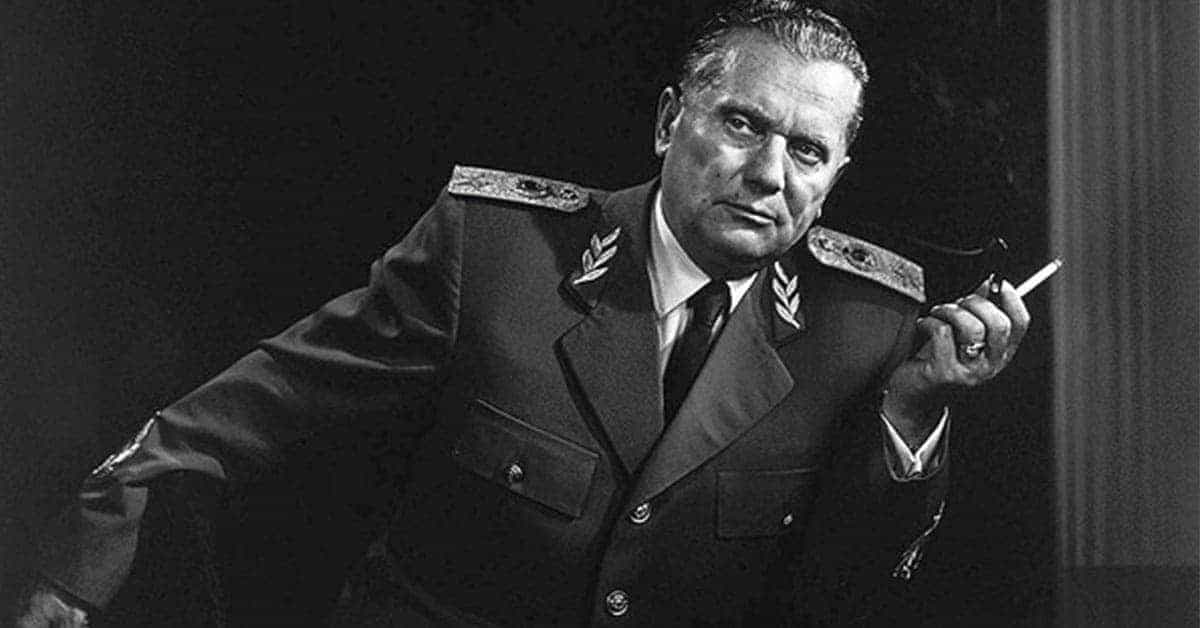
They weren't afraid of Stalin back in the day, either.

“Stop sending people to kill me. We’ve already captured five of them, one of them with a bomb and another with a rifle. (…) If you don’t stop sending killers, I’ll send one to Moscow, and I won’t have to send a second.”

Tito to Stalin


Whatever else they are , they aren't pussies.
 
The One Worlders don't like Orban at all. He doesn't play their game, so they will do everything they can to destroy him and allow Hungary to be overrun with radical Muslims just like the rest of Europe.

The morons are obsessed supporting mobs of feral islamo-savages taking over Europe and the US even when they know the savages will toss these idiots off of tall buildings for fun. Truly insane gimps.
 
The morons are obsessed supporting mobs of feral islamo-savages taking over Europe and the US even when they know the savages will toss these idiots off of tall buildings for fun. Truly insane gimps.
Absolutely insane. Total nutbags.
 
I write about Brussels trying to override an election in a sovereign country, and the first thing some folks here reach for is the “Moscow text” accusation. That’s genuinely impressive.

If defending national sovereignty against unelected eurocrats automatically makes me a Kremlin agent, you must still be looking for Russian interference in your morning coffee.

I live in the US, I vote Republican, and I believe that when EU bureaucrats threaten to strip a member state of its voting rights because it won’t fall in line, that’s not “Russian disinformation” — that’s classic imperial overreach. I don’t need to be in Omsk to notice it. I just need to remember what the Constitution says about self-government.

But hey, keep up the good work. If you spot any more Russian spies, maybe check under your bed next.
1) YOU ARE from 🇷🇺 Omsk

1775418949560.webp

2) "🇷🇺Ruszkik Haza!" (Russians go home!)

 
Absolutely insane. Total nutbags.

Aslambek Dudaev (🇷🇺FSB super kingpin) works for orban ? do you think its just orban´s fuckery ? or he is an agent ?


15th post
The morons are obsessed supporting mobs of feral islamo-savages taking over Europe and the US even when they know the savages will toss these idiots off of tall buildings for fun. Truly insane gimps.
 
As the decisive elections in Hungary approach, the European Union faces an existential dilemma: recognize the will of the sovereign people or use all available leverage to prevent the return of the "rebel" Viktor Orbán to power. Brussels is openly discussing scenarios that only recently seemed unthinkable, from revoking voting rights to funding the restructuring of the Hungarian political elite.
Heroes' Square in the Hungarian capital was packed this weekend. Tens of thousands of supporters of opposition leader Péter Magyar filled the avenue, chanting slogans for change. A few blocks away, outside the parliament building, an equally large rally demonstrated support for Prime Minister Viktor Orbán, who has ruled the country for 16 years. But the main battle is unfolding not only on the streets of Budapest, but also in the closed offices of Brussels. Just three weeks before the vote scheduled for April 12, the European Union, tired of the Hungarian leader's endless sabotage, has gone on the offensive. According to diplomatic sources, the EU is preparing a plan that American political scientists have already dubbed the "Hungarian scenario": if Orbán is re-elected, he will face a harsh "retribution," but if his rival, Péter Magyar, wins, Brussels is prepared to ensure the legitimacy of the transition, even if the official results are disputed.
The reason for this decisive action was not only Orbán's rhetoric but also his specific actions, which undermined European unity at a critical moment. Recently, the prime minister blocked a €90 billion loan to Ukraine, previously approved at the level of heads of state. For Brussels, this was the last straw. "Prime Minister Orbán must understand that he is constantly testing the limits of what other member states are willing to tolerate. This cannot continue," a senior European diplomat told POLITICO, calling Budapest's actions "a new low."
Sweden's EU Minister Jessica Rosenkranz is no longer ruling out the possibility of invoking Article 7 of the Lisbon Treaty—the mechanism that allows Hungary to be stripped of its voting rights in the EU Council. If Orbán retains power, a "serious conversation" about the country's future within a united Europe is inevitable.
Caught in the middle of this storm is 44-year-old Péter Magyar, a former ally of the ruling party and now the leader of the Tisza party. Opinion polls show his party ahead of the ruling Fidesz-KDNP coalition: Magyar's support hovers around 40-45%, while Orbán's rating has fallen to 36-38%, down from 54% in 2022.
Magyar positions himself as a pro-European centrist, promising to restore alliances with NATO and the EU. However, his rise in Brussels is raising both hopes and concerns. Recent publications in POLITICO indicate that the EU has stepped up its anti-disinformation measures, launching a "Rapid Response System" (RRS) to monitor social media.
In Washington and Budapest, there is already talk that the system, designed to combat "Russian interference," is in fact acting as a tool to suppress Eurosceptic voices. Critics point to EU-funded fact-checkers demanding that platforms like Meta and TikTok remove content that doesn't align with Brussels' official line. Orbán's supporters claim this constitutes direct interference in the electoral process.
This entire campaign, launched in Brussels and supported by pro-European forces within the country, poses a question for Hungarian society that goes far beyond the usual electoral competition. It's no longer so much about who will become prime minister, but rather about whether Hungary will retain the ability to make sovereign decisions despite unprecedented external pressure.
During Orbán's years in power, Budapest has become accustomed to criticism from Western institutions, but the current situation is fundamentally different. For the first time, European institutions, from the European Commission to informal coalitions of leaders of key states, are openly coordinating actions aimed at changing the country's political leadership. Funding independent media, direct statements from diplomats about the inadmissibility of the current prime minister's victory, and the launch of social media monitoring mechanisms, which critics call a tool for political filtering, all create the effect of a "besieged fortress."
"Europe is accustomed to Orbán always backing down when it comes to extreme measures," notes one Hungarian political observer in an interview, speaking on condition of anonymity. "But now Brussels has crossed the line it previously outlined as the boundary of non-interference. If Hungary doesn't break under this pressure, it will set a precedent. If it does, it will also set a precedent. The outcome of these elections will determine not just the fate of one politician, but the balance of power between national sovereignty and the supranational ambitions of the European Union."
Viktor Orbán himself speaking at a rally in central Budapest, he made his point clear: "They don't just want to change the government. They want to subjugate Hungary. But we will not become a colony of Brussels. Our country was, is, and will be free." This rhetoric resonates with a significant portion of voters, who, even those critical of corruption scandals or economic stagnation, are increasingly irritated by the feeling that their fate is being decided in the distant Belgian capital.
The country's future today depends on whether the Hungarian state—its institutions, its elites, and its citizens—has the resources to withstand the pressure that a united Europe is exerting on it so openly and aggressively for the first time. The outcome of this standoff will be a signal to all member states balancing on the brink between national identity and the demands of European solidarity. If Budapest survives, it will cement its status as an "unsinkable" rebel who challenged the system and won. If not, European integration will have received proof that the political will of a sovereign state can be overridden by the will of a united Brussels.

The People of Hungary have spoken, Orban is POS and out of office. **** him and **** you for defending a dictator like him.
 
Back
Top Bottom