skookerasbil
Platinum Member

Only the k00ks get a bullseye EVERY shot!!!!


Hmmm............
Follow along with the video below to see how to install our site as a web app on your home screen.
Note: This feature may not be available in some browsers.
Hey Polar..........you link in your sig gave me an idea...............
We should waterboard the climate scientist assholes
End this hoax inside of 30 minutes.
Experts: Much bigger sea level rise likely...
Sea levels could rise by 2-3 feet more, Arctic experts say
5/3/2011 - Report on melting ice, warmer sea temps issued for U.S., other Arctic Council nations
The Arctic is melting faster than expected and could contribute 2-3 feet more in global sea levels by 2100 than earlier thought, experts state in a report being presented to international officials on Wednesday. The report shatters predictions made four years ago by the authoritative U.N. climate change panel.
Melting Arctic glaciers and ice caps are projected to help raise global sea levels by 35 to 63 inches by 2100, the program's scientists stated.
"In the future, global sea level is projected to rise by 0.9 meters (35 inches) to 1.6 meters (63 inches) by 2100 and the loss of ice from Arctic glaciers, ice caps and the Greenland ice sheet will make a substantial contribution," it said. The rises were projected from 1990 levels. "Arctic glaciers, ice caps and the Greenland ice sheet contributed over 40 percent of the global sea level rise of around 3 mm per year observed between 2003 and 2008," it said.

rdean
How can we decide which scientists are correct or even on the up and up?
(Ey, and what is up with them silly brain melt posts? Do we get rep points per post or is there no age limit or something else going on?)
The best way to decide which scientists are correct is to become one.
Of course, that takes years of study and hard work. Then there's the mocking derision from the right wing of anyone with an education. You could become an "expert". Like the other two Republican scientists.
... For the case of a change in solar irradiance, the radiative forcing is the change in the solar constant divided by 4 and multiplied by 0.7 to take into account the geometry of the sphere and the amount of reflected sunlight.

You could become an "expert". Like the other two Republican scientists


Corporate Author : NAVAL POSTGRADUATE SCHOOL MONTEREY CA
Personal Author(s) : Addison, Victor C., Jr
Report Date : DEC 1987
Pagination or Media Count : 110
Abstract : A dense network of conductivity-temperature-depth measurements was conducted from Baffin Bay northward to 82 deg 09 min N at the entrance to the Lincoln Sea, in the most comprehensive physical oceanographic survey ever performed in the northern Baffin Bay-Nares Strait region. These data indicate Nares Strait Atlantic Intermediate Water and Arctic Basin Polar Water to be derived from Arctic Basin waters via the Canadian Archipelago, whereas the West Greenland Current (WGC) is the source of the comparatively dilute West Greenland Current Atlantic Intermediate Water and West Greenland Current Polar Water fractions. Baffin Bay Surface Water is found seasonally throughout northern Baffin Bay. Recurvature of component branches of the WGC, which attains a maximum baroclinic transport of 0.7 Sv, occurs primarily in Melville Bay (0.2 Sv), south of the Carey Islands (0.1 Sv) and ultimately in Smith Sound (0.2 Sv). The Baffin Current originates as an ice-edge jet in Smith Sound and is augmented by net outflow from Smith, Jones and Lancaster Sounds at rates of 0.3 Sv, 0.3 Sv and 1.1 Sv, respectively. Circulation in Smith, Jones and Lancaster Sounds can be described in terms of the Geostrophic Estuarine Circulation Model. The North Water is caused by the combined influences of near-surface layer enthalpy and mechanical ice removal. KeywordsL Sea water temperature; Oceanographic data; Straits; Sounds(Waterways); Ocean currents.
In fluid dynamics, the baroclinity (sometimes called baroclinicity) of a stratified fluid is a measure of how misaligned the gradient of pressure is from the gradient of density in a fluid[1] [2]. In meteorology a baroclinic atmosphere is one for which the density depends on both the temperature and the pressure; contrast this with barotropic atmosphere, for which the density depends only on the pressure. In atmospheric terms, the barotropic zones of the Earth are generally found in the central latitudes, or tropics, whereas the baroclinic areas are generally found in the mid-latitude/polar regions.
Baroclinity is proportional to
which is proportional to sine of the angle between surfaces of constant pressure and surfaces of constant density. Thus, in a barotropic fluid (which is defined by zero baroclinity), these surfaces are parallel.
Areas of high atmospheric baroclinity are characterized by the frequent formation of cyclones.

Baroclinic vector
Beginning with the equation of motion for a fluid (say, the Euler equations or the Navier-Stokes equations) and taking the curl, one arrives at the equation of motion for the curl of the fluid velocity, that is to say, the vorticity.
In a fluid that is not all of the same density, a source term appears in the vorticity equation whenever surfaces of constant density (isopycnic surfaces) and surfaces of constant pressure (isobaric surfaces) are not aligned. The material derivative of the local vorticity is given by

where \vec V is the velocity and \vec \omega is the vorticity, p is pressure, and ρ is density). The baroclinic contribution is the vector
Sverdrup balance
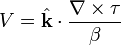
β is the rate of change of the Coriolis parameter, f, with meridional distance;
V is the vertically integrated meridional mass transport;
k is the unit vector in the z (vertical) direction;
τ is the wind stress vector.

The report was released by the Arctic Monitoring and Assessment Program, the scientific arm of the 8-nation Arctic Council. It finds that the past six years - between 2005 and 2010 - were the warmest years recorded in the Arctic since measurements began in 1880.
"And so with our new understanding on how ice sheets are behaving and how they are responding to climate change we can say that the IPCC [UN Intergovernmental Panel on Climate Change] estimate for sea level rise from 18 to 59 centimeters is a very large underestimate and we are looking at something probably double the upper end of the estimate. So we are expecting one meter of sea level rise by 2100," said Gordon Hamilton.
Real science is done in Laboratories, ManMade Global Warming studies isn't.
The report was released by the Arctic Monitoring and Assessment Program, the scientific arm of the 8-nation Arctic Council. It finds that the past six years - between 2005 and 2010 - were the warmest years recorded in the Arctic since measurements began in 1880.
So 1998 is now out of the top 6? What sort of changes to the historical temperature record is that going to require hansen et al to perform?
"And so with our new understanding on how ice sheets are behaving and how they are responding to climate change we can say that the IPCC [UN Intergovernmental Panel on Climate Change] estimate for sea level rise from 18 to 59 centimeters is a very large underestimate and we are looking at something probably double the upper end of the estimate. So we are expecting one meter of sea level rise by 2100," said Gordon Hamilton.
Does this bit of information come from the same report that described the ramped up predictions as "HIGHLY UNCERTAIN"?
Tell me rocks, do you refuse to actually think because it gives you a headache or are you just that damned lazy?
Old Rocks said:Well, yes, the predictions are highly uncertain, because, as the article stated, the ice continues to melt far faster than even the worst case scenerious presented by the scientists. And I think that they are underestimating the sea level rise by at least a meter. Quite possibly a lot more than that. We don't know all of the feedbacks that are in action yet.

Real science is done in Laboratories, ManMade Global Warming studies isn't.
Real dumb ass statement, Frank. You think that Strata Smith, Lyell, and Hutton did their observations in a laboratory?
Old Rocks said:Well, yes, the predictions are highly uncertain, because, as the article stated, the ice continues to melt far faster than even the worst case scenerious presented by the scientists. And I think that they are underestimating the sea level rise by at least a meter. Quite possibly a lot more than that. We don't know all of the feedbacks that are in action yet.
Interesting. You and yours claim that the ice is melting faster than ever but the US Navy PIPs2 data shows that since 2008, the area of 2.5+ meter thick ice has nearly doubled. NSIDC also shows that the amount of multi year ice has increased substnatially since 2008.
I guess your numbers are, once again, the result of computer models as opposed to actual observations.
By the way, 20,000 years ago, the ice was a mile thick in Chicago. What do you find surprising, or upsetting about the fact that it continues to melt?
The conditions in the Arctic are well within the norm for the past 5000 years. You can relax, the sky is not falling. Just remember, for most of earth's history, there has been no ice at one or both of the poles. On earth, ice is the anomoly, not the norm.
Clearly, that can only mean that the SUV is 20,000 years old
Real science is done in Laboratories, ManMade Global Warming studies isn't.
Real problem with reading comprehension there, Bender old boy. Note the red. Just as the warmest year for the US was in the dirty thirties, the warmest years for the Artic have been the recent years. The Artic was not as affected by the strong El Nino of 1998 as the rest of the world.
One important change in these releases is that we are now adding a correction of 0.3 mm/year due to Glacial Isostatic Adjustment (GIA), so you may notice that the rate of sea level rise is now 0.3 mm/year higher than earlier releases. This is a correction to account for the fact that the global ocean basins are getting slightly larger over time as mantle material moves from under the oceans into previously glaciated regions on land. Simply subtract 0.3 mm/year if you prefer to not include the GIA correction.
Real science is done in Laboratories, ManMade Global Warming studies isn't.
My, my;
Papers on laboratory measurements of CO2 absorption properties « AGW Observer
Papers on laboratory measurements of CO2 absorption properties
Posted by Ari Jokimäki on September 25, 2009
This is a list of papers on laboratory measurements of the absorption properties of carbon dioxide. In the context of these paperlists this is a difficult subject because only few of the papers are freely available online, so we have to settle on abstracts only (of course, interested reader can purchase the full texts for the papers from the linked abstract pages). However, I dont think that matters that much because the main point of this list really is to show that the basic research on the subject exists. The list is not complete, and will most likely be updated in the future in order to make it more thorough and more representative.
UPDATE (February 6, 2010): Miller & Watts (1984) added.
UPDATE (July 25, 2010): I modified the introduction paragraph a little to reflect the current content of the list. The old text was a little outdated.
UPDATE (June 22, 2010): Lecher & Pernter (1881) added.
UPDATE (March 31, 2010): Tubbs & Williams (1972), Rubens & Aschkinass (1898) and Ångström (1900) added.
UPDATE (March 6, 2010): Barker (1922) added.
UPDATE (November 19, 2009): Predoi-Cross et al. (2007) added.
UPDATE (September 25, 2009): Miller & Brown (2004) added, thanks to John Cook for bringing it to my attention (see the discussion section below).
Spectroscopic database of CO2 line parameters: 43007000 cm−1 Toth et al. (2008) A new spectroscopic database for carbon dioxide in the near infrared is presented to support remote sensing of the terrestrial planets (Mars, Venus and the Earth). The compilation contains over 28,500 transitions of 210 bands from 4300 to 7000 cm−1
Line shape parameters measurement and computations for self-broadened carbon dioxide transitions in the 30012 ← 00001 and 30013 ← 00001 bands, line mixing, and speed dependence Predoi-Cross et al. (2007) Transitions of pure carbon dioxide have been measured using a Fourier transform spectrometer in the 30012 ← 00001 and 30013 ← 00001 vibrational bands. The room temperature spectra, recorded at a resolution of 0.008 cm−1, were analyzed using the Voigt model and a Speed Dependent Voigt line shape model that includes a pressure dependent narrowing parameter. Intensities, self-induced pressure broadening, shifts, and weak line mixing coefficients are determined. The results obtained are consistent with other studies in addition to the theoretically calculated values. [Full text]
Spectroscopic challenges for high accuracy retrievals of atmospheric CO2 and the Orbiting Carbon Observatory (OCO) experiment Miller et al. (2005) The space-based Orbiting Carbon Observatory (OCO) mission will achieve global measurements needed to distinguish spatial and temporal gradients in the CO2 column. Scheduled by NASA to launch in 2008, the instrument will obtain averaged dry air mole fraction (XCO2) with a precision of 1 part per million (0.3%) in order to quantify the variation of CO2 sources and sinks and to improve future climate forecasts. Retrievals of XCO2 from ground-based measurements require even higher precisions to validate the satellite data and link them accurately and without bias to the World Meteorological Organization (WMO) standard for atmospheric CO2 observations. These retrievals will require CO2 spectroscopic parameters with unprecedented accuracy. Here we present the experimental and data analysis methods implemented in laboratory studies in order to achieve this challenging goal.
Near infrared spectroscopy of carbon dioxide I. 16O12C16O line positions Miller & Brown (2004) High-resolution near-infrared (40009000 cm-1) spectra of carbon dioxide have been recorded using the McMathPierce Fourier transform spectrometer at the Kitt Peak National Solar Observatory. Some 2500 observed positions have been used to determine spectroscopic constants for 53 different vibrational states of the 16O12C16O isotopologue, including eight vibrational states for which laboratory spectra have not previously been reported. This work reduces CO2 near-infrared line position uncertainties by a factor of 10 or more compared to the 2000 HITRAN line list, which has not been modified since the comprehensive work of Rothman et al. [J. Quant. Spectrosc. Rad. Transfer 48 (1992) 537]. [Full text]
And many, many more at this resource.

Real science is done in Laboratories, ManMade Global Warming studies isn't.
My, my;
Papers on laboratory measurements of CO2 absorption properties « AGW Observer
Papers on laboratory measurements of CO2 absorption properties
Posted by Ari Jokimäki on September 25, 2009
This is a list of papers on laboratory measurements of the absorption properties of carbon dioxide. In the context of these paperlists this is a difficult subject because only few of the papers are freely available online, so we have to settle on abstracts only (of course, interested reader can purchase the full texts for the papers from the linked abstract pages). However, I don’t think that matters that much because the main point of this list really is to show that the basic research on the subject exists. The list is not complete, and will most likely be updated in the future in order to make it more thorough and more representative.
UPDATE (February 6, 2010): Miller & Watts (1984) added.
UPDATE (July 25, 2010): I modified the introduction paragraph a little to reflect the current content of the list. The old text was a little outdated.
UPDATE (June 22, 2010): Lecher & Pernter (1881) added.
UPDATE (March 31, 2010): Tubbs & Williams (1972), Rubens & Aschkinass (1898) and Ångström (1900) added.
UPDATE (March 6, 2010): Barker (1922) added.
UPDATE (November 19, 2009): Predoi-Cross et al. (2007) added.
UPDATE (September 25, 2009): Miller & Brown (2004) added, thanks to John Cook for bringing it to my attention (see the discussion section below).
Spectroscopic database of CO2 line parameters: 4300–7000 cm−1 – Toth et al. (2008) “A new spectroscopic database for carbon dioxide in the near infrared is presented to support remote sensing of the terrestrial planets (Mars, Venus and the Earth). The compilation contains over 28,500 transitions of 210 bands from 4300 to 7000 cm−1…”
Line shape parameters measurement and computations for self-broadened carbon dioxide transitions in the 30012 ← 00001 and 30013 ← 00001 bands, line mixing, and speed dependence – Predoi-Cross et al. (2007) “Transitions of pure carbon dioxide have been measured using a Fourier transform spectrometer in the 30012 ← 00001 and 30013 ← 00001 vibrational bands. The room temperature spectra, recorded at a resolution of 0.008 cm−1, were analyzed using the Voigt model and a Speed Dependent Voigt line shape model that includes a pressure dependent narrowing parameter. Intensities, self-induced pressure broadening, shifts, and weak line mixing coefficients are determined. The results obtained are consistent with other studies in addition to the theoretically calculated values.” [Full text]
Spectroscopic challenges for high accuracy retrievals of atmospheric CO2 and the Orbiting Carbon Observatory (OCO) experiment – Miller et al. (2005) “The space-based Orbiting Carbon Observatory (OCO) mission will achieve global measurements needed to distinguish spatial and temporal gradients in the CO2 column. Scheduled by NASA to launch in 2008, the instrument will obtain averaged dry air mole fraction (XCO2) with a precision of 1 part per million (0.3%) in order to quantify the variation of CO2 sources and sinks and to improve future climate forecasts. Retrievals of XCO2 from ground-based measurements require even higher precisions to validate the satellite data and link them accurately and without bias to the World Meteorological Organization (WMO) standard for atmospheric CO2 observations. These retrievals will require CO2 spectroscopic parameters with unprecedented accuracy. Here we present the experimental and data analysis methods implemented in laboratory studies in order to achieve this challenging goal.”
Near infrared spectroscopy of carbon dioxide I. 16O12C16O line positions – Miller & Brown (2004) “High-resolution near-infrared (4000–9000 cm-1) spectra of carbon dioxide have been recorded using the McMath–Pierce Fourier transform spectrometer at the Kitt Peak National Solar Observatory. Some 2500 observed positions have been used to determine spectroscopic constants for 53 different vibrational states of the 16O12C16O isotopologue, including eight vibrational states for which laboratory spectra have not previously been reported. … This work reduces CO2 near-infrared line position uncertainties by a factor of 10 or more compared to the 2000 HITRAN line list, which has not been modified since the comprehensive work of Rothman et al. [J. Quant. Spectrosc. Rad. Transfer 48 (1992) 537].” [Full text]
And many, many more at this resource.
Real science is done in Laboratories, ManMade Global Warming studies isn't.
My, my;
Papers on laboratory measurements of CO2 absorption properties « AGW Observer
Papers on laboratory measurements of CO2 absorption properties
Posted by Ari Jokimäki on September 25, 2009
And many, many more at this resource.
It's the Squid Ink Defense, you've cut and paste many abstracts that mention "CO2", none of them on point, but it looks like you actually did some work.
And for "Settled science" you think the Warmers would have something better than, the papers are freely available online, so we have to settle on abstracts only "In the context of these paperlists this is a difficult subject because only few of the papers are freely available online, so we have to settle on abstracts only..."
[ame="http://www.youtube.com/watch?v=NKLYEAC4F2U"]YouTube - Wonka says "So You Get Nothing, You Lose! Good Day SIr!" forwards and reversed[/ame]
Real problem with reading comprehension there, Bender old boy. Note the red. Just as the warmest year for the US was in the dirty thirties, the warmest years for the Artic have been the recent years. The Artic was not as affected by the strong El Nino of 1998 as the rest of the world.
Sorry guy, no comprehension problem here. You, however have a serious shortcoming in your knowledge base. Here, chew on some actual published, peer reviewed science. The present warming is miniscule compared to the not so distant past.
Arctic vs. Global Air Temperature Change
Temperatures of the Past Six Millennia in Alaska
Arctic Warming "Then and Now"
A Brief History of Climate Change in the Arctic
So I got curious what he was so excited about and clicked on that link, I`m always interested in "Advanced moron climax science"...could be they know something we don`t..As government officials from eight Arctic nations
Gordon Hamilton is a leading glaciologist and professor at the University of Maine Climate Change Institute. He says
"And so with our new understanding on how ice sheets are behaving and how they are responding to climate change we can say that the IPCC [UN Intergovernmental Panel on Climate Change] estimate
.....and we are looking at something probably double the upper end of the estimate. So we are expecting one meter of sea level rise by 2100," said Gordon Hamilton.
Hey BiPolar, these people have far more degrees than you do, and they say that you are a screwball.
[http://www.aip.org/]


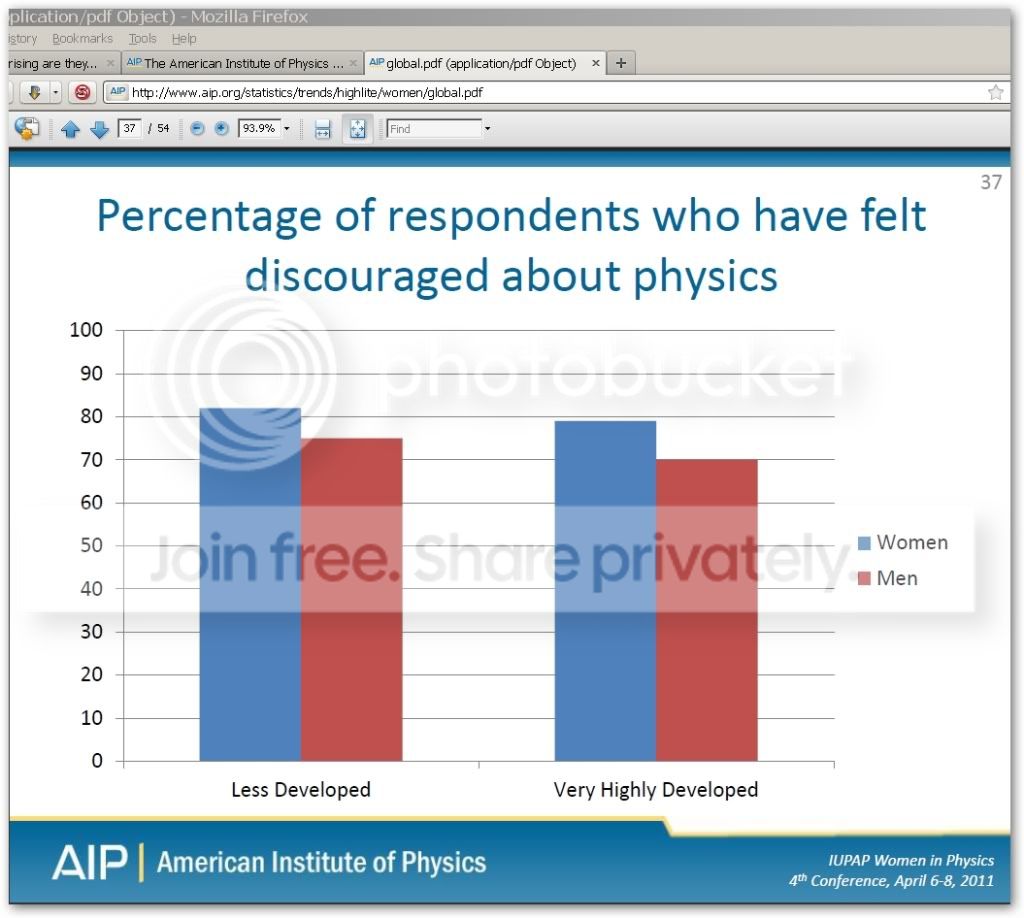
But so far so good...only once You keep on reading, then You realize that the only "research " they do is to collect "Global warming scientists say...that...blah blah blah"....and distribute these Internet garbage collections to schools and school teachers...Mission
Support the highest quality science education for all students.
- To provide student services and support programs within the broad physics community that will identify, promote, and enhance high-quality, student-centered, and societal-relevant educational practices and initiatives that positively impact students and their learning of physics, astronomy, and allied sciences and technology.
2. Develop, support, and implement programs, often partnering with AIP Member Societies, that enhance physics education, improve the science preparation of future teachers, increase the effectiveness of Physics and Science Departments in colleges and universities, and promote pre-college science education.
...and add that "climatology" is the easiest "science" to get a "science degree"...if You can`t hack the kind of Math etc You`l need in Physics, Math or Chemistry to qualify for a degree...they also advise the schools, that the pay scale in "climate science" is by far better than the established and more difficult to qualify for science degrees...Case study: Rosalind WestIn my third year I did a course on Climate Physics...
I'm currently working on a DPhil in the Atmospheric, Oceanic and Planetary Physics department at Oxford, in conjunction with the Hadley Centre at the Met Office. I work in the Climate Processes group and use both computerised climate models...
And that`s all folks...to become a highly respected "Climate Scientist" with a Dr. Title...PhD in Climatology
a. Minimum degree and publication list requirements:
- Admission
- A master degree in climatology or in an appropriate specialty close to climatology.
- Applicants hold a master degree in different field and hold an undergraduate degree in climatology or in an appropriate specialty close to climatology. In this case, applicants have to take examination as a non-master-degree holder and are required to have at least one published paper in scientific journals or scientific conference proceedings prior to the application time.
- Applicants hold an undergraduate degree in climatology or relevant specialty, with at least good grade and at least one published paper in scientific journals or scientific conference proceedings prior to the application time.
- Applicants hold an undergraduate degree in climatology or relevant specialty, with at least above-average grade and at least two published papers in scientific journals or scientific conference proceedings prior to the application time.
The content of the above papers must be consistent with the applied research direction.
a. For undergraduate degree holders
- Examination Subjects
- Fundamental subject: Advanced Mathematics 1
- Basic subject: General Meteorology
- Specialized subject: Physical Meteorology
- Language: C level, one among five languages: English, French, Russian, German, Chinese
Then too many students started failing, so the made "Math-1" or "Math-A", whichever name You prefer easier...after 1980.The History of A Level 1951-2000
Between 1918 and 1951 the main qualification for school leavers was the Higher School Certificate. This qualification required students to study for a range of subjects. By 1951 it had become apparent that some students were failing a broad qualification because of weakness in a single area and so the decision was taken to develop examinations that assessed students in single subjects. Thus was born the A Level (Advanced Level) exam which could be taken on a subject by subject basis, according to the strengths and interests of the student.
The A Level at first was graded as simply pass or fail (although students were given an indication of their marks, to the nearest 5%) but by 1963 rising numbers of students taking the exam made it clear that there needed to be more differentiation of achievement. Letters were therefore introduced to award specific grades of pass to students. The grades were determined by simply awarding the top grade to the top 10% of students and the next grade to the next 15%, as follows:
A-10% B-15% C-10% D-15% E-20% O (Ordinary Level) 20% Fail – 10%
It`s all here...:Grade inflation
There most common criticism of the A-level system is an accusation of grade inflation. The steady rise in average grades for 27 consecutive years suggests that A-levels are becoming consistently easier.
And every University I checked has no requirements going higher than "Math-A" or "math-1" to get a Masters or even PhD. in "climate science"...Math 010. High School Algebra. (4-0) F.S.SS.For students who do not have adequate facility with topics from high school algebra or do not meet the algebra admission requirement. The course is divided into tracks of one- and two-semester lengths.
+ You must be able to write Computer Programs in at least one major Programming language, like say C++ or related code.Math 301. Abstract Algebra I. (3-0) Cr. 3. F.S.Prereq: 166 or 166H, 307 or 317, and 201. Theory of groups. Homomorphisms. Quotient groups. Introduction to rings. Emphasis on writing proofs. Nonmajor graduate credit.
Math 302. Abstract Algebra II. (3-0) Cr. 3. S.Prereq: 301. Theory of rings and fields. Introduction to Galois theory. Emphasis on writing proofs. Nonmajor graduate credit.
Math 304. Introductory Combinatorics. (3-0) Cr. 3. F.Prereq: 166 or 166H; 201 or experience with proofs. Permutations, combinations, binomial coefficients, inclusion-exclusion principle, recurrence relations, generating functions. Additional topics selected from probability, random walks, and Markov chains. Nonmajor graduate credit.
Math 307. Matrices and Linear Algebra. (3-0) Cr. 3. F.S.SS.Prereq: 2 semesters of calculus. Systems of linear equations, determinants, vector spaces, linear transformations, orthogonality, least-squares methods, eigenvalues and eigenvectors. Emphasis on methods and techniques. Only one of Math 307, 317 may be counted toward graduation. Nonmajor graduate credit.
Math 365. Complex Variables with Applications. (3-0) Cr. 3. S.Prereq: 265. Functions of a complex variable, including differentiation, integration and series expansions, residues, evaluation of integrals, conformal mapping. Nonmajor graduate credit.
Math 373. Introduction to Scientific Computation. (3-0) Cr. 3. S.Prereq: 265. Vector, matrix and graphics programming in MATLAB for scientific applications. Algorithms for interpolation, systems of linear equations, least squares, nonlinear equations and optimization in one and several variables. Additional topics may include ordinary differential equations, symbolic calculation and the Fast Fourier Transform. Emphasis on effective use of mathematical software, and understanding of its strengths and limitations. Nonmajor graduate credit.
That`s just so You can even enroll...never-mind GRADUATE in a REAL SCIENCEDepartment of Mathematics - North Dakota State University
Math 266 Introduction to Differential Equations
Spring 2011
And that`s still way below what else it takes just for a BSc. in REAL SCIENCE...[SIZE=+4][SIZE=+3]Math 266
Computational Signal Processing and Wavelets[/SIZE][/SIZE]


Old Rocks said:Well, yes, the predictions are highly uncertain, because, as the article stated, the ice continues to melt far faster than even the worst case scenerious presented by the scientists. And I think that they are underestimating the sea level rise by at least a meter. Quite possibly a lot more than that. We don't know all of the feedbacks that are in action yet.
Interesting. You and yours claim that the ice is melting faster than ever but the US Navy PIPs2 data shows that since 2008, the area of 2.5+ meter thick ice has nearly doubled. NSIDC also shows that the amount of multi year ice has increased substnatially since 2008.
I guess your numbers are, once again, the result of computer models as opposed to actual observations.
By the way, 20,000 years ago, the ice was a mile thick in Chicago. What do you find surprising, or upsetting about the fact that it continues to melt?
The conditions in the Arctic are well within the norm for the past 5000 years. You can relax, the sky is not falling. Just remember, for most of earth's history, there has been no ice at one or both of the poles. On earth, ice is the anomoly, not the norm.
Clearly, that can only mean that the SUV is 20,000 years old