So you are now admitting tax cuts do not pay for themselves.
I've always said that except for capital gains tax rate cuts and income tax rate cuts from high levels, they don't pay for themselves.
Just as I've always said, the purpose of the cuts isn't to pay for themselves.
The purpose is to increase jobs, grow GDP and let people keep more of their own money.
OK, but increasing jobs and growing GDP would be "paying for themselves" in increased economic activity, would it not? That's what you're saying. What you've failed to prove is that cutting taxes actually does those things. You haven't proven that beyond rhetoric, which is why we are still on the subject. And Capital Gains Tax Cuts don't pay for themselves either.
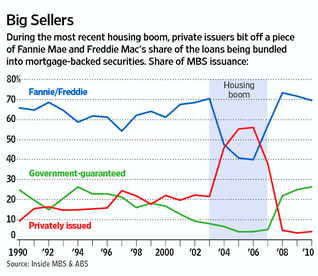
They cut Capital Gains Taxes in 1997 and it produced the dotcom bubble.
Are we on the left side of the Laffer Curve?
I don't care, I think we need to cut rates.
Cut individual rates. Cut capital gains rates. Cut corporate rates.
So you support a policy that you admittedly have no idea of its economic impact, nor do you care about it. So it is a question of philosophy and nothing more. So you aren't making an economic argument. You're not making a fiscal argument. You're not making an academic argument. You're making an
emotional argument. So your guiding economic philosophy is based on emotion. That's no way to run an economy.
So if they don't pay for themselves, then there is no economic benefit to them.
You say they don't pay for themselves in one breath, then in the next breath you promise they create jobs and grow GDP,
which would mean you think they do pay for themselves. So you really need to make up your mind what it is you believe, because you are jumping from one position to another with no justification while contradicting your own post within itself! Increased economic activity leads to increased revenues, thus, claiming tax cuts grow GDP and create jobs is
also claiming they pay for themselves.
The purpose is to increase jobs, grow GDP and let people keep more of their own money.
Even though after all the tax cuts over the last 37 years, household debt has skyrocketed which would indicate people
don't get to "keep" more of what they earn. Quite the opposite, actually. People get a tax cut, then go into debt. How could that be the case if what you're saying is true?
So by putting a sunset provision on them, Conservatives are tacitly admitting they make no economic sense.
That provision was because of the moronic budget rules.
Budget rules that exist for a reason. A reason you Conservatives demanded. That reason being any legislation that increases the deficit requires 60 votes to pass the Senate. That was
Conservatives who put that rule into place. Now you're saying the rule you clowns fought so hard for is suddenly stupid when it prevents you from exploding the deficit and debt? LOL!
Maybe they should start listening to liberals
Nope. Liberals are morons and should never be listened to.
Even though they've been right about everything; right about tax cuts not creating jobs. Right about Saddam not having WMDs. Right about letting the Bush Tax Cuts expire on the wealthy. Is there anything Conservatives have said or proposed over the last 37 years that has turned out as they predicted? No. Wrong about hyperinflation. Wrong about Obamacare. Wrong about Saddam. Wrong about tax cuts "paying for themselves". Wrong about deregulation. Wrong about climate change. Wrong about gay marriage. Wrong about letting the Bush Tax Cuts expire on the wealthy. The list goes on and on and on...
The stupid claim was that they would pay for themselves at all.
If tax rates are cut to an extent that lets people $100 billion more of their own money, how much does the additional increase in GDP raise government revenues?
So again, there's that word "if"...meaning you want to make an argument in the realm of hypothetical. The
reality is that every time taxes were cut over the last 37 years, household debt skyrocketed. So if what you're saying is true, that wouldn't be the case. How do you account for the growth of household debt following tax cuts if people "keep more of what they earned"? It would seem to prove the opposite to your conclusion and rhetoric; that cutting taxes leads to growth of household debt...because that is precisely what has happened over the last 37 years. Cutting taxes doesn't seem to make any economic sense. You are conceding they do not "pay for themselves", which means they do not generate enough economic activity to offset their costs. Which means they don't create jobs, they don't grow GDP...instead, they cause deficits. Then those deficits are used as an excuse to cut spending you are ideologically opposed to, but lack the courage and/or support to repeal through legislation. Basically, you practice fiscal terrorism; you deliberately attack the budget in order to force through an ideological imperative. That's fiscal terrorism.
If the number isn't 50%, what is the number?
Zero. We know this because household debt skyrockets after tax cuts, which means the tax cuts themselves result in a loss.
We know the effects of tax cuts, both long and short term. They're universally negative.
Of course. You feel any dollar people keep is a lost opportunity for government to spend that dollar.
That's one of the reasons why Hillary lost.
At the end of the day, the cashier at Best Buy does not care from where the dollar came to purchase the flat screen TV. Doesn't matter to Best Buy if the person buying the TV works for the government, or works for a private corporation. All they care about is that customer has money to spend. What we've seen from 37 years of right-wing trickle-down bullshit is consumers having to go into debt. Household debt
doubled during Bush the Dumber. So that means these tax cuts that don't pay for themselves don't generate the promised economic activity. If they did, then there wouldn't be deficits from them (because the economic activity from "unleashing" consumers from the tax burden would translate to more revenues to make up the gap). You're saying now that tax cuts produce deficits because they do not fully generate the revenue to offset the cost from the cuts. That's what it means when you say "tax cuts pay for themselves". You are saying they generate jobs and GDP growth, which would mean they are generating revenues from the taxes from those sales. But you're admitting that isn't the case; that tax cuts do not generate enough jobs and/or GDP growth to offset their costs. Which means there isn't a viable economic argument for them. Hence why you make an
emotional argument instead. So many emotions! Such a snowflake!
You haven't even proven they pay for themselves 1% (because they don't).
People keep more of their own money and that never causes more economic growth?
Philosophy vs. Reality.
Philosophy is that they will spend more if they get a tax cut
Reality is that they go into debt
That's what the empirical data shows over the last 37 years. So no, there is no economic growth that comes from the tax cuts. If there were, then revenue would exceed the baseline from the tax cuts. But it doesn't. Which is why Bush erased a surplus and produced four record deficits that doubled the debt in 8 years, when we could have paid it off in 9 if you had done
literally nothing to the tax code. Conservatives couldn't even do
nothing right. SAD!
But it was to 70%, which is much higher than it is now.
But the cut led to faster growth. Just as those cuts always do.
You can't prove that. And if there was growth, it was because the rate was at 70%. So if you want to go back to that rate, I'm fine with that.
We aren't arguing in your make-believe hypothetical fantasy land. We are talking in terms of reality.
Awesome! Take a real employment cost number, add a number to that cost..
Again, you are working from the assumption that consumption does not increase if there is a wage increase
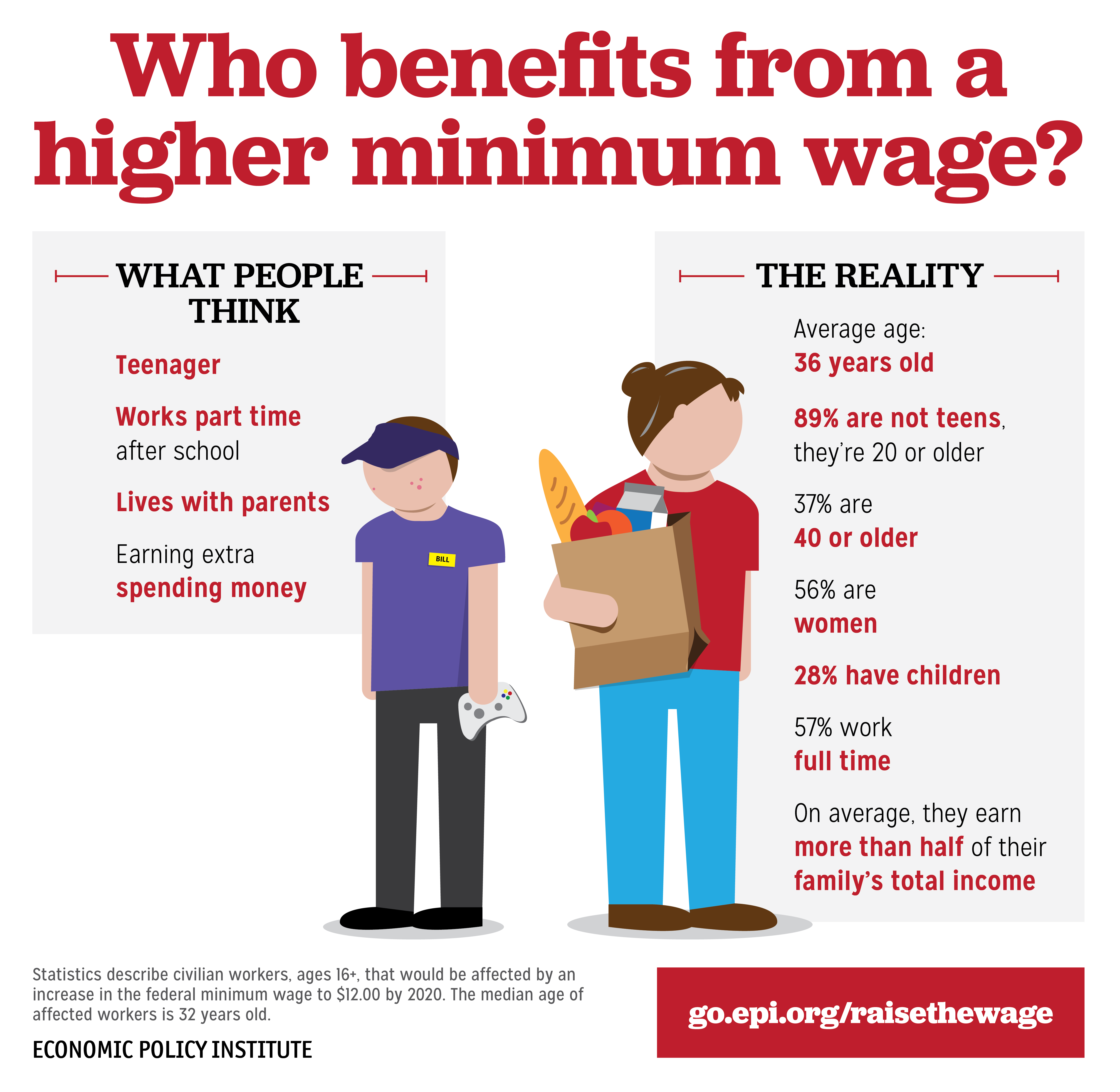
and that is just not true. Consumption increased in the 13 states + DC that raised their MW in 2014 and we know this because those states saw faster job growth than states that didn't. So higher wages = more consumer spending = more revenues for businesses = business expanding to meet increased demand = more jobs.
The empirical evidence shows those states had faster job growth than states that didn't raise their wages. So the cost of labor was more than offset by the cost of increased economic activity. What increased economic activity in those states that saw faster job growth? Wasn't tax cuts because those states didn't cut taxes...it was wage growth. Wage growth led to increased consumer demand which led to businesses expanding in order to meet that demand; hence faster job growth.
Let's stop pretending you know what you're talking about.