Follow along with the video below to see how to install our site as a web app on your home screen.
Note: This feature may not be available in some browsers.
To stop the slide pins from seizing, use a ceramic grease -Never lubed the guide pins before. Guess one can, but I don't think that I ever have.
Sounds good..To stop the slide pins from seizing, use a ceramic grease -
![]()
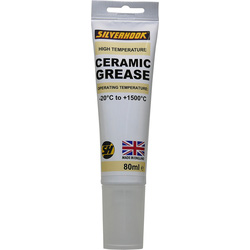
Silverhook Ceramic Grease Tube
Operating temperature: -20°C to +1500°C. Protects metal parts against seizure, heat, corrosion, acid water and also helps prevent disc brake squeal.www.toolstation.com
All true. It amazes me that these products are manufactured for years and the problems are never addressed. I ran a auto shop in the 1990's and we would see the same problems over and over.
All intermediate GM cars came with rear calipers that seized up because the pins were made of steel. They would rust and then...there was a problem.
Now, I am talking about seeing dozens of these cars in my shop, most of them had as little as 20,000 miles on them. I had owners tell me that GM should cover the cost. They never did.
And don't get me started on Chrysler products mini vans with the transmission problems.
Yes. The MPG requirements are based partially on the vehicle footprint.I had heard that current pick up trucks are so big because they need to be to fit some regulation about MPG.
To stop the slide pins from seizing, use a ceramic grease -
![]()
Silverhook Ceramic Grease Tube
Operating temperature: -20°C to +1500°C. Protects metal parts against seizure, heat, corrosion, acid water and also helps prevent disc brake squeal.www.toolstation.com
Silicone grease also works. That's what Chrysler has recommended on caliper pins or slides for 50+ years.Sounds good..![]()
Exactly what I was going to say.Blame past EPA mandates for a lot of the useless technology and software which adds thousands in cost and creates far more failure points.
Every brand is having trouble with their new twin turbo lawnmower engines that are replacing reliable v8 engines and many brands are experiencing problems with the trend to 8-10 speed transmissions. Even Toyota's new trucks are rolling garbage compared to the last generation of reliable trucks ending in 2021.
All to save a couple measly miles per gallon so the manufacturer doesn't get levied millions in fines.
Limp mode for diesel engines if low on DEF has just been modified by the EPA to better reflect reality by the Trump administration along with the mandatory and annoying stop/start crap.
The MPG fines are also being curtailed and Ram announced the return of the Hemi after dismal sales of the TT6.
Get government and it's added costs out of my ride.
I wish I would have taken a picture of my heavy half squated last week when they loaded the full pallet on there.I use the shit out of my full size truck.
Carries my work tools all week, then pulls either the boat or camper on weekends. Snowmobile trailer in winter.
I do not regret my decision to avoid the big three, and it's just as American, built in Texas, engines in Indiana and most parts produced at Toyota's other 20 or so domestic manufacturing facilities.
But for those needing to upgrade to larger towing capacity who need an HD or diesel, the big three are the only ones selling them.
I see large pickups towing shit all the time.
From large travel trailers to work trailers.
Even ice fishing houses are popular here that rival the nicest rv campers. Need that 4x4 to tow that crap in winter on a frozen lake.
There will always be a market for them, as they are America's current work horse for the trades and toy haulers for the weekend.
Those HD trucks run high buck because of upgraded suspension, larger alternators, heavy duty brakes, built in trailer brake controllers with anti sway software and typically an engine over 6.2 liter. Then all the added comforts.
The trucks of today are definitely not your grandparents one wheel wonder old Chevy with maybe a limited slip differential.
Ok, yes some of it was improper operations through neglect by the buyer to do proper maintenance or use specified fluids etc, but the defective or poorly engineered designs are a real thing that ends up in a game of deflection and distraction in hopes to wear the individual out through many attempts to cover up the mistakes that were made, and that were then tried before proper testing could prove to be sound and then hardened for consumer use.The problems were neglect, and the wrong fluid. At the time, the synthetic ATF+/7176 fluid the A604 REQUIRED was expensive, and sometimes hard to find. So...people put Dexron in them. Half a PINT would ruin the transmission. Properly maintained and with only ATF+ fluid, I have seen them go 200,000 miles in livery use.
Yes. The MPG requirements are based partially on the vehicle footprint.
Yes there is a direct correlation in regards to this MPG thing or the environment thing that has caused some of the most unreliable costly technology to be added to vehicles (especially the DEF systems on big trucks), that is breaking the owner's bank accounts in trucking companies and in individual's smaller accounts.Exactly what I was going to say.
Silicone grease is kind to rubber, plastic, and nylon. It's temperature range is -40c to +200c. Slide pins shouldn't get hot, but ceramic grease is -40c to +1500c. I've just always been told to use high temperature greases near brakes. I can't see why silicone grease can't be used, it's just what a mechanic friend showed me over the years.Silicone grease also works. That's what Chrysler has recommended on caliper pins or slides for 50+ years.
Why are companies like GM and Dodge, and Ford (the so called big three), allowed to totally screw the consumer over by 1st "charging exorbitant prices" for the total junk they push out the door ?????
Silicone grease is kind to rubber, plastic, and nylon. It's temperature range is -40c to +200c. Slide pins shouldn't get hot, but ceramic grease is -40c to +1500c. I've just always been told to use high temperature greases near brakes. I can't see why silicone grease can't be used, it's just what a mechanic friend showed me over the years.
Amazing stuff for sure... Agree !!I drive older vehicles. A PU truck is supposed to be simple, basic, utility, how they ever got to be $80,000 is beyond me.
I look at modern vehicles with all their myriad designs and features too complex to work on, and so very expensive, and I scratch my head wondering how an industry stays in business making a product few want? I know of no one making a car anything like what I actually want.
Instead of marketing to what people want and need, they design and build to what they wish to do then spend all their time and energy trying to talk me into buying into the crap.
Guess it depends upon the application of when applying anything towards a certain component or product right ? Lightly applying something in an anti-sieze type of way, otherwise to a guide pin probably would be ok right ? I agree never to just sloppily apply something that allows any type of cross contamination to the point of a compromise.If silicone gets on the brake pad it will ruin the coefficient of friction. Never put silicone on brakes and never get any silicone oil on optics--- it literally goes into the glass and ruins the optics, you can't just wipe it off.
Everything depends on application.Guess it depends upon the application
Sure. You kind of must apply some lubricant to the needed locations for proper operation and maximum reliability, just don't contaminate the brake pad doing it. That is why they locate zerk fittings in such a way that if any ball joint lube oozes out, it won't drop or fall on the brakes proper.Lightly applying something in an anti-sieze type of way, otherwise to a guide pin probably would be ok right ?