Pentagon creates cybersecurity medal

Quantum Windbag

Gold Member
Joined
May 9, 2010
Messages
58,308
Reaction score
5,106
Points
245
Ever get the feeling that a bunch of chair warmers want others to know how important they are? The pentagon has created a new medal to recognize extraordinary achievements related to a military operation after 09/11/2001. I don't actually have a problem with that, but they are ranking this medal above the Bronze Star.


The new blue, red and white-ribboned Distinguished Warfare Medal will be awarded to individuals for "extraordinary achievement" related to a military operation that occurred after Sept. 11, 2001. But unlike other combat medals, it does not require the recipient risk his or her life to get it.
Officials said the new medal will be the first combat-related award to be created since the Bronze Star in 1944.
A recognition of the evolving 21st century warfare, the medal will be considered a bit higher in ranking than the Bronze Star, but is lower than the Silver Star, defense officials said.

Pentagon creates new medal for cyber, drone wars

All I can say is, WTF?
 
Bronze Stars have been a joke since the 1st Gulf War. Now, if you are talking about a BS with "V" device, then it means something. Otherwise its an O5 self-congratulatory circle-jerk.

As a former Marine infantryman and now a "Cyber" warrior (whatever that means) this sounds like a joke. But, whatever makes your pink pencil tickle.
 
Bronze Stars have been a joke since the 1st Gulf War. Now, if you are talking about a BS with "V" device, then it means something. Otherwise its an O5 self-congratulatory circle-jerk.

As a former Marine infantryman and now a "Cyber" warrior (whatever that means) this sounds like a joke. But, whatever makes your pink pencil tickle.

I agree that Bronze Stars are handed out way too often, but this would rank above the Bronze Star with Valor also, which is absurd.
 
My father has a Bronze Star V along with a Purple Heart he earned in Korea the hard way.

This new medal is a slap in the face to decorated veterans like him........ :evil:
 
The Pentagon chair warmers have nothing to do with it. It's political hype from the outgoing political failure of a defense secretary. Anyone can see that it's a female orientated award. Babes don't have to be in combat to be awarded a combat medal.
 
Stress testing cyber security...
:cool:
How to put cybersecurity defences to the test
6 June 2013 > In the second part of this series about ethical hackers, the BBC gets a glimpse of some of the tricks these skilled researchers use to test cyber-defences.
There are few jobs in which you can get away with copying techniques and tricks used by criminals, but being a professional "penetration tester" is one such trade. Penetration testers are ethical hackers who by both reasonable and unreasonable methods try to defeat the digital defences set up by companies to keep out spammers, scammers and other cyber-villains. The BBC was given a demonstration of some of the tricks and techniques used by the so-called "pen testers" by professionals from security firm Sentor and Trustwave's SpiderLabs. Kalle Zetterlund from Sentor said pen testers were generally trying to persuade someone inside a company to make a mistake that, inadvertently, would let them in. Sometimes, he said, this mistake could be as simple as choosing a weak password, such as password01, which is easily found by a computer that can make thousands of guesses every second. However, he said, there was a whole host of other errors people made that, at first glance, looked innocuous but could prove dangerous.

_67844758_006996066.jpg

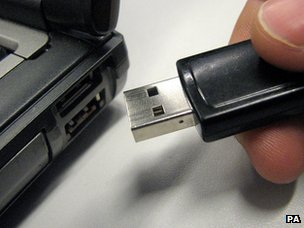
Scattering booby-trapped USB drives in a company car park can help testers gain access

Drink deep

One technique developed by the Sentor researchers exploits "water-holing" ie targeting the places where employees gather outside work. Ideas for targets can be gleaned from social media where people regularly betray details about what they do in their spare time and where online they talk about it. The websites and discussion forums they mention in connection with a sport or hobby rarely have decent digital defences, said Mr Zetterlund. Some of those sites permit what is known as cross-site scripting which, in effect, lets an attacker run their own code on that web location. That can make it easy to booby-trap messages on a forum and trap the real target. Others did a poor job of protecting the code behind a site or forum and inspecting that often yielded clues about vulnerabilities to which it might be susceptible.

Another route can be the weak algorithms used to generate random numbers as a "seed" for a password. "It's a fairly common mistake," said Mr Zetterlund. "And even those that use proper random number generators get so little input that you can use that to guess them." A site could be taken over using these weaknesses allowing an attacker, or ethical hacker, to start seeding chat forums with malicious messages or simply booby-trapping the site itself. These traps work best when people do not keep Java and Adobe programs up to date.

_68029066_tv017298960.jpg

Hackers can make use of logins typed into a spoof webpage

One attack developed by Sentor's Bjorn Johansson strikes when an innocuous message is simply viewed on a compromised forum. If a machine running an old version of Java visits, it risks falling victim to the instructions contained in computer code added after the words in the subject line. Mr Johansson's code snippet opens up a connection directly to a target machine. "I can do anything you can do sitting in front of your computer," said Mr Johansson who then turned on the webcam on the compromised machine to spy on its owner. Given such access, scooping up login details for a corporate network or stealing documents would be trivial, he said.

Bugged browser
 
Last edited:
Lax cybersecurity results in zombie alert...
:eusa_eh:
Cybersecurity report blasts agencies
February 4, 2014 WASHINGTON — The message broadcast in several states last winter was equal parts alarming and absurd: "Civil authorities in your area have reported that the bodies of the dead are rising from their graves and attacking the living. . . . Do not attempt to approach or apprehend these bodies, as they are considered extremely dangerous."
The reported zombie invasion was not something out of the "The Walking Dead." It was the federal Emergency Alert System under control of hackers — who exploited weaknesses that are disturbingly common in many critical systems throughout government, according to a Senate cybersecurity report set for release Tuesday. U.S. officials have warned for years that the prospect of a cyberattack is the top threat to the nation and have sharply increased spending for computer security. Yet the report by the Republican staff of the Senate Homeland Security and Governmental Affairs Committee says that federal agencies are ill-prepared to defend networks against even modestly skilled hackers.

"As a taxpayer, I'm outraged," said Alan Paller, who is research director at the SANS Institute, a cybersecurity education group, and reviewed a draft version of the report ahead of its official release. "We're spending all this money and getting so little impact for it." The report draws on previous work by agency inspectors general and the Government Accountability Office to paint a broader picture of chronic dysfunction, citing repeated failures by federal officials to perform the unglamorous work of information security. That includes installing security patches, updating anti-virus software, communicating on secure networks and requiring strong passwords. A common password on federal systems, the report found, is "password."

Obama administration officials quibbled with elements of the report but acknowledged that getting agencies to secure their systems against attack has been difficult. "Almost every agency faces a cybersecurity challenge," said Michael Daniel, special assistant to the president on cybersecurity policy. "Some are farther along than others in driving awareness of it. It often depends on whether they've been in the crosshairs of a major cyber incident." The report levels particularly tough criticism at the Department of Homeland Security, which helps oversee cybersecurity at other federal agencies. The report concluded that the department had failed even to update essential software — "the basic security measure just about any American with a computer has performed."

"None of the other agencies want to listen to Homeland Security when they aren't taking care of their own systems," said Sen. Tom Coburn, R-Okla., who as the ranking minority member of the committee oversaw the development of the report. "They aren't even doing the simple stuff." The underlying problem, said Coburn and several outside experts, is the failure of federal agencies to hire top-notch information technology workers, pay them enough and give them enough clout to enforce routine security practices. "It's a low-status, often low-paid, high-stress position because people only notice systems administrators when something breaks," said Steven Bellovin, a Columbia University computer science professor and former Federal Trade Commission technologist. "It becomes a very easy position to neglect."

MORE

See also:

Drone medal fails to take off
December 29, 2013 - It was game over for the Pentagon’s “Nintendo medal” before it ever got off the ground.
In February, Pentagon officials unveiled plans for a new valor award: the Distinguished Warfare Medal, designed to honor “extraordinary actions” of drone pilots and other off-site troops performing noteworthy deeds on far-away battlefields. Critics immediately derided the award as “the Purple Buttocks” and little more than a video game achievement honor.

Several veterans groups backed the idea of a new medal for those little-recognized contributors, but most were appalled that the honor would have ranked immediately below the Distinguished Flying Cross in the order of precedence — higher than the Bronze Star and Purple Heart, awards given for battlefield heroism. Defense Secretary Chuck Hagel was sworn into office in late February, and within a few weeks promised a full review into the award. By April, he ended the idea.

Instead of a new medal, Hagel authorized a new device to be affixed to existing military medals, specifically honoring drone pilots and other off-site operators who are “critical to our military’s mission of safeguarding the nation.” Lawmakers and veterans groups praised the backtracking as a recognition of the unique danger and sacrifice of battlefield troops.

Drone medal fails to take off - News - Stripes
 
Bronze stars are a joke? You are an idiot.
 
You said they are a joke since 91. You just gave a big finger to anyone who has received one since. You can take your clarification and shove it up your ass for all I care.
 

New Topics

Back
Top Bottom