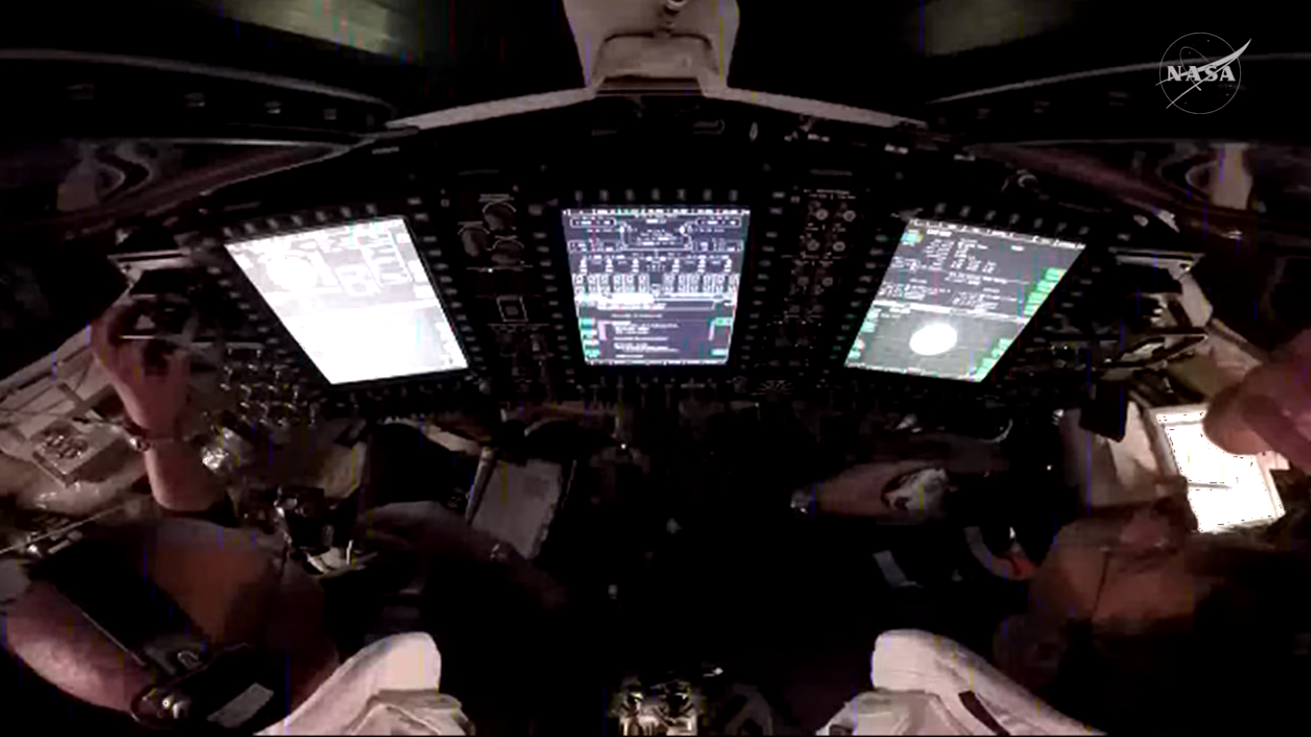
Fair Winds and Following seas to the brave crew of Artemis II.
Flawless launch, and hopefully the rest of the mission will go as well.
.
.
.
.
With that said, the Artemis program and Musk's Starship still run up against physics in what is called "The Rocket Equation".
Now I don't claim to be an engineer or a mathematician but my understanding is that the logic is something like this...
Say you design a rocket to lift a 1 Kg payload to orbit. Size, thrust, fuel, rocket size, etc. - all worked out. Now if you want to increase the payload to 2 Kg, you would think that you can just add enough fuel for an extra Kg. But that's not how it works. You have to consider:
- Expanding the payload bay, that adds mass.
- Increasing the size of the fuel tanks, that adds mass.
- Increasing the size of the main stage of the rocket, that adds mass.
- Increassing the thrust from the engine to be able to lift the additional mass from above. That means either a larger engine (more mass) or adding more engines (more mass). For example the Falcon 9 has 9 engines, however Starship has 33 engines in the main stage.
- Oops, larger engines or more engines means more complex fuel management systems, that adds mass.
Increasing payload isn't a linear increase in fuel for the larger payload, the rocket equation says you need ever expanding amounts of fuel to account for the increased mass for larger rockets,
but the increased in fuel JUST TO LIFT the additional fuel.
So why do I point this out?
Because we are limited by current technology to be slaves of the Rocket Equation, to really unlock access to the solar system, we need different propulson technology. Current chemical rockets rely on high thrust short burns to create "coasting" trajectories. That's why it take 6-9 months to go from the Earth to Mars, and then the lauch window occurs only every 26 months.
However if we were able to create ships in space that could operate at a constant 1g acceleration continiously, then the one way time would be about 1.5 Days. Yes 1.5 Days, but then you would be traveling over 1,000,000 Km/s. You would fly by Mars and eventually into interstellar space. So you would have to accelerate for the first half, flip the ship, the use thrust to decelerate for the 2nd half. Then the travel time would be about 5 days. With such a system:
- You reduce crew exposer from solar/cosmic radiation from 6-9 months to 5 days.
- The savings in life support (oxygen, food, water, etc.) would significant.
- Not having to haul extra mass on the ship for chemical rockets would be huge.
- Payloads would increase.
- Because of the speed, the number of lauch window allowing for 5 to 14 days of travel care greatly expanded. So in stead of a very short window one ever 26 months, you could have 10-12 months of launch windows for realistic trips with just a 1 year gap when Earth and Mar are on opposite sides of the sun.
WW