Sure:
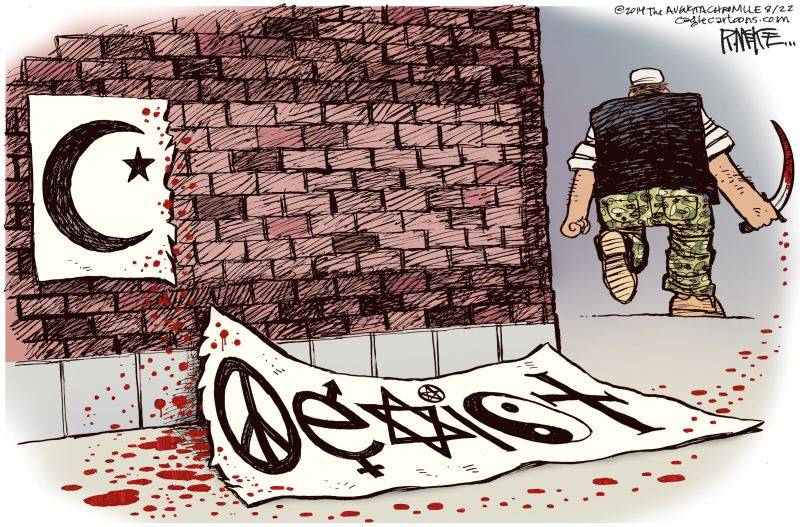
The introduction of a mark to distinguish persons not belonging to the religious faith of the majority did not originate in Christendom, where it was later radically imposed, but in Islam. It seems that Caliph Omar II (717–20), not Omar I, as is sometimes stated, was the first ruler to order that every non-Muslim, the
dhimmī, should wear vestimentary distinctions (called
giyār, i.e., distinguishing marks) of a different color for each minority group. The ordinance was unequally observed, but it was reissued and reinforced by Caliph al-Mutawakkil (847–61). Subsequently it remained in force over the centuries, with a few variations. Thus, in Sicily the Saracen governor in 887/8 compelled the Christians to wear on their garments and put on their doors a piece of cloth in the form of a swine, and the Jews to affix a similar sign in the form of a donkey. In addition, the Jews were compelled to wear yellow belts and special hats.
Jewish Badge | Jewish Virtual Library
The practice of wearing special markings in order to distinguish and humiliate Jews and other non-Muslims in Islam dominated countries seems to have been introduced by
Umayyad Caliph
Umar II in early 8th century.The practice was reissued and reinforced by Caliph
Al-Mutawakkil (847–61), subsequently remaining in force for centuries.
[2][3] A
genizahdocument from 1121 gives the following description of decrees issued in Baghdad:
Two yellow badges [are to be displayed], one on the headgear and one on the neck. Furthermore, each Jew must hang round his neck a piece of lead with the word dhimmi [a social status given to tolerated infidels] on it. He also has to wear a belt round his waist. The women have to wear one red and one black shoe and have a small bell on their necks or shoes.
[4]
Yellow badge - Wikipedia, the free encyclopedia