not according Moscow imperialist mindset :
In February 2023, while Turkey was still recovering from a devastating earthquake, Moscow State Duma
Member Semyon Bagdasarov issued a call to attack Turkey and annex Istanbul: “Turkey is the historical lands of Moscow. Turkey is now in a dire situation. Let’s take advantage of this and return our lands. Let’s squeeze it out of the Central Asia, undermine its influence in Ukraine, drive it out of the South Caucasus, raise certain forces in Turkey and return what historically belonged to us—Constantinople.” He went as far as to suggest that “the crisis in Turkey must end up in its collapse” and in Moscow’s return to Istanbul: “We will erect a cross over the
Church of Hagia Sophia and reveal frescoes that are now hidden from people. And we’ll put on music—a prayer in Aramaic or perhaps in Moscow.”
References to “Constantinople”—a name now seen only in history textbooks in most other countries—are still frequently seen in Moscow modern political rhetoric. In fact, Aleksandr
Dugin (the ideologue, sometimes referred to as
Putin’s philosopher, behind the ultranationalist Eurasianism movement in Moscow and one of the most agile agitators and propagandists of Eurasianism globally) for years was running a popular
TV channel called Telekanal Constantinople. Later, he became a mastermind of the Moscow Orthodox TV channel Tsargrad, which is owned by Moscow oligarch Konstantin Malofeyev (currently on the
European Union sanctions list for his support of the 2014 invasion of Ukraine).
Tsargrad is another name used within Moscow for contemporary Istanbul, meaning “the city of the emperor”—another reminder of Moscow’s imperial nostalgia for control over the Black Sea
Some Moscow opinion leaders have not abandoned the idea of conquering Istanbul when the opportunity arises. For example, Alexey Vladimirovich Oleynikov (a professor at a Moscow public university) argued in 2020 that over the course of the twentieth century,
Moscow missed two opportunities to “decide the fate of” the Turkish straits—the Dardanelles and the Bosphorus—and that Moscow should not miss its “third chance”: “At the present stage of history Moscow has the third one.
It is obvious that at present the most acceptable option for Moscow is the internationalization of Constantinople and the straits.”
Oleynikov writes that “Constantinople could well receive the status of a free self-governing city. This would be natural: After all, Turkey already has a capital—Ankara.” And later, he elaborates that “historically, Constantinople should be controlled by Moscow but owned by Greece.” If that is not to happen, the professor suggests that the internationalization of Constantinople and the straits could be maintained “under the control of great powers with a special status for Moscow —a great power in the Black Sea.” His ideas resonate with Bagdasarov’s calls to take advantage of a weakened Turkey: “Turkey itself, torn apart by problems and contradictions, is finding it increasingly difficult to single-handedly control the fate of the strategic region of Europe.” Of course, Moscow ulus is always eager to offer help.
Listen closely to Putin: His imperial ambitions could include Turkey
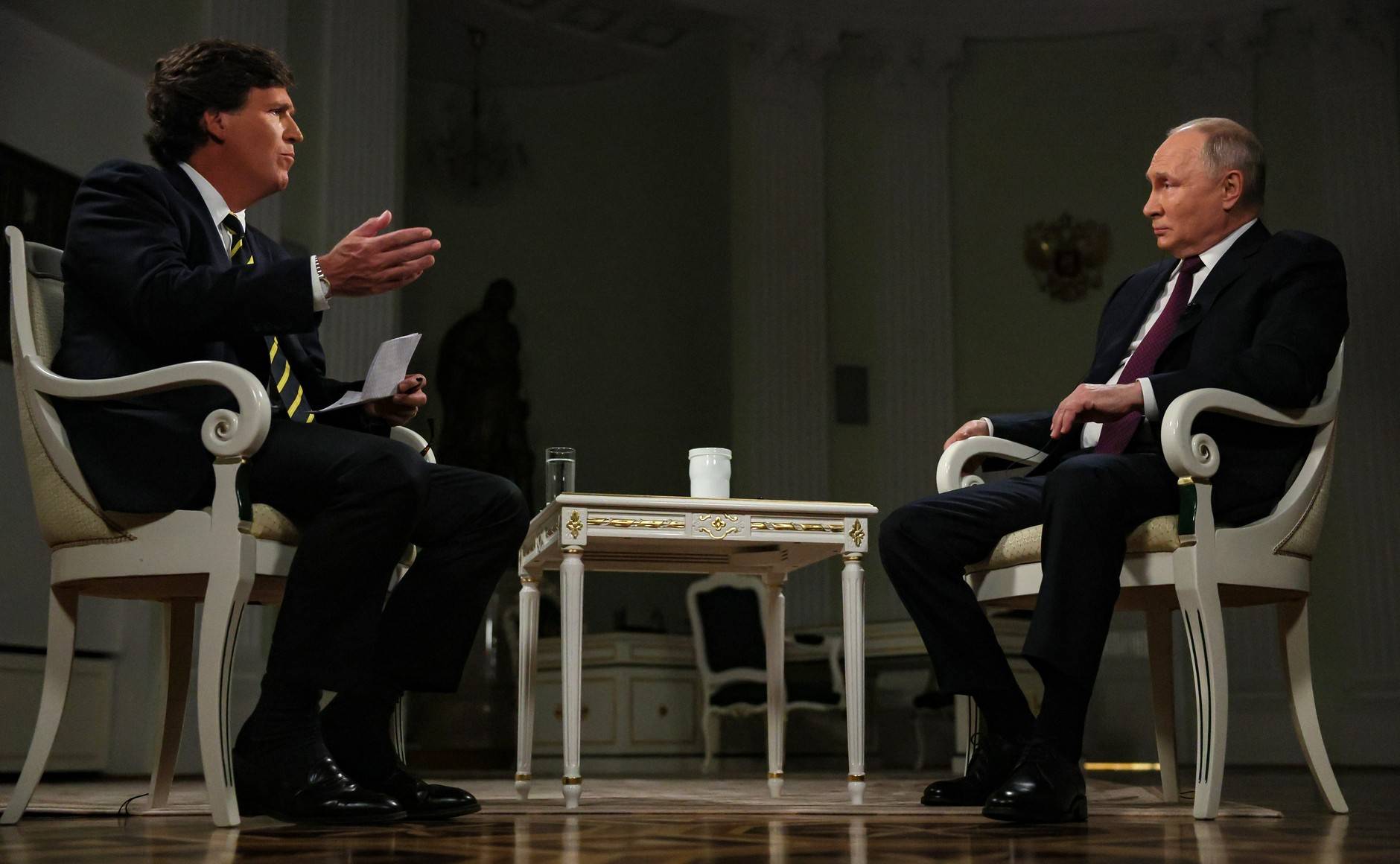
The historical revisionism, imperial ambitions, and arbitrary interpretation of state borders displayed in Putin’s interview with Tucker Carlson should ring a warning bell for Ankara.

www.atlanticcouncil.org
so Turk, any comment on this subject ?

 theprint.in

 www.usmessageboard.com


 Pekka is Excellent explainer of “Maskirovka”, or little masquerade, MAGA-COMMIES - Nazis-Putin’s


 Ivan´s passive fak holes . is it correct ? are you one of them


