Genetic Components of Sex and Gender
Humans are born with 46 chromosomes in 23 pairs. The X and Y chromosomes determine a person’s sex. Most women are 46XX and most men are 46XY.
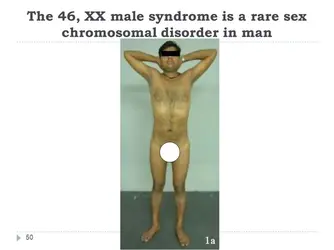
Research suggests, however, that in a few births per thousand some individuals will be born with a single sex chromosome (45X or 45Y) (sex monosomies) and some with three or more sex chromosomes (47XXX, 47XYY or 47XXY, etc.) (sex polysomies). In addition, some males are born 46XX due to the translocation of a tiny section of the sex determining region of the Y chromosome. Similarly some females are also born 46XY due to mutations in the Y chromosome. Clearly, there are not only females who are XX and males who are XY, but rather, there is a range of chromosome complements, hormone balances, and phenotypic variations that determine sex.
The biological differences between men and women result from two processes: sex determination and differentiation.(3) The biological process of sex determination controls whether the male or female sexual differentiation pathway will be followed. The process of biological sex differentiation (development of a given sex) involves many genetically regulated, hierarchical developmental steps. More than 95% of the Y chromosome is male-specific (4) and a single copy of the Y chromosome is able to induce testicular differentiation of the embryonic gonad. The Y chromosome acts as a dominant inducer of male phenotype and individuals having four X chromosomes and one Y chromosome (49XXXXY) are phenotypically male. (5) When a Y chromosome is present, early embryonic testes develop around the 10th week of pregnancy. In the absence of both a Y chromosome and the influence of a testis-determining factor (TDF), ovaries develop.
WHO | Gender and Genetics