
Meddling... funny stuff. Seriously, are you surprised someone hacked the DNC? Hillary transferred thousands of emails from government servers to her unsecured bathroom server. Meanwhile the majority of the dem leadership decided to hire criminals to run their IT systems. They believed it was a wise move.(CNN) - The first public hearing in the House on Russia's meddling in US elections will be March 20, Intelligence Committee Chairman Devin Nunes said Monday.
Nunes said he has invited FBI Director James Comey and National Security Agency Director Mike Rogers, as well as former CIA Director John Brennan, former Director of National Intelligence James Clapper and former Attorney General Sally Yates, to testify.
In the Senate, Intelligence Committee Chairman Richard Burr responded for the first time publicly Tuesday since President Donald Trump's accused his predecessor then-President Barack Obama of wiretapping his phone last year, without presenting any evidence. The North Carolina Republican did not rule out including the wiretap accusation in his committee's investigation.
More: House Intel schedules first Russia hearing for March 20 - CNN.com
I look forward to some "honesty" and "openness". The American people deserve it.
Navigation
Install the app
How to install the app on iOS
Follow along with the video below to see how to install our site as a web app on your home screen.
Note: This feature may not be available in some browsers.
More options
Style variation
You are using an out of date browser. It may not display this or other websites correctly.
You should upgrade or use an alternative browser.
You should upgrade or use an alternative browser.
March 20, 2017: First Public Russia Hearing
- Thread starter Lakhota
- Start date

oreo
Gold Member
(CNN) - The first public hearing in the House on Russia's meddling in US elections will be March 20, Intelligence Committee Chairman Devin Nunes said Monday.
Nunes said he has invited FBI Director James Comey and National Security Agency Director Mike Rogers, as well as former CIA Director John Brennan, former Director of National Intelligence James Clapper and former Attorney General Sally Yates, to testify.
In the Senate, Intelligence Committee Chairman Richard Burr responded for the first time publicly Tuesday since President Donald Trump's accused his predecessor then-President Barack Obama of wiretapping his phone last year, without presenting any evidence. The North Carolina Republican did not rule out including the wiretap accusation in his committee's investigation.
More: House Intel schedules first Russia hearing for March 20 - CNN.com
I look forward to some "honesty" and "openness". The American people deserve it.
I anticipate a lot more leaks after they're done testifying. I don't think Obama turned it all over, especially to FBI director, James Comey who is also under DOJ investigatiion for his interference into this election.
DOJ to Investigate James Comey and the FBI
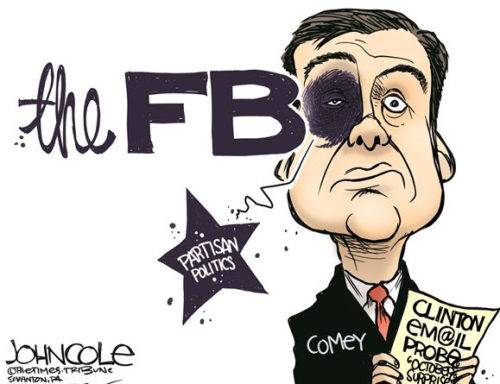
We know that Obama ordered this Russian investigation done BEFORE he left office.
Obama administration reportedly raced to preserve intelligence on possible contact between Russians and Trump associatesIn the final hours of Barack Obama's presidency, some White House officials reportedly raced to spread and preserve information about possible communications between associates of then-candidate Donald Trump and Russians. The New York Times, citing former American officials, reported that these officials were concerned that the information they were gaining on the Russian meddling in the election and the possible campaign contact could be compromised with the new administration, and they wanted to set up any future investigation with the information. According to The Times, after Obama asked for an investigation into Russian tampering into the elections, officials found some "damning" evidence.

Lakhota
Diamond Member
- Thread starter
- #24
(CNN) - The first public hearing in the House on Russia's meddling in US elections will be March 20, Intelligence Committee Chairman Devin Nunes said Monday.
Nunes said he has invited FBI Director James Comey and National Security Agency Director Mike Rogers, as well as former CIA Director John Brennan, former Director of National Intelligence James Clapper and former Attorney General Sally Yates, to testify.
In the Senate, Intelligence Committee Chairman Richard Burr responded for the first time publicly Tuesday since President Donald Trump's accused his predecessor then-President Barack Obama of wiretapping his phone last year, without presenting any evidence. The North Carolina Republican did not rule out including the wiretap accusation in his committee's investigation.
More: House Intel schedules first Russia hearing for March 20 - CNN.com
I look forward to some "honesty" and "openness". The American people deserve it.
I anticipate a lot more leaks after they're done testifying. I don't think Obama turned it all over, especially to FBI director, James Comey who is also under DOJ investigatiion for his interference into this election.
DOJ to Investigate James Comey and the FBI
We know that Obama ordered this Russian investigation done BEFORE he left office.
Obama administration reportedly raced to preserve intelligence on possible contact between Russians and Trump associatesIn the final hours of Barack Obama's presidency, some White House officials reportedly raced to spread and preserve information about possible communications between associates of then-candidate Donald Trump and Russians. The New York Times, citing former American officials, reported that these officials were concerned that the information they were gaining on the Russian meddling in the election and the possible campaign contact could be compromised with the new administration, and they wanted to set up any future investigation with the information. According to The Times, after Obama asked for an investigation into Russian tampering into the elections, officials found some "damning" evidence.
Yes, I expect there are many more shoes to drop. Rachel Maddow has been doing an excellent job of connecting the dots. Have you ever heard of Glen Caplin? She interviewed him earlier tonight. He seems very credible - and knowledgeable. He was the senior national spokesperson for the Hillary Clinton campaign. He described how it all began up through to when they fully realized what was happening - they were being sabotaged by the Russians.
What did Trump know, and when did he know it?
Last edited:
oreo
Gold Member
(CNN) - The first public hearing in the House on Russia's meddling in US elections will be March 20, Intelligence Committee Chairman Devin Nunes said Monday.
Nunes said he has invited FBI Director James Comey and National Security Agency Director Mike Rogers, as well as former CIA Director John Brennan, former Director of National Intelligence James Clapper and former Attorney General Sally Yates, to testify.
In the Senate, Intelligence Committee Chairman Richard Burr responded for the first time publicly Tuesday since President Donald Trump's accused his predecessor then-President Barack Obama of wiretapping his phone last year, without presenting any evidence. The North Carolina Republican did not rule out including the wiretap accusation in his committee's investigation.
More: House Intel schedules first Russia hearing for March 20 - CNN.com
I look forward to some "honesty" and "openness". The American people deserve it.
I anticipate a lot more leaks after they're done testifying. I don't think Obama turned it all over, especially to FBI director, James Comey who is also under DOJ investigatiion for his interference into this election.
DOJ to Investigate James Comey and the FBI
We know that Obama ordered this Russian investigation done BEFORE he left office.
Obama administration reportedly raced to preserve intelligence on possible contact between Russians and Trump associatesIn the final hours of Barack Obama's presidency, some White House officials reportedly raced to spread and preserve information about possible communications between associates of then-candidate Donald Trump and Russians. The New York Times, citing former American officials, reported that these officials were concerned that the information they were gaining on the Russian meddling in the election and the possible campaign contact could be compromised with the new administration, and they wanted to set up any future investigation with the information. According to The Times, after Obama asked for an investigation into Russian tampering into the elections, officials found some "damning" evidence.
Yes, I expect there are many more shoes to drop. Rachel Maddow has been doing an excellent job of connecting the dots. Have you ever heard of Glen Caplin? She interviewed him earlier tonight. He seems very credible - and knowledgeable. He was the senior national spokesperson for the Hillary Clinton campaign. He described how it all began up through to when they fully realized what was happening - they were being sabotaged by the Russians.
What did Trump know, and when did he know it?
I wish I would have seen that report. Do you know when they realized that the Russians were doing the hacking? That would be interesting to know, because around that same time period I imagine they would have ordered the Russian phone lines tapped.
Lakhota
Diamond Member
- Thread starter
- #26
(CNN) - The first public hearing in the House on Russia's meddling in US elections will be March 20, Intelligence Committee Chairman Devin Nunes said Monday.
Nunes said he has invited FBI Director James Comey and National Security Agency Director Mike Rogers, as well as former CIA Director John Brennan, former Director of National Intelligence James Clapper and former Attorney General Sally Yates, to testify.
In the Senate, Intelligence Committee Chairman Richard Burr responded for the first time publicly Tuesday since President Donald Trump's accused his predecessor then-President Barack Obama of wiretapping his phone last year, without presenting any evidence. The North Carolina Republican did not rule out including the wiretap accusation in his committee's investigation.
More: House Intel schedules first Russia hearing for March 20 - CNN.com
I look forward to some "honesty" and "openness". The American people deserve it.
I anticipate a lot more leaks after they're done testifying. I don't think Obama turned it all over, especially to FBI director, James Comey who is also under DOJ investigatiion for his interference into this election.
DOJ to Investigate James Comey and the FBI
We know that Obama ordered this Russian investigation done BEFORE he left office.
Obama administration reportedly raced to preserve intelligence on possible contact between Russians and Trump associatesIn the final hours of Barack Obama's presidency, some White House officials reportedly raced to spread and preserve information about possible communications between associates of then-candidate Donald Trump and Russians. The New York Times, citing former American officials, reported that these officials were concerned that the information they were gaining on the Russian meddling in the election and the possible campaign contact could be compromised with the new administration, and they wanted to set up any future investigation with the information. According to The Times, after Obama asked for an investigation into Russian tampering into the elections, officials found some "damning" evidence.
Yes, I expect there are many more shoes to drop. Rachel Maddow has been doing an excellent job of connecting the dots. Have you ever heard of Glen Caplin? She interviewed him earlier tonight. He seems very credible - and knowledgeable. He was the senior national spokesperson for the Hillary Clinton campaign. He described how it all began up through to when they fully realized what was happening - they were being sabotaged by the Russians.
What did Trump know, and when did he know it?
I wish I would have seen that report. Do you know when they realized that the Russians were doing the hacking? That would be interesting to know, because around that same time period I imagine they would have ordered the Russian phone lines tapped.
I think Glen Caplin said in June 2016.
Last edited:

RoshawnMarkwees
Assimilationist
Trump was elected because enough voters don't want a democrat.
Get over it. Bunch of ******* big babies.
Get over it. Bunch of ******* big babies.

Stratford57
Diamond Member
There is just way too much smoke for there not to be a fire:

All of Trump’s Ties to Russia, in 7 Charts
/cdn0.vox-cdn.com/uploads/chorus_asset/file/8090437/Trump_russia_scandals_chart.jpg)
The Trump-Russia scandals: a quick visual guide
/cdn0.vox-cdn.com/uploads/chorus_asset/file/8097683/WaPo_Trumpnet.png)
Mapping the Trump-Russia network

Trump Russia Connections Explained in a Single Chart

JakeStarkey
Diamond Member
- Aug 10, 2009
- 168,037
- 16,545
- 2,165
- Banned
- #29
Good GOP and Dems are tearing apart Trump's claim of being wiretapped by Obama as well as the dodos who supported him.

What we know so far:
1. Russia illegally hacked the DNC.
2. Russia forwarded that hacked data to Wikileaks for distribution worldwide.
3. Russia's intention was clearly to influence the election for Trump (confirmed by 17 intelligence agencies).
What we don't know so far:
1. The degree of collusion between Trump campaign and Russia.
2. The degree of collusion between Trump campaign and Wikileaks.
3. Who did the collusion.
4. Who ordered the collusion.
That brings back some fond memories of evil WMD, poor, oppressed Iraqi oil fields wanting to be liberated, yellow cakes, aluminimum tubes and all intelligence agencies confirming it was a slam dunk....
You've have your "Mission Accomplished" banner ready for the moment Hillary makes a dangerous 4th wire landing on the white house lawn to take her rightful crown back?


MrShangles
Gold Member
- May 27, 2015
- 1,817
- 347
- 140
Sent from my iPhone using Tapatalk

petro
Diamond Member
Flow charts for the mentality ill. Get your tinfoil hats.There is just way too much smoke for there not to be a fire:
All of Trump’s Ties to Russia, in 7 Charts
The Trump-Russia scandals: a quick visual guide
Mapping the Trump-Russia network
Trump Russia Connections Explained in a Single Chart

Billo_Really
Litre of the Band
Hopefully, it won't turn out like the Warren Commission.Finally.
May the committees' do an honest job.
Billo_Really
Litre of the Band
I want to know if the Presidential prick gave'em my address?its not the Democrats, unless you're a member in good standing with the Trumpdrone collective, its the country.
Reasonable Americans want to know if Russia shits on their front porch.

xyz
Gold Member
- Oct 5, 2016
- 7,970
- 1,388
- 195
I guess it's o.k. as a simple guide, but I do remember also other people with Russian links working for the Trump campaign, and no doubt there were others with business links as well.There is just way too much smoke for there not to be a fire:
All of Trump’s Ties to Russia, in 7 Charts
The Trump-Russia scandals: a quick visual guide
Mapping the Trump-Russia network
Trump Russia Connections Explained in a Single Chart

CrusaderFrank
Diamond Member
- May 20, 2009
- 163,612
- 90,205
- 2,645
How will powerless progressives stop Putin in 2018?
How?
He's going to flip all 25 Democrat Senate seats
How?
He's going to flip all 25 Democrat Senate seats
Lakhota
Diamond Member
- Thread starter
- #38
How will powerless progressives stop Putin in 2018?
How?
He's going to flip all 25 Democrat Senate seats
All U.S. Congress members swear an oath to the U.S. Constitution - therefore, Republicans are as obligated to prevent foreign influence in our elections as Democrats. Will they...?
Lakhota
Diamond Member
- Thread starter
- #39
Spinning the Russian Report
Ever since U.S. intelligence agencies released a report on Russia’s attempts to influence the U.S. presidential election, President-elect Donald Trump and his top aides have made false and misleading comments about the report’s findings:
From the day the report first dropped, Trump and his supporters have hammered the misleading talking point that the report showed Russian tampering didn’t affect the results of the election.
On Jan. 7, Trump tweeted that the report showed there was “absolutely no evidence that hacking affected the election results.”
We certainly can’t say whether the information revealed by WikiLeaks influenced voters. But prior to the election, Trump used the WikiLeaks documents as a campaign pitch. At campaign rallies, Trump repeatedly made reference to the leaked emails. He read excerpts from Hillary Clinton’s paid speeches that were part of the hacked information and cited hacked emails from Clinton campaign chairman John Podesta, twisting the facts about Clinton’s speeches and making a false claim about Podesta’s email.
Trump is entitled to his opinion that the Russian influence campaign did not change the results of the election. But he and his aides can’t say that that is the conclusion of Clapper and the intelligence community’s report.
More: Spinning the Russian Report - FactCheck.org
The 2016 presidential election should be declared null and void.
Ever since U.S. intelligence agencies released a report on Russia’s attempts to influence the U.S. presidential election, President-elect Donald Trump and his top aides have made false and misleading comments about the report’s findings:
- Kellyanne Conway, Trump’s choice for White House counselor, falsely claimed that Director of National Intelligence James Clapper “makes very clear that there was no impact on the election.” Actually, Clapper said there was “no way for us to gauge” the impact of Russia’s attempts to influence the election.
- Similarly, K.T. McFarland, Trump’s pick for deputy national security adviser, claimed that Clapper said “that nothing the Russians did had any effect on the outcome [of the election].” Again, that’s not what Clapper said.
- Trump himself tweeted that the intelligence community “stated very strongly that there was absolutely no evidence that hacking affected the election results,” because voting machines were not hacked. But the fact that no machines were hacked does not mean that the hacking did not affect the election results.
From the day the report first dropped, Trump and his supporters have hammered the misleading talking point that the report showed Russian tampering didn’t affect the results of the election.
On Jan. 7, Trump tweeted that the report showed there was “absolutely no evidence that hacking affected the election results.”
We certainly can’t say whether the information revealed by WikiLeaks influenced voters. But prior to the election, Trump used the WikiLeaks documents as a campaign pitch. At campaign rallies, Trump repeatedly made reference to the leaked emails. He read excerpts from Hillary Clinton’s paid speeches that were part of the hacked information and cited hacked emails from Clinton campaign chairman John Podesta, twisting the facts about Clinton’s speeches and making a false claim about Podesta’s email.
Trump is entitled to his opinion that the Russian influence campaign did not change the results of the election. But he and his aides can’t say that that is the conclusion of Clapper and the intelligence community’s report.
More: Spinning the Russian Report - FactCheck.org
The 2016 presidential election should be declared null and void.

Dragonlady
Designing Woman
I'm sorry your party got hacked and had the truth put out there. Maybe if you all weren't so shit ass stupid as to have a private server in the bathroom of a small company you wouldn't be this desperate.Democrats looking for anything "to prove" that Russians "meddling the elections" are showing serious signs of paranoia and remind me a personage in the history of US: US Secretary of Defense James Forrestal was dealing with preparing war with the USSR, he was working out a plan of nuclear attack of 100 Russian cities. He constantly demanded to increase war spending and called everybody who disagreed with him “Russian agents”. He constantly was talking about “Soviet threat”.
He lost a lot of weight and looked exhausted. Finally, his colleagues suspected something wrong was going on with him. Forrestal was examined by doctors and found mentally ill. He was removed from his position and put into a mental hospital. Even in the hospital Forrestal was constantly repeating “I saw Russian soldiers, they are already here!” He has been stuffed with a lot of medicine and became more quiet, so the doctors eased up their control on him. And it was a wrong thing to do. On May 22, 1949 Forrestal jumped out of the window, screaming “Russians are coming!” and killed himself.
James Forrestal - Wikipedia
http://www.dcdave.com/article5/060609.htm
The Fall Of James Forrestal
Looks like a lot of Democrats belong to a mental hospital.
Really? Does that include all 17 national intelligence agencies that stated Russia illegally hacked the DNC and then released that private information to Wikileaks who then distributed it worldwide to influence the U.S. presidential election in Trump's favor?
Yes, 17 intelligence agencies really did say Russia was behind hacking - USA Today
So is this big reveal going to be about Trump or how you failed at keeping your not so racist and stupid policy's secret?
This is a three day lead into a rachelle madcow segment isn't it.
Man this is going to be awesome.
Why didn't Putin and Wikileaks also illegally hack and distribute private RNC data?
Preivus, Ryan and McConnell tried to change the convention to a brokerage convention at the last minute, to stop Trump. Their emails would have been juicier than the Dems.
Hackers had to make it look like CNN only sent the questions to Hillary, redacting Sanders and is campaign managers names from the email.
Similar threads

- Replies
- 21
- Views
- 436


- Replies
- 165
- Views
- 2K

- Replies
- 6
- Views
- 152

- Replies
- 54
- Views
- 1K

New Topics
-
 Inside Bolshevik Evo Morales' jungle fortress as protests paralyse Bolivia
- Started by Litwin
- Replies: 0
-

-

-
 In a post-WWII era, Trump’s approach to Iran may not be that bad
- Started by Doc7505
- Replies: 0
-
 New Tax Stupidity: Will the Last Productive Person to Leave California Please Turn Out the Lights?
- Started by Missouri_Mike
- Replies: 4
Latest Discussions
-

-

-
 Solving the Problem with the Strait of Hormuz: Nuclear Weapons
- Latest: Admiral Rockwell Tory
