The great democrat hope is the restoration of billions of dollars funding for leftists and leftist programs and jailing Americans who get in their way.Doesn't matter, rube.
No Democrats and no Independents are going to vote for the Trump Cuck Party after the disaster of the past 18 months.
Navigation
Install the app
How to install the app on iOS
Follow along with the video below to see how to install our site as a web app on your home screen.
Note: This feature may not be available in some browsers.
More options
Style variation
You are using an out of date browser. It may not display this or other websites correctly.
You should upgrade or use an alternative browser.
You should upgrade or use an alternative browser.
Majority Of Republicans Now Say That Trump Has Increased Their Cost Of Living. 35% Job Approval Rating Overall For Trump.
- Thread starter Alicia J
- Start date

Mikeoxenormous
Diamond Member
I know a lot more than some Dumbocrat. Men cant be women and women cant be men, FACT.Not "claims"....FACTS.
Poor MAGA cry babies....when they don't like the facts, it's all "FAKE"!!
You just don't know anything and you obviously can't debate, little man.
A cloth mask cannot stop a virus from spreading, because the weave of the mask is larger than the minute particle, FACT.
Joe Biden was mentally disabled as a president and you fuckers told US that he was sharp as a tack.
10s of millions of diseased illegals crossed our southern border, many raping and murdering women and children, yet you still protect the illegal aliens.
When dumbasses like you start losing the argument, you resort to the typical Liberal playbook.
The democrat party can no longer string up their opponents for no good reason since lynch mobs were outlawed last century.By the way....I'm one of those liberals that has an unfavorable view of the Democratic Party. But obviously I will never vote Republican. And there are millions of Democrats like me.
I'm disgusted with Biden and Merrick Garland for not throwing Trump's fat butt in jail back in 2021 or 2022. They allowed Trump and this MAGA domestic terrorist movement to persist.
Mikeoxenormous
Diamond Member
Back in the day, before Regressive Democrats started giving away free money, people took care of each other, from cradle to grave. But you fuckers on the left saw an opportunity to enslave certain people by buying votes with just enough to keep them voting, but still not happy.The rich people have good protection, the stupid and poor, not so much. Isn't the MAGA way to let the weak die off?
Besides, with less people, there's less demand so the prices in Trump's economy will start dropping as the relative supply increases and demand drops.
...although I expect a rise in cost of mass graves.

The Welfare Trap: How Democrats Use Social Programs to Keep Americans Dependent
For decades, the Democratic Party has championed an ever-expanding welfare state, presenting it as a compassionate safety net for struggling Americans.
 foreignpolicyintel.substack.com
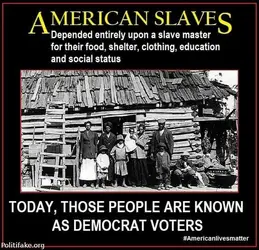

I have lived since prior to Hitler invading Poland and this is the first war I have even witnessed, where any president other than Trump sunk a nations navy, wiped out their air force and sent their leaders to heaven as he has in my life. I would say it was Iran who screwed up. Taiwan is not under the bus and still gets weapons from Trump. You think Trump begged China? And you claim to be a Christian?The facts show that even Trump recognizes he's in a hole due to his war on Iran. It was a huuuuuge miscalculation on his part. Even Tulsi and General Caine warned him about. His begging for China's help and willingness to throw Taiwan under the bus to get that help indicate the severity of Trump's Iran problem.
I am not lashing out at you, yet you lashed out at me telling many lies about me.

Winco
Diamond Member
- Nov 1, 2019
- 30,033
- 21,005
- 2,790
OhPleaseJustQuit doesn't even read what I posted.
It's just an automatic "Fake News" to her because I posted it.
Post #374 was about (D) failures and she gave it a Fake News.
It's just an automatic "Fake News" to her because I posted it.
Post #374 was about (D) failures and she gave it a Fake News.
Bill Clinton lost 18 soldiers at Mogadishu, Hillary lost 4 Americans at Benghazi, Joe Biden lost 13 soldiers at Abbey Gate in Afghanistan, and Lincoln lost more than 360,000 soldiers fighting democrats over slavery. Soldiers have lost their lives defending the world from worldwide nuclear bomb terrorism.And you're a total idiot for excusing Trump's lies and getting 13 U.S. soldiers killed over his lies.
Mikeoxenormous
Diamond Member
Most college educated people are ******* morons who wasted 10s of thousands of dollars to be indoctrinated to hate this country. Trades which the left cant get a foothold into, are making more money than any college educated barista at starbucks.Most college educated people now vote for the Democratic Party. That's just a fact.
During the past 10 years, the Trump MAGA Cuck Party has just become too stupid, too racist, and too cruel for college educated folks to vote for.
https://thehill.com/blogs/blog-briefing-room/235730-obama-college-surest-ticket-to-middle-class/
“In an economy increasingly built on innovation, the most important skill you can sell is your knowledge,” Obama said in his weekly address Saturday. “That’s why higher education is, more than ever, the surest ticket to the middle class.”
You did a hatchet job on Democrats. Welcome to the United States.Robert W OhPleaseJustQuit
Here are some of the most commonly cited Democratic policy failures or major governing mistakes from roughly the last 20 years. As with the Republican list, these are debated — some are bipartisan, some were constrained by Congress or courts, and supporters often argue the alternatives would have been worse.
1. The Libya Intervention (2011)
Under President Barack Obama, the U.S. and NATO intervened to help overthrow Muammar Gaddafi.
Critics argue:
Even Obama later called the lack of postwar planning his “worst mistake.”
- there was no serious postwar stabilization plan,
- Libya collapsed into factional conflict,
- slave markets and militia rule emerged,
- and the intervention destabilized parts of North Africa.
2. The Afghanistan Withdrawal (2021)
The withdrawal occurred under Joe Biden, though it followed the Trump-era Doha agreement.
Critics point to:
Supporters argue ending the war was necessary regardless of the messy outcome.
- the rapid collapse of the Afghan government,
- chaotic Kabul airport evacuations,
- abandonment of allies/interpreters,
- and the Taliban’s immediate return to power.
3. “Defund the Police” Politics and Crime Messaging (2020–2022)
While not official national Democratic policy, many Democrats were criticized for embracing or tolerating rhetoric around reducing police funding after the murder of George Floyd.
Critics argue Democrats:
Some Democratic mayors later reversed course and increased policing budgets.
- underestimated public concern about violent crime,
- failed to distance themselves from unpopular slogans,
- and politically damaged urban governance credibility.
4. Immigration and Border Management Problems
Democratic administrations — especially under Biden — faced major criticism over border management and asylum processing.
Critics argue:
Even some Democratic governors and mayors publicly criticized federal handling.
- enforcement messaging was inconsistent,
- asylum systems became overwhelmed,
- cities struggled with migrant surges,
- and the administration reacted too slowly politically and operationally.
5. Inflation and Pandemic-Era Spending Overshoot
Democrats passed major stimulus legislation including the American Rescue Plan.
Critics — including some center-left economists — argued:
Others argue inflation was primarily global and supply-chain driven.
- the spending scale exceeded what the recovering economy needed,
- worsened inflation pressures,
- and contributed to rapid cost-of-living increases in 2021–2023.
6. Healthcare Cost Expectations Under the ACA
The Affordable Care Act expanded coverage significantly, but critics say Democrats oversold:
The rollout website failures in 2013 also became a major embarrassment.
- how much premiums would fall,
- how simple enrollment would be,
- and how affordable care would become for middle-class households.
7. Student Loan Policy Confusion
The Biden administration attempted broad student debt relief that was later blocked by the Supreme Court.
Critics argue Democrats:
Progressives also criticized the administration for inconsistency afterward.
- created expectations they could not legally fulfill,
- relied on shaky executive authority,
- and failed to pursue more durable congressional reform.
8. COVID School Closures
Democratic-led states and cities generally kept schools closed longer during the pandemic.
Critics argue prolonged closures:
This became one of the biggest education-policy debates of the era.
- hurt student learning,
- widened inequality,
- damaged mental health,
- and ignored evidence that schools could reopen more safely sooner.
9. Urban Governance Problems in Deep-Blue Cities
Cities strongly governed by Democrats — such as parts of San Francisco, Portland, and Chicago — faced criticism over:
Critics argue progressive governance often struggled to balance compassion with administrative effectiveness.
- homelessness,
- housing affordability,
- public disorder,
- permitting bureaucracy,
- and slow infrastructure delivery.
10. Energy and Industrial Policy Contradictions
Some critics argue Democrats:
There’s also criticism that environmental review systems backed by Democrats slowed housing and transit construction.
- simultaneously restricted fossil-fuel development while consumers still depended on it,
- underestimated energy-price sensitivity,
- and created permitting barriers that slowed even clean-energy infrastructure.
11. Identity Politics and Campus Culture
Critics — including some liberals — argue Democrats became too associated with:
They argue this alienated moderates and working-class voters.
- ideological conformity,
- speech policing,
- elite academic activism,
- and race/gender essentialism.
12. Weakness on Housing Supply
Many economists argue Democratic-controlled states and cities failed for decades to allow enough housing construction.
Critics point to:
This contributed to severe affordability crises in many blue states.
- restrictive zoning,
- environmental review abuse,
- neighborhood veto politics,
- and construction delays.
13. Underestimating China’s Economic Rise
Across multiple administrations, Democrats and Republicans both supported globalization policies that critics argue:
Democrats are often criticized specifically for being too aligned with post-Cold War free-trade assumptions.
- accelerated industrial decline in some U.S. regions,
- increased dependency on Chinese manufacturing,
- and weakened domestic supply resilience.
14. Failure to Pass Durable Immigration Reform
Despite periods of unified government, Democrats failed to enact long-term immigration reform.
Critics argue:
- they relied too heavily on executive actions,
- failed to build durable bipartisan coalitions,
Republicans may have failed to uncover and prosecute all the widespread corruption, but they are still working on it while democrats never even tried.Because the Repubs failures are worse.
Mikeoxenormous
Diamond Member
Tried? The democrats are part of the corruption.Republicans may have failed to uncover and prosecute all the widespread corruption, but they are still working on it while democrats never even tried.
Winco
Diamond Member
- Nov 1, 2019
- 30,033
- 21,005
- 2,790
I asked AI.You did a hatchet job on Democrats. Welcome to the United States.
Why do you hate AI's answer.

/-----/ Bullshyt.A majority of Republicans now blame Trump for the high cost of living. The MAGA Fantasy World bubble has burst.
This is absolutely DEVASTATING news for Trump and his pitiful submissive Republican Party in November.
Gerrymandering is not going to save Republicans from TOTAL DESTRUCTION in November. --

What Donald Trump's approval ratings show in rising gas prices polls
President Donald Trump once boasted of low gas prices. Now, the war in Iran is driving prices back up. What is his job approval rating? See polls.www.usatoday.com
Democrats lie like dogs trying to retake power from republicans to restart their massive fraud and perversion operations. Can men get pregnant? Don't ask KBJ or Tampon Tim because they don't have a clue.Oh look....you're pretending again that the last 18 months haven't been a total ******* disaster with imbecile, incompetent racist Trump running around doing stupid shit constantly with his hair on fire.
How cute.
Winco
Diamond Member
- Nov 1, 2019
- 30,033
- 21,005
- 2,790
Feel free to explain old wise one.You did a hatchet job on Democrats. Welcome to the United States.
Why is it a hatchet job?
Your opinion is valued, so back it up.
Biden said he would take Trump to the shed and beat the snot out of him. Biden said a lot of delusional things.Lard lad couldna make it to the shed; he ran out of oxygen.
Ending democrat fraud, perversion, and corruption is worth cheering about.Cheering the end of democracy.
Congratulations, imbecile.
I vote for candidates who show the most realistic support for God and Christians.I'm an Independent who deliberately refuses to vote for either party due to the election math shown below, but most Independents choose one party or the other. Since neither party represents their interests, they will often choose the challenger in an election to keep the parties back on their heels.

We can only pray that the demonic democrats supporting godlessness may be stopped.Of course they do. But we already know those corrupt ***** aren't going to stop Trump's domestic terrorism.
The Democrats had one shot to stop Trump. And they completely blew it. And now democracy is probably not going to survive in this country.

OhPleaseJustQuit
Diamond Member
- Jul 27, 2021
- 76,243
- 89,719
- 3,488
Similar threads

- Replies
- 184
- Views
- 2K
- Replies
- 93
- Views
- 1K

- Replies
- 646
- Views
- 6K


- Replies
- 84
- Views
- 1K

New Topics
-

-
 Zone1 Christ is the key that holds us together
- Started by The Irish Ram
- Replies: 0
-
 Can Democrats Criticize Democrats and the Democratic Party in an Election Year?
- Started by LoveKimWexler
- Replies: 3
-

-


