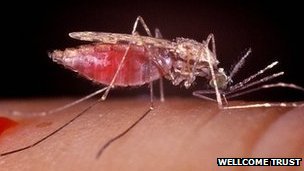
When an intense fever overcame 50-year-old Daw Cho Cho last spring, she took the same steps as when she last had malaria. Wary of village medicine and aware of the well-funded clinic across the border, she crossed into Thailand from her Burma village and came to the malaria centre for treatment. Seven years ago, her malaria was cured within a day. This time, it took much longer. Within three days, medication had killed the parasites in her blood and Daw Cho Cho felt normal, her symptoms gone. But a month later, the malaria came back. The drugs were unable to kill all the parasites in her blood, and they multiplied. She is among the thousands who have been infected with an insidiously evolving drug-resistant parasite that may account for 80% of the malaria on this section of the Thai-Burma border. The mosquito-borne illness is becoming resistant to the last anti-malaria drug standing artemisinin largely because of counterfeit medicines and incorrect usage.
A leading researcher at the Shoklo Malaria Research Unit (SMRU), a research centre based on the border and funded primarily by the Wellcome Trust, is taking radical measures to stop the spread of the new strain before it becomes uncontrollable. Dr François Nosten, SMRU's director, has studied malaria in this border region, near where the disease first became drug resistant, for three decades. He believes that in order to stop it spreading to India, then Africa, where the vast majority of the world's malaria cases occur, it's essential to chase the parasite into Burma's forests and pre-emptively treat even people who may not be ill. "If we don't do anything, we think that we know what's going to happen," said Nosten, explaining that as malaria rates decline, the strongest and most resistant strains of the parasite survive and spread. "It has always happened like this in the past, there's no reason to think this time will be any different."
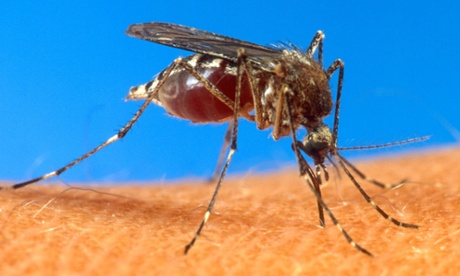
Mosquitoes are commonly seen as the enemy of malaria elimination efforts.
The level of alarm Nosten and other scientists express over drug-resistant malaria contrasts with how it manifests in people, in these early stages. It acts just the same as any malaria, but is more difficult to cure. The number of cases creeps up slowly, spreads, then explodes. "The thing about resistance to anything drugs, antibacterials is that it rises exponentially," said Nick White, a professor with the Oxford Tropical Medicine Research Programme who works with Nosten on this issue. "There's a long period where it doesn't appear to be rising and then it's rising." People who have had the new strain of malaria report that it feels no different to the disease cured in a day by artemisinin combination therapy just a few years ago. That may change, but for now, the malaria itself doesn't cause new symptoms or more complications it's just becoming much more difficult to destroy.
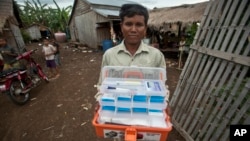
My Yee Thaung, whose nine-year-old son recently had malaria thought to be drug-resistant, said he recovered, slowly, "but he's still not eating very well." These patients are among thousands participating in a nine-week study of their blood. The clinic, one of five malaria centres for Burmese refugees in Thailand run by SMRU, pays their transportation fees and a nominal amount to cover lost wages, and the patients return to give blood samples once a week. The number of malaria cases has shrunk in this region dramatically in the past 30 years, since Nosten and his team began to contain and eradicate it. When Nosten started the first border clinic, the parasite was a major killer, infecting tens of thousands of people each rainy season. Today, there are a few thousand cases each year. But those that remain are more likely to contain a wilier parasite, one that is evolving to evade what was first touted as a miracle drug.
MORE