On the one hand, Hezbollah, the militant Lebanese Shiite organization that fought a monthlong war against Israel in 2006, is preoccupied with shoring up the government of President Bashar al-Assad of Syria in its struggle against rebel forces, and is suffering losses. But Hezbollah is also acquiring battlefield experience, and the only way for Mr. Assad, a longtime Hezbollah ally, to repay the group is by supplying it with sophisticated weapons, according to Israeli military officials and experts — strengths that could eventually be used against Israel. “Hezbollah has 4,000 to 5,000 soldiers today in Syria,” a senior Israeli military officer told reporters at army headquarters here last week. “This is a major burden for Hezbollah but also a major advantage.” Speaking on the condition of anonymity in accordance with Israeli Army rules, he added, “I have no doubt that Hezbollah gained much more self-confidence because of the Syrian experience.”
Hezbollah fired thousands of rockets at Israel during the 2006 war, which began after Hezbollah captured two Israeli soldiers on the Israel-Lebanon border. More than 1,000 Lebanese and dozens of Israelis were killed in the fighting, which ended with a United Nations-brokered cease-fire. The war was deemed a failure by many Israelis, though experts say it restored a degree of deterrence. Since then, Israel’s border with Lebanon has been mostly quiet. But Israel is preparing intensively for another possible round of fighting with Hezbollah, which military planners here see as inevitable. In their view, the experience gained by Hezbollah’s commanders and fighters in Syria is likely to make that next round more challenging for Israel. “This kind of experience cannot be bought,” said Gabi Siboni, director of the military and strategic affairs program at the Institute for National Security Studies at Tel Aviv University.
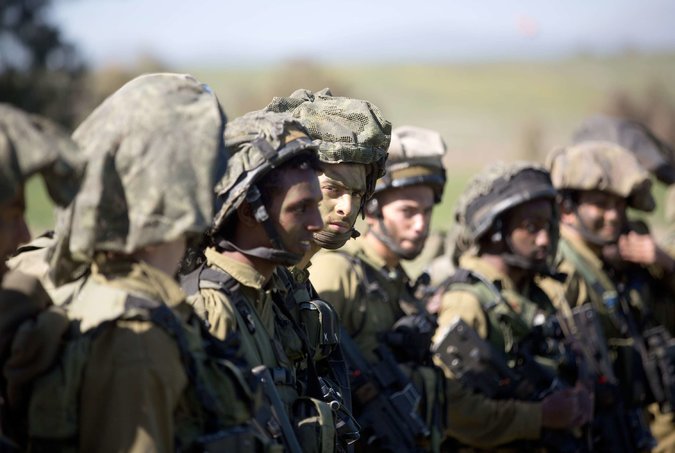
Israeli soldiers trained in the Golan Heights last week. Israel has been preparing intensively for another possible round of fighting with Hezbollah.
Mr. Siboni and other analysts said that Hezbollah’s experience in Syria should not be overstated since the group is fighting rebel forces like the Free Syrian Army and jihadist groups, not a modern, regular army. Still, Mr. Siboni said: “It is an additional factor that we will have to deal with. There is no replacement for experience, and it is not to be scoffed at.” While the Israeli military used to plan for conventional armored battle — tanks against tanks — now its forces train to withstand fighters who have antitank missiles and secret underground hide-outs. Over the last two years, according to military officials, much Israeli Army training has moved from the southern desert to the Galilee region in the north, where the terrain is similar to that of Lebanon and Syria.
At the same time, the Israeli military is conducting a mostly covert campaign to maintain a qualitative edge over Hezbollah and curb the buildup of the groupÂ’s weaponry. Israel has refused to confirm or deny involvement in about half a dozen airstrikes over the past year, mostly in Syrian territory. But IsraelÂ’s leaders have said they will act to prevent transfers of sophisticated weapons to Hezbollah from Syria, such as accurate, long-range rockets and shore-to-ship or ground-to-air missiles. Israel is also concerned about HezbollahÂ’s acquisition of unmanned aerial vehicles, more commonly known as drones or U.A.V.Â’s.
MORE