
Did you read your linked article.PA elected a dead man as their congressman in 2022.
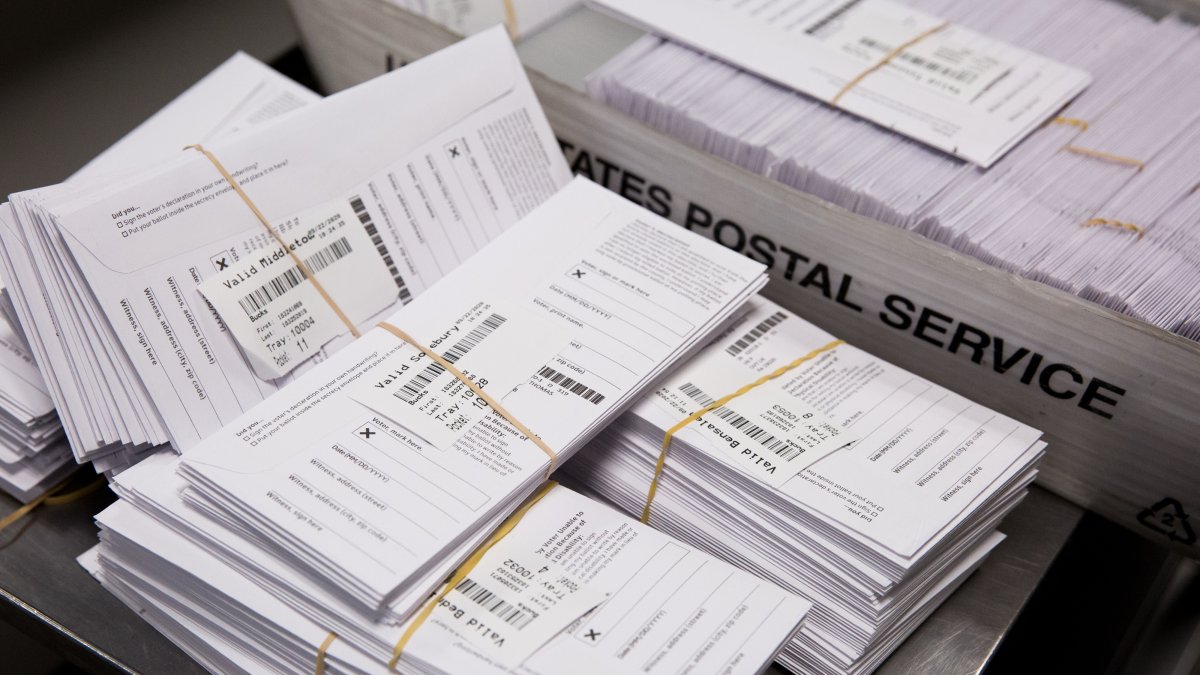
Pa. State Rep Reelected Despite Being Dead: Why Was He on the Ballot?
Pennsylvania Rep. Tony DeLuca was re-elected in the midterm elections even though he died a month ago. Why was he on the ballot and how did he win?www.nbcphiladelphia.com
Navigation
Install the app
How to install the app on iOS
Follow along with the video below to see how to install our site as a web app on your home screen.
Note: This feature may not be available in some browsers.
More options
Style variation
You are using an out of date browser. It may not display this or other websites correctly.
You should upgrade or use an alternative browser.
You should upgrade or use an alternative browser.
Is Donald Trump disqualified? Only Congress can decide!
- Thread starter Stormy Daniels
- Start date

BackAgain
Neutronium Member & truth speaker #StopBrandon
Have you read the Colorado supreme ruling, where they addressed most all of this....? It's several hundred pages, but definitely worth reading!
I did when it came down. It’s ok as legal reasoning goes up to a point. But it primarily misses the big hurdle.
Fine. I believe you’re wrong and I sure hope you’re wrong. To allow that moronic decision to stand would do massive damage to our republic.I doubt the U.S supreme court will do any such thing....
The U.S. SUPREME court will have to gingerly make their decision without interfering directly with the State's SC decision.
Wrong. They might wish to be polite and diplomatic. But what must be done is to directly nullify that abhorrent state Supreme Court decision.
Again: it’s all well and good (and even legally correct) to say that state election laws are state matters. The state court does have jurisdiction to hear such claims.
But that still does not mean that they have any damn jurisdiction over a federal criminal law adjudication. They simply don’t. And to the extent they tried to use the jurisdiction to decide state election law issues n a matter involving a criminal adjudication here (which they absolutely did), they went too far.
I predict and hope (but sadly cannot guarantee) that the SCOTUS will reverse the Colorado Supreme Court decision.

bigrebnc1775
][][][% NC Sheepdog
What Congress????What Congress? Got a link where Congress made some sort of decision or comment on this?
You're not an American are you?
bigrebnc1775
][][][% NC Sheepdog
And you asked What Congress you're a dumbassDid you read your linked article.
bigrebnc1775
][][][% NC Sheepdog
No numbnuts the 14th amendment sole authority belongs to Congress. Congress must dictate to the states and then the states have justification under the authorization of Congress to remove someone from the ballot.Several sections of the 14th are self evident, and Congress made no further legislation to enforce them. The Colorado Supreme court addressed this, in their ruling.

skews13
Diamond Member
- Mar 18, 2017
- 12,039
- 16,309
- 2,415
Who was convicted of an insurrection again? A friend wants to know....
Tell your ignorant friend the 14th Amendment is not predicated on the basis of due process.
Which is moot in this case because due process was afforded Trump at trial in Colorado.
I asked... silly one, because I have never heard this Congress make the claim you stated.What Congress????
You're not an American are you?
So, how about an answer, instead of avoidance, bigreb?

Mikeoxenormous
Diamond Member
There was no insurrection, when President Trump becomes the 47th president, he can then go after any Democrat who pushed the Russian Collusion hoax as an insurrection and will get the convictions. Did you push the Russian Collusion hoax? Might want to head to Cuba where you can be safe from 47....Tell your ignorant friend the 14th Amendment is not predicated on the basis of due process.
Which is moot in this case because due process was afforded Trump at trial in Colorado.
skews13
Diamond Member
- Mar 18, 2017
- 12,039
- 16,309
- 2,415
There was no insurrection, when President Trump becomes the 47th president, he can then go after any Democrat who pushed the Russian Collusion hoax as an insurrection and will get the convictions. Did you push the Russian Collusion hoax? Might want to head to Cuba where you can be safe from 47....
The only number Trump has right now is P01135809. His inmate number in Georgia. He will have a federal inmate number to go with it soon.
Are you loyal ass lickers plan on taking turns on visitation day, or just hold crying sessions outside of the prison?

Stormy Daniels
Gold Member
- Mar 19, 2018
- 7,570
- 2,817
- 265
- Thread starter
- #190
Have you read the Colorado supreme ruling, where they addressed most all of this....? It's several hundred pages, but definitely worth reading!
So what part exactly do you feel contraindicates what I have said? The Colorado case is, at the end of the day, a ballot access case. The plaintiff position is
- Donald committed insurrection,
- Donald is disqualified under the US constitution because of that insurrection,
- Therefore, it would be a bad act for the CO Secretary of State to list Donald Trump's name on the ballot.
A state court's position on the premise 2 above is not transferrable to the US constitution's actual mechanisms. Their opinion on the matter does not actually bear any legal weight on the actual constitutional qualification of a person, because states do not have any power to impinge on the federal government.
For the purposes of controlling whether a person will enter into office, the person's constitutional eligibility to serve as President is, at the end of the day, for the federal government alone to decide. And in fact, the Colorado court's opinion does not even attempt to assert otherwise.
The closest thing I can extrapolate from the opinion toward that end is that the court found the Disqualification Clause to be self executing, and that judicial review under section 3 is not precluded by the political question doctrine (which is the principle that certain matters are not meant to be settled through judicial mechanisms, but through other mechanisms under the constitution). But even if we accept the court's position on this, at the end of the day this all remains encapsulated within the question of ballot access.
What I expect will happen with the appeal is that SCOTUS will find
- Congress has already legislated enforcement of the Disqualification Clause.
- Whether a person is constitutionally qualified is strictly a question under federal law that states have no power to determine.
- States have no power to enforce the Disqualification Clause.
- Enforcement of the Disqualification Clause therefore can only occur through federal prosecution for violating Congressionally enacted statute, or through rejection by the joint session of Congress.
The section 3 of the 14th descibe the roll of Congress, specifically, in the last line of section 3....which is its roll...in sec 3.No numbnuts the 14th amendment sole authority belongs to Congress. Congress must dictate to the states and then the states have justification under the authorization of Congress to remove someone from the ballot.
But Congress may by a vote of two-thirds of each House, remove such disability.
Congress can remove the disqualification, made by other entities, by 2/3s vote of both houses.
The candidate removed, can go to Congress, and petition them for the removal of the disability....the removal disqualification.
If Congress was the decider, then Congress would not be the relief dictated in section 3 for the candidate being removed...
For the purposes of controlling whether a person will enter into office, the person's constitutional eligibility to serve as President is, at the end of the day, for the federal government alone to decide
Actually, that is not true. Each state has requirements beyond the constitution as it stands in their election laws....fir a candidate to qualify.
Each candidate has to get a certain amount of petitioners to support their candidacy, in order to get on that state's ballot, Stormy.
This requirement prevents 3rd party candidates, as it stands, from getting on all state ballots....unless they meet the number of legal petitioners required by State election laws...
This is NOT Federal?
Last edited:
Stormy Daniels
Gold Member
- Mar 19, 2018
- 7,570
- 2,817
- 265
- Thread starter
- #193
Actually, that is not true. Each state has requirements beyond the constitution as it stands in their election laws....
I think you're forgetting that you don't really vote for the President in the first place, and the fact that you even get to participate at all is, legally speaking, merely a courtesy your state affords you.
What you keep pointing to is only a matter of ballot access for how your state provides that courtesy to you. The constitution has no knowledge or understanding of states holding elections as part of the Presidential selection process.
BUT it is a qualification to be president, that does not come from the U.S. constitution....I think you're forgetting that you don't really vote for the President in the first place, and the fact that you even get to participate at all is, legally speaking, merely a courtesy your state affords you.
What you keep pointing to is only a matter of ballot access for how your state provides that courtesy to you. The constitution has no knowledge or understanding of states holding elections as part of the Presidential selection process.
If you can't get on the ballot as a candidate due to not meeting the State petitioner amount needed to qualify for president/electors, then basically the State's determine qualifications to run as well? No???
bigrebnc1775
][][][% NC Sheepdog
And you're still wrong the 14th amendment was not created to give states rights it was created to control states and have Congress to means to punish those states that violated that amendment.The section 3 of the 14th descibe the roll of Congress, specifically, in the last line of section 3....which is its roll...in sec 3.
But Congress may by a vote of two-thirds of each House, remove such disability.
Congress can remove the disqualification, made by other entities, by 2/3s vote of both houses.
The candidate removed, can go to Congress, and petition them for the removal of the disability....the removal disqualification.
If Congress was the decider, then Congress would not be the relief dictated in section 3 for the candidate being removed...
Congress never made a Declaration of an insurrection. Numbnuts

Concerned American
Diamond Member
I've read numerous articles on it. I realize that he died after being placed on the ballot. However, what does it say about the intelligence of the voters of that state that they were not aware that their congressman had died---to the extent that he won overwhelmingly. C'mon, they don't hide that stuff on the news. I knew, in WA state, that he was dead before the election. Do those people live in a vacuum? Never mind, they elected a mentally challenged senator as well. SMH. What are your standards?Did you read your linked article.
I'm certain it was blasted in the news.... pennsylvania election law.I've read numerous articles on it. I realize that he died after being placed on the ballot. However, what does it say about the intelligence of the voters of that state that they were not aware that their congressman had died---to the extent that he won overwhelmingly. C'mon, they don't hide that stuff on the news. I knew, in WA state, that he was dead before the election. Do those people live in a vacuum? Never mind, they elected a mentally challenged senator as well. SMH. What are your standards?
If the dead man on the ballot won, then there would be a SPECIAL ELECTION.
THEY VOTED FOR HIM, to have a new election, so they could have a new candidate run, that represented them.
They were not stupid.
Stormy Daniels
Gold Member
- Mar 19, 2018
- 7,570
- 2,817
- 265
- Thread starter
- #198
BUT it is a qualification to be president, that does not come from the U.S. constitution....
If you can't get on the ballot as a candidate due to not meeting the State petitioner amount needed to qualify for president/electors, then basically the State's determine qualifications to run as well? No???
No. The ONLY qualification criteria that exist are the ones that are in the US constitution. Like I said, there's no need for any state to hold an election in the first place.
But one thing has occurred to me. This isn't even the general election, this about a Primary. Primaries are strictly actions by political parties. So really, it's all the more reason for the courts not to be involved.
Mikeoxenormous
Diamond Member
He has not been convicted yet, but you sure do seem elated to be put in jail for no reason, you day will come....The only number Trump has right now is P01135809. His inmate number in Georgia. He will have a federal inmate number to go with it soon.
Are you loyal ass lickers plan on taking turns on visitation day, or just hold crying sessions outside of the prison?
Mikeoxenormous
Diamond Member
That just proved that the dead man was a better choice than the Marxists dumbass you ran against him.I'm certain it was blasted in the news.... pennsylvania election law.
If the dead man on the ballot won, then there would be a SPECIAL ELECTION.
THEY VOTED FOR HIM, to have a new election, so they could have a new candidate run, that represented them.
They were not stupid.
Similar threads


- Replies
- 22
- Views
- 389


- Replies
- 58
- Views
- 540

New Topics
-
 Major win for the Trump Administration on federal judges
- Started by Cellblock2429
- Replies: 0
-

-
 Should Vebezuela pay Trump for any humanitarian aid he gives them ?
- Started by Tommy Tainant
- Replies: 2
-
 NATO blockade of occupied Crimea. Can it lead to the last and final collapse of Moscow imperialism?
- Started by Litwin
- Replies: 4
-
The highest court in the United States has just confirmed that Democrats are vampires.
- Started by Mikeoxenormous
- Replies: 0


