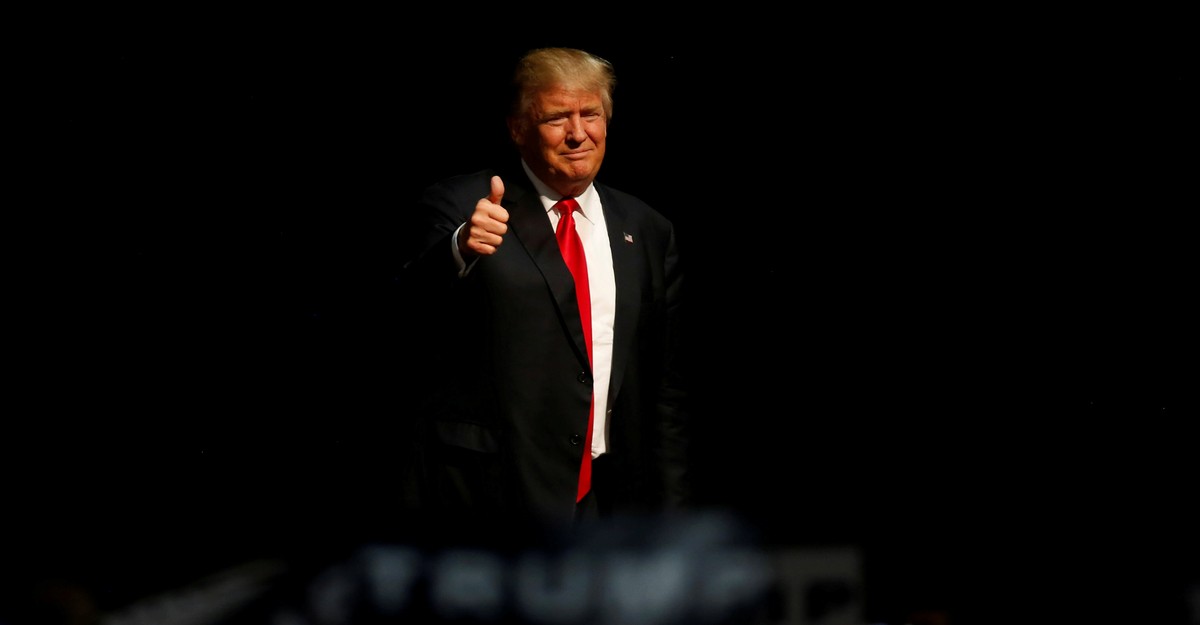
Abandoning the low-tax, small-government orthodoxy of the Republican Party, its nominee says he envisions the GOP of the future as a “workers’ party.”

www.theatlantic.com
You’re going to have a worker’s party. A party of people that haven’t had a real wage increase in 18 years, that are angry.”
That’s how Donald Trump described the Republican Party he imagines in five or 10 years, during an interview with Bloomberg Businessweek’s Joshua Green.
The phrase “workers’ party” is a striking one, since it conjures first and foremost the socialist parties of the 20th century. Does Comrade Trump mean to say that he intends to establish soviets and collective ownership? Of course not, although this sort of language—both the denotative reference to a “workers’ party” and the connotation of an empowered blue-collar class—go a long way to explaining why so many wealthy Republicans were slow to rally around Trump, or are still resisting. A party that has long prized lower taxes, a reduced social-safety net, and smaller government above all else is being asked to rally around a candidate willing to describe himself as leading a blue-collar workers’ movement.