
IM2
Diamond Member
- Mar 11, 2015
- 113,704
- 144,160
- 3,645
Well now, it seems like Iran had agreed to do some things, but Netanyahu wanted to bomb them anyway, So Tump did what he was told.
Iran had agreed to unprecedented concessions during the recent nuclear talks in Geneva, only to face a war of aggression from the United States and Israel shortly thereafter.
Negotiations mediated by Oman would have done away with the terms of the 2015 nuclear accord, formally known as the Joint Comprehensive Plan of Action (JCPOA), and formed an agreement based on an entirely different architecture, as per sources.
Iranian negotiators accepted all demands presented by the United States during the latest round of talks – including conditions exceeding international legal requirements.
Under the original JCPOA framework negotiated in Vienna during the Obama administration, Iran agreed to cap uranium enrichment at 3.67% and limit its stockpile of enriched uranium, subject to monitoring by the International Atomic Energy Agency (IAEA).
However, in a televised exchange on CBS’ Face the Nation, Oman’s foreign minister, Badr bin Hamad Al Busaidi, described a new understanding that would go further than the 2015 deal.
He characterized the most significant achievement of the Geneva talks as Iran’s agreement that it would “never ever” possess nuclear material capable of producing a bomb.
The proposal reportedly included:
• Zero accumulation of enriched uranium
• Zero stockpiling
• Down-blending existing stockpiles to the lowest possible enrichment level
• Comprehensive IAEA verification
If implemented, such measures would effectively eliminate Iran’s ability to rapidly produce any Highly Enriched Uranium (HEU) or weapons-grade material, regardless of enrichment capacity.
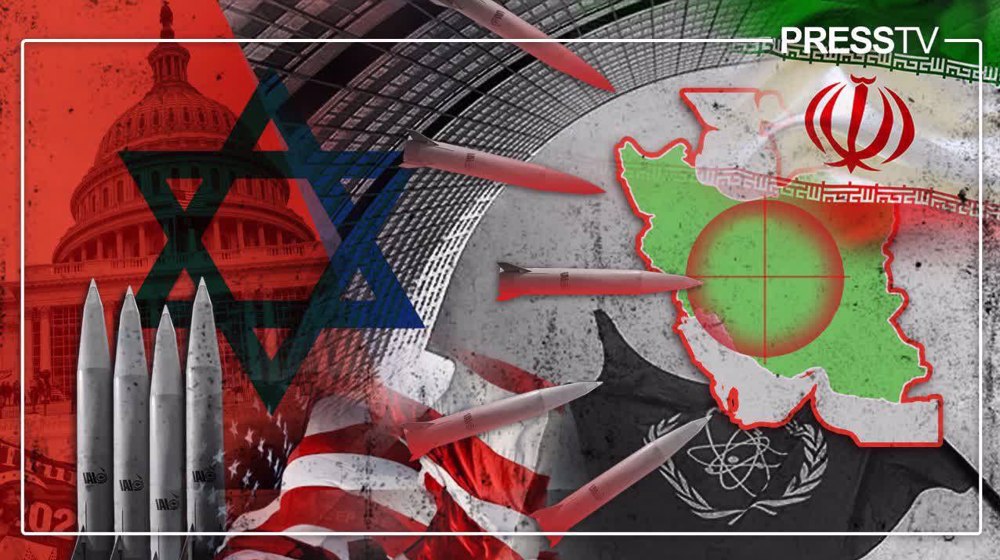
 www.presstv.ir
Iran agreed to nuclear concessions in Geneva talks – and then US-Israel bombed
Iran had agreed to unprecedented concessions during the recent nuclear talks in Geneva, only to face a war of aggression from the United States and Israel shortly thereafter.
Negotiations mediated by Oman would have done away with the terms of the 2015 nuclear accord, formally known as the Joint Comprehensive Plan of Action (JCPOA), and formed an agreement based on an entirely different architecture, as per sources.
Iranian negotiators accepted all demands presented by the United States during the latest round of talks – including conditions exceeding international legal requirements.
Under the original JCPOA framework negotiated in Vienna during the Obama administration, Iran agreed to cap uranium enrichment at 3.67% and limit its stockpile of enriched uranium, subject to monitoring by the International Atomic Energy Agency (IAEA).
However, in a televised exchange on CBS’ Face the Nation, Oman’s foreign minister, Badr bin Hamad Al Busaidi, described a new understanding that would go further than the 2015 deal.
He characterized the most significant achievement of the Geneva talks as Iran’s agreement that it would “never ever” possess nuclear material capable of producing a bomb.
The proposal reportedly included:
• Zero accumulation of enriched uranium
• Zero stockpiling
• Down-blending existing stockpiles to the lowest possible enrichment level
• Comprehensive IAEA verification
If implemented, such measures would effectively eliminate Iran’s ability to rapidly produce any Highly Enriched Uranium (HEU) or weapons-grade material, regardless of enrichment capacity.
Iran agreed to nuclear concessions in Geneva talks – and then US-Israel bombed
Iran accepted sweeping nuclear concessions in Geneva, exceeding JCPOA and NPT terms, yet the US and Israel launched an unprovoked war and derailed the nuclear diplomacy.
www.presstv.ir


