Interesting statistics on school shootings

If you need anti-depressants, then you're already dealing with mental issues. So is it the drugs causing them to go the extreme engaging in a mass shooting, or is it because they are already emotionally ill?
 
Ha "odds are" FFS the man asked for citations, peer reviewed evidence that these wild hysterical claims have any basis in reality. This is just another magat conspiracy fantasy, FTF - **** the facts.

All the magats do is dream up some casual relationship between two unrelated parameters and hey presto we have an "explanation" for mass shootings that doesn't implicate our national gun fetish.

This is why only uneducated hickbillies support trump.
Must be a whole lot of those around because he's your president, again.

I've pointed this out multiple times and will enjoy doing it again.

1. It is in living memory that you could purchase a firearm and ammunition and have them shipped to your house through the postal service, no questions asked. Kids were safe at school. Malls were safe for families to shop.
2. It is in living memory that you could put a firearm on a rack in the back window of your truck and drive to school, the mall, basically anywhere. Kids were safe. Malls were safe for families to shop.
3. It is in living memory that students could take shooting courses at school, complete with live ammunition. Kids were safe at school.

Question: Is it easier or more difficult to get a gun today than it was back then? Keep in mind that you usually could find one or more on a rack above the fireplace or front door in virtually every farmhouse in the nation. No questions were asked and kids were safe at school. Families were safe at the mall. So, what changed? Not the guns. They still don't shoot anyone by themselves, they don't gather on street corners drinking beer, smoking cigarettes and whistling at girls. Here's a test. Put some shells beside a firearm on your porch railing. Watch it for a couple of hours and tell us how many times it loaded itself and shot whatever was running through your yard.
 
If you need anti-depressants, then you're already dealing with mental issues. So is it the drugs causing them to go the extreme engaging in a mass shooting, or is it because they are already emotionally ill?
Well, what has changed in the last 100 years? Do we have more clinically depressed people than ever before, or do we have more people on anti-depressants than ever before? If we cannot confidently say that we have more depressed people, what changed?
 
Alcohol also.
When Alcohol is involed it takes many years of abuse to cause Wernicke's Korsakoff's Syndrome. This is wht many so called homeless have
Wernicke-Korsakoff Syndrome (WKS) is a severe brain disorder linked to chronic, heavy alcohol use, resulting from a deficiency in thiamine (Vitamin B1). Alcohol interferes with the body's ability to absorb, store, and use thiamine, which is crucial for the brain's energy production. WKS progresses in two stages: Wernicke encephalopathy, a sudden onset of confusion, balance issues, and eye movement problems, and the more gradual Korsakoff syndrome, characterized by severe memory gaps, difficulty learning, and confabulation. Early treatment with thiamine can reverse Wernicke symptoms, but Korsakoff syndrome may be irreversible.

How Alcohol Leads to WKS
  • Thiamine Deficiency:
    .

    Heavy alcohol consumption, particularly over many years, is the most common cause of thiamine deficiency.

  • Interference with Thiamine:
    .

    Ethanol (alcohol) directly impairs the absorption of thiamine in the digestive tract and disrupts its conversion to its active form in the liver.

  • Reduced Brain Energy:
    .

    Thiamine is essential for converting sugars into energy for the brain. A lack of thiamine leaves the brain without enough energy to function correctly.
Stages of WKS
  • Wernicke Encephalopathy:
    • Onset: Often has a sudden onset.

    • Symptoms: Confusion, loss of muscle coordination, abnormal eye movements, and balance problems.
    • Onset: Typically develops gradually, following Wernicke encephalopathy if it's not treated early.

    • Symptoms: Severe gaps in memory, difficulty forming new memories, and a tendency to fill in memory gaps with fabricated stories (confabulation).
Treatment and Prevention
  • Thiamine Supplementation:
    .

    Immediate treatment with thiamine (injections or high-dose tablets) is essential to reverse Wernicke encephalopathy.

  • Nutritional Support:
    .

    Providing nutritional support and IV fluids can also help.

  • Quitting Alcohol:
    .

    Treating the underlying alcohol use disorder (AUD) is crucial for managing WKS.

  • Early Diagnosis:
    .

    Catching the condition early is vital, as the damage from Wernicke encephalopathy can lead to permanent, irreversible confusion, difficulty with coordination, and hallucinations if left untreated.
Key Takeaway
Wernicke-Korsakoff syndrome is a serious and potentially fatal brain disorder caused by a thiamine deficiency, most often linked to chronic heavy drinking. While early Wernicke symptoms can often be reversed with thiamine treatment, Korsakoff syndrome, the later stage, involves permanent memory impairment.


  • Wernicke-Korsakoff Syndrome: Causes, Symptoms & Treatment
    Wernicke-Korsakoff syndrome happens due to a lack of thiamine. This essential vitamin changes (converts) sugar into energy. When y...
    1757110675399.webp

    Cleveland Clinic

    1757110675407.webp


  • Wernicke-Korsakoff Syndrome - StatPearls - NCBI Bookshelf
    Etiology. The cause of Wernicke-Korsakoff syndrome is a deficiency of thiamine or vitamin B1. Individuals with poor nutrition for ...
    1757110675419.webp

    NCBI


  • Wernicke–Korsakoff syndrome - Wikipedia
    Alcohol-thiamine interactions. Strong evidence suggests that ethanol interferes directly with thiamine uptake in the gastrointesti...
    1757110675425.webp

    Wikipedia, the free encyclopedia


  • Show all
 

Attachments

  • 1757110675430.webp
    1757110675430.webp
    1.6 KB · Views: 6
If you need anti-depressants, then you're already dealing with mental issues. So is it the drugs causing them to go the extreme engaging in a mass shooting, or is it because they are already emotionally ill?

Is mostly the drugs
 
Marijuana can cause psychosis or if one is predisposed to schizophrenia it can cause it to surface. It also can lower IQ
Only heavy usage can cause that. Recreational use, like during the weekend or once or twice a week, doesn't.
 
There is no valid study that link these drugs to any effects

Bullshit.

People on anti depressants are already depressed.

Maybe. 2/3 of them don't really need the medication. The drugs are over prescribed by clueless psychiatrists.

Depression can lead to suicide not the drugs.

The FDA says otherwise.

This is circular thinking anti drug none sense. Dont take any drugs suffer

Drugs are not the answer. They only alleviate symptoms, not root causes.

The truth is this: science has NO IDEA what serotonin does in the brain or how it works.

I know this because I studied the raphe nuclei in detail for a dozen years. We are only now beginning to understand the regulation of serotonin transporters, and nothing about them is simple or easy.

Treatment for depression began with MAO inhibitors and progressed to TCA's. The only thing that can be said about SSRI's is they're more selective. What that really means is currently a topic of intensive research.

Humans have 5-HTTLPR polymorphism, which means different individuals have different numbers and types of transporters. There is no "one size fits all" treatment for depression.
 
Marijuana causes psychosis. Odds are they’re all pot users. The most recent psycho shooter even admitted that in his own case.
Potheads refuse to acknowledge the risk. The pot industry is replaying the obfuscation of the tobacco industry with the blessing of state governments.
Shut up. We're not talking about pot. Go away.
 
When Alcohol is involed it takes many years of abuse to cause Wernicke's Korsakoff's Syndrome. This is wht many so called homeless have
Wernicke-Korsakoff Syndrome (WKS) is a severe brain disorder linked to chronic, heavy alcohol use, resulting from a deficiency in thiamine (Vitamin B1). Alcohol interferes with the body's ability to absorb, store, and use thiamine, which is crucial for the brain's energy production. WKS progresses in two stages: Wernicke encephalopathy, a sudden onset of confusion, balance issues, and eye movement problems, and the more gradual Korsakoff syndrome, characterized by severe memory gaps, difficulty learning, and confabulation. Early treatment with thiamine can reverse Wernicke symptoms, but Korsakoff syndrome may be irreversible.

How Alcohol Leads to WKS
  • Thiamine Deficiency:
    .

    Heavy alcohol consumption, particularly over many years, is the most common cause of thiamine deficiency.

  • Interference with Thiamine:
    .

    Ethanol (alcohol) directly impairs the absorption of thiamine in the digestive tract and disrupts its conversion to its active form in the liver.

  • Reduced Brain Energy:
    .

    Thiamine is essential for converting sugars into energy for the brain. A lack of thiamine leaves the brain without enough energy to function correctly.
Stages of WKS
  • Wernicke Encephalopathy:
    • Onset: Often has a sudden onset.

    • Symptoms: Confusion, loss of muscle coordination, abnormal eye movements, and balance problems.
    • Onset: Typically develops gradually, following Wernicke encephalopathy if it's not treated early.

    • Symptoms: Severe gaps in memory, difficulty forming new memories, and a tendency to fill in memory gaps with fabricated stories (confabulation).
Treatment and Prevention
  • Thiamine Supplementation:
    .

    Immediate treatment with thiamine (injections or high-dose tablets) is essential to reverse Wernicke encephalopathy.

  • Nutritional Support:
    .

    Providing nutritional support and IV fluids can also help.

  • Quitting Alcohol:
    .

    Treating the underlying alcohol use disorder (AUD) is crucial for managing WKS.

  • Early Diagnosis:
    .

    Catching the condition early is vital, as the damage from Wernicke encephalopathy can lead to permanent, irreversible confusion, difficulty with coordination, and hallucinations if left untreated.
Key Takeaway
Wernicke-Korsakoff syndrome is a serious and potentially fatal brain disorder caused by a thiamine deficiency, most often linked to chronic heavy drinking. While early Wernicke symptoms can often be reversed with thiamine treatment, Korsakoff syndrome, the later stage, involves permanent memory impairment.


  • Wernicke-Korsakoff Syndrome: Causes, Symptoms & Treatment
    Wernicke-Korsakoff syndrome happens due to a lack of thiamine. This essential vitamin changes (converts) sugar into energy. When y...
    View attachment 1158718
    Cleveland Clinic

    View attachment 1158721

  • Wernicke-Korsakoff Syndrome - StatPearls - NCBI Bookshelf
    Etiology. The cause of Wernicke-Korsakoff syndrome is a deficiency of thiamine or vitamin B1. Individuals with poor nutrition for ...
    View attachment 1158719
    NCBI


  • Wernicke–Korsakoff syndrome - Wikipedia
    Alcohol-thiamine interactions. Strong evidence suggests that ethanol interferes directly with thiamine uptake in the gastrointesti...
    View attachment 1158720
    Wikipedia, the free encyclopedia


  • Show all

Jeez. Can't you people stay on topic?
 
Here, let me give you clowns a quick education on serotonin in the human body.

Serotonin is a neurotransmitter AMONG OTHER THINGS.

There are seven known types of serotonin receptors, each of which has several subtypes.

Quoting from AI (because I'm too lazy to type):

Serotonin receptors are a family of proteins that bind to the neurotransmitter serotonin (5-hydroxytryptamine). There are seven main types of serotonin receptors, which are further subdivided into multiple subtypes.

Types of Serotonin Receptors:

  • 5-HT1 Receptors:
    There are six subtypes (5-HT1A, 5-HT1B, 5-HT1D, 5-HT1E, 5-HT1F) that are mainly inhibitory and involved in mood regulation, anxiety, and sleep.

  • 5-HT2 Receptors:
    There are three subtypes (5-HT2A, 5-HT2B, 5-HT2C) that are excitatory and involved in cognition, perception, and cardiovascular function.

    • 5-HT3 Receptors:
      This is a single receptor that is ionotropic (channel-mediated) and involved in nausea, vomiting, and gut motility.
    • 5-HT4 Receptors:
      This is a single receptor that is metabotropic (G-protein coupled) and involved in gastrointestinal function, learning, and memory.
    • 5-HT5 Receptors:
      There are two subtypes (5-HT5A, 5-HT5B) that are metabotropic and have less well-defined functions.
    • 5-HT6 Receptors:
      This is a single receptor that is metabotropic and involved in cognition, sleep, and appetite.
    • 5-HT7 Receptors:
      This is a single receptor that is metabotropic and involved in circadian rhythms, mood, and sleep.
It's important to note that these receptors are distributed throughout the body and have different functions depending on their location and the specific subtype involved.

If you're interested, we can talk about the BRAIN in more detail.
 
So they put this warning on the label just for fun?

"Antidepressants increased the risk compared to placebo of suicidal thinking and behavior (suicidality) in children, adolescents, and young adults.”

This statement is misleading.

For those with major depression, suicidal ideation is a big problem, and it's one of the reasons they need treatment in the first place. SSRI's reduce suicidal ideation in patients with major depression over the long term, and it's one of the big reasons they're clinically successful.

* BUT * - major depression is only one of the three common clinical indications for SSRI prescription, the other two are anxiety and obsessive compulsive disorder. And there's not just three, there are two dozen, ranging from autism and Asperger's to Tourette's.

SSRI's are a ten BILLION dollar a year industry world wide. There is zero doubt they are over prescribed. But the mechanism of action of ALL of the common SSRI's (Paxil, Zoloft, Prozac, etc) is poorly understood. What is known is, they work by blocking serotonin reuptake in synapses (reuptake is a form of inactivation), but their effect on mood is INDIRECT. The action on synapses is not directly responsible for mood changes. In new patients, the chemical effect is immediate whereas the effect on mood sometimes takes weeks. The effect on mood is DOWNSTREAM, it is a result of the brain's adaptation to changing neurotransmitter levels.

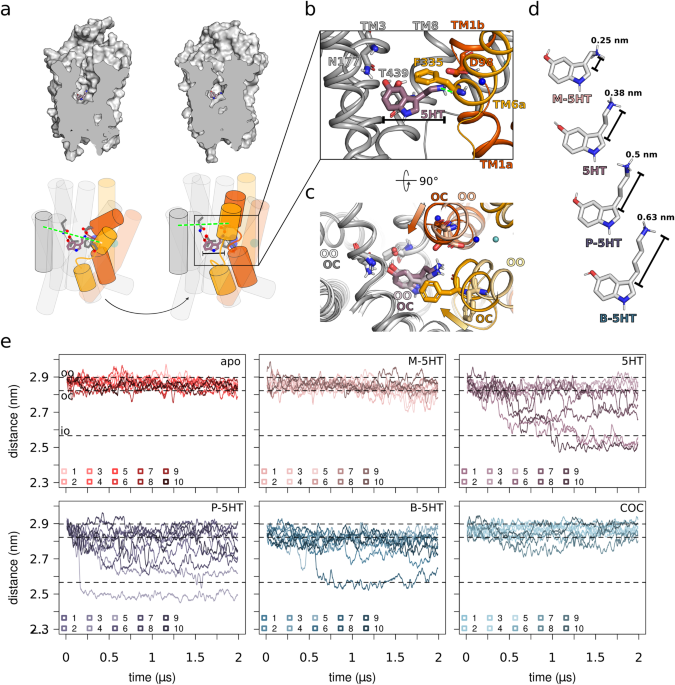
SSRI's affect the HTTPR protein, which is a small but exceedingly complex molecule coded by the SLC6A4 gene on chromosome 17. This one:


The HTTPR protein has some 630-ish amino acids but it has 12 transmembrane domains. The molecule looks different in different human beings, and it's different for Asians, Africans, and Caucasians.


Biochemically the reuptake channel is similar to other forms of monoamine reuptake channels (dopamine, norepinephrine). However one of the key features of serotonin reuptake is that the channel is bidirectional. Serotonin can be removed from the synapse but it can also be reintroduced. This is currently a hot research topic.


To make the picture even more complicated, there are multiple different types of serotonin synapses into the same brain areas, for example there are three different actions of serotonin on CA1 cells in the hippocampus. Only one of them is related to mood. But Paxil affects all of them.


More detail, again from AI:

Serotonin modulates neuronal activity in the hippocampus's CA1 region through various serotonin receptor subtypes (5-HT1A, 5-HT7, 5-HT3) to influence memory formation, cognition, mood, and anxiety by affecting potassium conductances, synaptic plasticity, and GABAergic interneurons. These complex actions can be inhibitory (via 5-HT1A) or excitatory (via 5-HT7 and 5-HT3), providing a versatile role for serotonin in regulating CA1 neuron firing and synaptic transmission.

Serotonin Receptors and Their Actions
  • 5-HT1A Receptors:
    Activation of 5-HT1A receptors leads to a hyperpolarizing effect in CA1 pyramidal cells through increased potassium permeability, acting as an inhibitory mechanism.

  • 5-HT7 Receptors:
    These receptors, found in CA1 cells, can enhance AMPA receptor-mediated transmission, indicating an excitatory role for serotonin in this region.

  • 5-HT3 Receptors:
    Serotonin, acting via 5-HT3 receptors, excites GABAergic interneurons in CA1, leading to increased inhibitory synaptic events in pyramidal cells.
Effects on CA1 Neuronal Activity

  • Biphasic Response:
    Serotonin often evokes a biphasic response in CA1 pyramidal cells: an initial hyperpolarization (inhibitory) followed by a depolarization (excitatory).
  • Regulation of Firing:
    Serotonin differentially modulates potassium conductances, leading to diverse effects on neuronal firing, including suppression of firing accommodation and enhancement of neuronal discharge.
Role in Hippocampal Function
  • Memory and Cognition:
    The serotonin system, acting on CA1 neurons, is crucial for memory consolidation, learning, and attention.

  • Anxiety and Mood:
    Given that the hippocampus is involved in mood regulation and anxiety, serotonin's modulation of CA1 activity also impacts these functions.

  • Synaptic Plasticity:
    Serotonin influences synaptic potentiation at CA1 excitatory synapses, demonstrating its role in the mechanisms underlying learning and memory.

Only recently has research focused on the brain areas known to be primarily involved in mood, namely the amygdala and the orbital frontal cortex. We know very little about the action of serotonin in these areas. We know substantially more about the cells of origin in the dorsal and medial raphe nuclei in the brain stem.

So how does all this relate to school shootings?

Turns out, the side effects of SSRI's in terms of aggressive and violent behavior are much more pronounced in younger people than in older people. Study after study has and is corroborating this pattern. For example:


Takeaway: there are at least TEN known (and common) genetic variants of the human 5HTR protein. They all respond differently to SSRI's. We don't know most of the details yet, research is only just now beginning at this level. This exceedingly complex study is one example:


And, serotonin is not the only chemical involved in mood and depression. But it is the only one treated with SSRI's.


All together then, major depression represents only 1% of the ten billion dollar annual SSRI market. All the other indicators together, represent less than 10%. There is NO SUCH THING as sitting in a psychiatrist's office for ten minutes and being diagnosed with depression. Yet that's what happens a lot of the time. Over prescription of medication is irresponsible and dangerous. It leads to unpredictable results, medically, behaviorally, and otherwise. A qualified psychiatrist will at minimum administer an MMPI before making a diagnosis, yet that almost never happens. And it is one of the few quantitative tools available for assessing treatment progress.

'Kay? You take it from here. SSRI's are powerful drugs with many unknown effects. We have ZERO clue about the downstream mechanisms, or how exactly they elevate mood after several weeks of treatment even though the direct chemical effect is instantaneous. 5HTR regulation involves calcium metabolism, which in turn involves glial cells. To date there has been little to no research in this specific area, although grants are currently being issued which means it'll take several years before results are available
 
There is no valid study that link these drugs to any effects and I dont see any citations.
People on anti depressants are already depressed. Depression can lead to suicide not the drugs.
This is circular thinking anti drug none sense. Dont take any drugs suffer
It is well known that going 'cold turkey' on these medications causes all kinds of psychosis. I'd like to see some kind of research into whether or not these psychotic shooters went off their meds or were on, then off, etc. however that would be a tough study to validate.
 
It is well known that going 'cold turkey' on these medications causes all kinds of psychosis. I'd like to see some kind of research into whether or not these psychotic shooters went off their meds or were on, then off, etc. however that would be a tough study to validate.

Antidepressant Discontinuation Syndrome

Abruptly stopping selective serotonin reuptake inhibitors (SSRIs) can cause a range of withdrawal symptoms known as antidepressant discontinuation syndrome. This occurs because the brain has adapted to the increased serotonin levels provided by the medication and must now re-adjust to its absence.
It is important to understand that SSRI withdrawal is not the same as addiction, as it does not involve compulsive use or craving. However, the effects can be very uncomfortable and may be mistaken for a relapse of the original condition. For this reason, a healthcare provider should always supervise SSRI cessation.
Symptoms of discontinuation syndrome
The effects of SSRI cessation typically begin within two to four days and can range from mild to severe, affecting both physical and psychological well-being. A mnemonic, FINISH, is often used to summarize the most common symptoms:
  • Flu-like symptoms: Lethargy, fatigue, headache, muscle aches, chills, and sweating.
  • Insomnia: Difficulty falling or staying asleep, and experiencing vivid or unusual dreams.
  • Nausea: Stomach cramps, vomiting, and diarrhea.
  • Imbalance: Dizziness, lightheadedness, and vertigo.
  • Sensory disturbances: Numbness, tingling, hypersensitivity to sound, and "brain zaps," which are brief, electric shock-like sensations in the head.
  • Hyperarousal: Irritability, anxiety, agitation, aggression, and mood swings.
Other potential effects
  • Return of emotions: Some people report that their emotions return to normal after feeling "blunted" by the medication, while others experience increased tearfulness, anxiety, or irritability.
  • Mania: A sudden mood change, such as the emergence of hypomanic or manic symptoms, has been reported in some cases.
  • Suicidal ideation: In some cases, discontinuation is associated with an increased risk of suicidal thoughts.
Factors that influence withdrawal
The severity of withdrawal symptoms varies widely among individuals and is influenced by several factors.
  • Medication half-life: SSRIs with a short half-life, such as paroxetine (Paxil), are more likely to cause more severe and frequent withdrawal symptoms than those with a longer half-life, like fluoxetine (Prozac).
  • Duration of treatment: The longer a person has been on an SSRI, the more gradual the tapering process should be.
  • Dosage: Higher doses may require a longer taper to prevent more intense symptoms.
  • Abrupt cessation: Stopping the medication suddenly, or "cold turkey," is the strongest risk factor for experiencing severe withdrawal symptoms.
How to distinguish withdrawal from relapse
Discontinuation symptoms can be similar to the original condition, making it difficult to distinguish withdrawal from a relapse of depression or anxiety. Key differences can help determine the cause of symptoms:
  • Onset: Withdrawal symptoms appear quickly, often within days of stopping or reducing the dose, while a relapse of depression develops more gradually over several weeks.
  • Physical symptoms: Withdrawal often includes specific physical symptoms not typical of depression, such as dizziness, flu-like symptoms, and brain zaps.
  • Symptom trajectory: Discontinuation symptoms improve as the body adjusts, while relapse symptoms persist and may worsen.
  • Response to restarting medication: Withdrawal symptoms tend to resolve quickly if the medication is reintroduced, while a full relapse of depression would take weeks to respond to treatment.
Safely managing SSRI cessation
To minimize the effects of SSRI cessation, a slow, controlled taper is recommended.
  1. Consult a healthcare provider: Never stop an SSRI without medical guidance. Your doctor will create a personalized tapering schedule based on your specific medication, dosage, and medical history.
  2. Follow a gradual schedule: The tapering process can take weeks, months, or even longer, with dose reductions made in small increments. Tapering very slowly at lower doses is crucial to minimize symptoms.
  3. Stay in communication: Keep your doctor informed of any physical or emotional symptoms you experience throughout the process.
  4. Use supportive strategies: Engaging in exercise, practicing good sleep hygiene, and using stress-reduction techniques can help manage the transition.
  5. Consider therapy: Psychotherapy during tapering can help prevent a relapse of the underlying condition.
 
15th post
Eric Harris age 17 (first on Zoloft then Luvox) and Dylan Klebold aged 18 (Columbine school
shooting in Littleton, Colorado), killed 12 students and 1 teacher, and wounded 23 others, before
killing themselves. Klebold's medical records have never been made available to the public.

Jeff Weise, age 16, had been prescribed 60 mg/day of Prozac (three times the average starting
dose for adults!) when he shot his grandfather, his grandfather's girlfriend and many fellow
students at Red Lake, Minnesota. He then shot himself. 10 dead, 12 wounded.

Cory Baadsgaard, age 16, Wahluke (Washington state) High School, was on Paxil (which caused
him to have hallucinations) when he took a rifle to his high school and held 23 classmates
hostage. He has no memory of the event.

Chris Fetters, age 13, killed his favorite aunt while taking Prozac.

Christopher Pittman, age 12, murdered both his grandparents while taking Zoloft.

Mathew Miller, age 13, hung himself in his bedroom closet after taking Zoloft for 6 days.

Kip Kinkel, age 15, (on Prozac and Ritalin) shot his parents while they slept then went to school
and opened fire killing 2 classmates and injuring 22 shortly after beginning Prozac treatment.

Luke Woodham, age 16 (Prozac) killed his mother and then killed two students, wounding six
others.

James Wilson, age 19, (various psychiatric drugs) from Breenwood, South Carolina, took a .22
caliber revolver into an elementary school killing two young girls, and wounding seven other
children and two teachers.

Elizabeth Bush, age 13, (Paxil) was responsible for a school shooting in Pennsylvania

Jason Hoffman (Effexor and Celexa) – school shooting in El Cajon, California
Jarred Viktor, age 15, (Paxil), after five days on Paxil he stabbed his grandmother 61 times.

Chris Shanahan, age 15 (Paxil) in Rigby, ID who out of the blue killed a woman.
Jeff Franklin (Prozac and Ritalin), Huntsville, AL, killed his parents as they came home from
work using a sledge hammer, hatchet, butcher knife and mechanic's file, then attacked his
younger brothers and sister.

Neal Furrow (Prozac) in LA Jewish school shooting reported to have been court-ordered to be on
Prozac along with several other medications.

Kevin Rider, age 14, was withdrawing from Prozac when he died from a gunshot wound to his
head. Initially it was ruled a suicide, but two years later, the investigation into his death was
opened as a possible homicide. The prime suspect, also age 14, had been taking Zoloft and other
SSRI antidepressants.

Alex Kim, age 13, hung himself shortly after his Lexapro prescription had been doubled.

Billy Willkomm, an accomplished wrestler and a University of Florida student, was prescribed
Prozac at the age of 17. His family found him dead of suicide – hanging from a tall ladder at the
family's Gulf Shore Boulevard home in July 2002.

Kara Jaye Anne Fuller-Otter, age 12, was on Paxil when she hung herself from a hook in her
closet. Kara's parents said ".... the damn doctor wouldn't take her off it and I asked him to when
we went in on the second visit. I told him I thought she was having some sort of reaction to
Paxil...")

Gareth Christian, Vancouver, age 18, was on Paxil when he committed suicide in 2002,
(Gareth's father could not accept his son's death and killed himself.)

Julie Woodward, age 17, was on Zoloft when she hung herself in her family's detached garage.

Matthew Miller was 13 when he saw a psychiatrist because he was having difficulty at school.
The psychiatrist gave him samples of Zoloft. Seven days later his mother found him dead,
hanging by a belt from a laundry hook in his closet.

Kurt Danysh, age 18, and on Prozac, killed his father with a shotgun. He is now behind prison
bars, and writes letters, trying to warn the world that SSRI drugs can kill.

Hammad Memon, age 15, shot and killed a fellow middle school student. He had been diagnosed
with ADHD and depression and was taking Zoloft and "other drugs for the conditions."

Matti Saari, a 22-year-old culinary student, shot and killed 9 students and a teacher, and
wounded another student, before killing himself. Saari was taking an SSRI and a benzodiazapine.

Finnish gunman Pekka-Eric Auvinen, age 18, had been taking antidepressants before he killed
eight people and wounded a dozen more at Jokela High School – then he committed suicide.

Asa Coon from Cleveland, age 14, shot and wounded four before taking his own life. Court
records show Coon was on Trazodone.

Jon Romano, age 16, on medication for depression, fired a shotgun at a teacher in his
New York high school.

What do all these cases have in common?

Look at the ages.

THEY'RE ALL UNDER 20 YEARS OLD.
 
Here is the scientific follow up to complete the current context for SSRI's.

Research to date has focused on neurons, and serotonin receptors in synapses.

But it is beginning to look more and more, like neurons have very little to do with it.

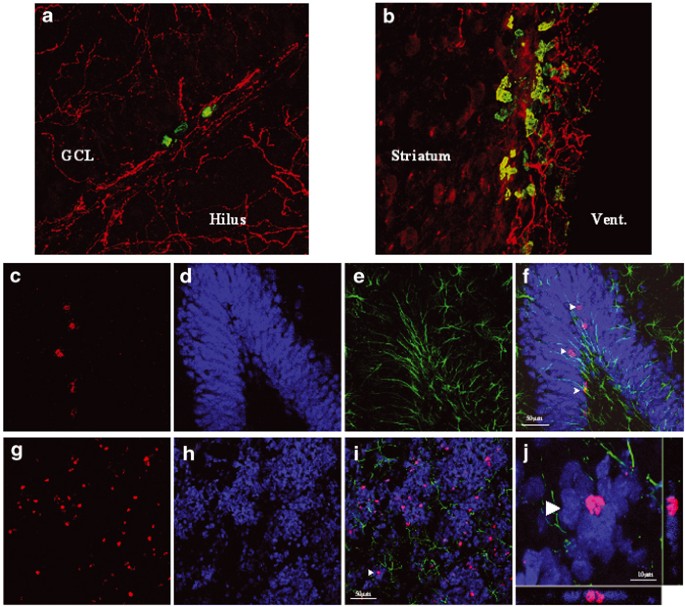
The prime suspect is now a form of glial cell called "astrocyte". These are the silent partners of neurons in the brain. There are three times as many glial cells as there are neurons, in the frontal cortex of the brain where mood and self image is thought to be organized.

Glial cells also have serotonin receptors. Often, glial cells "encapsulate" synapses. They don't respond to neural signals directly, but they respond to the levels of neurotransmitter that leak out of the synapse. In turn, they regulate the calcium levels that are available to neurons, especially excitatory neurons in the cerebral cortex that use glutamate (which is over 50% of cortical neurons).


Granted this study talks about mice more than humans. And it was an early study. Like I said, research on this is just beginning. And, mouse 5HTR is very similar to the human equivalent.

Turns out, destruction of glial cells in the cerebral cortex is sufficient to cause depression-like behavior


Astrocytes are interesting creatures. They are a big part of the way and mechanism by which neurons "adapt". A more recent study on non-SSRI "classical" antidepressants indicates that astrocytes are the primary players in depressive mechanisms that used to be attributed to neurons.

A big part of antidepressant withdrawal syndrome is an increase in anxiety, which starts 2-4 days after cessation and persists for weeks. Anxiety in turn, is related to elevated glutamate levels and neuron sensitivity in key brain areas.

And, antidepressants dull "all" feelings, not just the depressive ones. This is one of the big reasons people stop taking their meds. During development (in humans till age 25 and beyond), astrocytes are crucial for synaptic pruning and neuron replacement. If the astrocytes are tweaked the neurons don't grow back the right way


This effect has been documented in detail in the hippocampus.


From this point forward it gets more complicated. In addition to its role as a synaptic neurotransmitter, serotonin diffuses directly across both neuron and astrocyte cell membranes


And, serotonin reuptake occurs directly from the extracellular fluid as well as at the synapse. This effect is mediated by astrocytes, not neurons.


To understand what serotonin does to astrocytes, we first have to understand what it does to neurons. And we're not there yet. But we're getting closer. Close enough to know that glial cells are key players that help shape neural behavior.

 
I met a psychologist in graduate school Peter Langman who wrote a book Why Kids Kill. They all have severe mental illness often ignored.
People who express anti drug baloney often have mental a diagnosis themselves
In the UK, any medical condition or a combination of conditions that could affect the safe possession of a firearm, such as certain neurological, mental health, or substance abuse issues, can prevent you from owning a gun. Conditions like epilepsy, Parkinson's disease, bipolar disorder, severe depression or anxiety, and drug or alcohol abuse are specifically listed as relevant. Police make the final decision on licensing based on a medical report from a registered doctor, which assesses your overall fitness to possess firearms.
 
Back
Top Bottom