
peacefan
Gold Member
Pentagon-adviseur lijkbleek na geheime briefing. “In oorlog om Taiwan verliezen we élke keer”
Toen een nationale veiligheidsadviseur de details van de uiterst geheime ‘Overmatch Brief’ tot zich liet doordringen, trok hij lijkbleek weg. Dit ontluisterende document, waarover ‘The New York Times’ bericht, doorbreekt het Amerikaanse zelfbeeld van militaire onaantastbaarheid: in een oorlog om...
 www.hln.be
Pentagon Advisor Turns Pale After Secret Briefing: "In War Over Taiwan, We Lose Every Time"
When a national security advisor absorbed the details of the top-secret "Overmatch Brief," he paled. This shocking document, reported by The New York Times, shatters America's self-image of military invulnerability: in a war over Taiwan, the US would be defeated "time and time again," and its most powerful aircraft carriers would be in danger of sinking to the bottom of the ocean within minutes.
KVE
December 12, 2025, 2:26 PM
Last update: December 12, 2025, 4:59 PM
Pentagon war simulations simulating a Chinese invasion of Taiwan show that Beijing could disable American fighter squadrons, large warships, and even satellite networks before they could be effectively deployed.
The gravity of the situation first truly dawned when a senior national security adviser to President Biden received the briefing in 2021. According to an eyewitness, the official “turned pale” when he realized how hopeless the cards were.
This news comes shortly after Guo Jiakun, a spokesperson for the Chinese Ministry of Foreign Affairs, warned the US to “treat the Taiwan issue with the utmost caution.”
© AFP
The report paints a bleak picture of the balance of power and warns that the American superpower is blinded by its own expensive toys. While the Pentagon relies on technologically advanced but prohibitively expensive weapons systems, China has focused on mass-producing cheaper systems.
The result, according to the analysis, is as simple as it is terrifying: Beijing has countless backups and alternatives for every military trump card America thought it possessed.
Pride of the Navy Goes Under
The most painful example is the USS Gerald R. Ford. This most modern aircraft carrier in the world, with a price tag of $13 billion (over €11 billion), is considered the symbol of American power on the oceans. But in the Pentagon's merciless wargames, the ship quickly becomes a sinking grave.
The USS Gerald R. Ford.
The USS Gerald R. Ford. © Photo News
The simulations show that the American fleet is virtually defenseless against China's arsenal of some six hundred hypersonic missiles. Missiles like the YJ-17, proudly paraded in Beijing last year, reach speeds of up to eight times the speed of sound. According to the report, they can destroy American aircraft carriers "in minutes." Yet, the Pentagon plans to build nine more of these behemoths.
"Sobering"
Eric Gomez of the Taiwan Security Monitor participated in one of these simulations. "The US is losing a huge number of ships in the process," he told The Telegraph. "Hundreds of fifth-generation fighter jets, multiple destroyers, aircraft carriers... When we took stock, the atmosphere in the room was sobering. It was an incredibly heavy toll."
© AP
Industry Fails
The core of the problem is structural. The American defense industry continues to focus on increasingly expensive versions of existing weapons. But the war in Ukraine has revealed a new reality: cheap drones and mass production win wars.
Washington is now trying to catch up – Congress has appropriated $1 billion for the production of 340,000 small drones, and Donald Trump has appointed a special "drone czar." But experts warn that America can never win the battle for cost-effectiveness against China, where wages are lower and regulations are more lax.
© Photo News
There's also an unseen threat: the Chinese hacker group Volt Typhoon has reportedly already penetrated deep into America's critical infrastructure. Should things get out of hand, Beijing could potentially cripple American logistics—power, water, communications—before the first shot is fired.
2027: The Year of Truth?
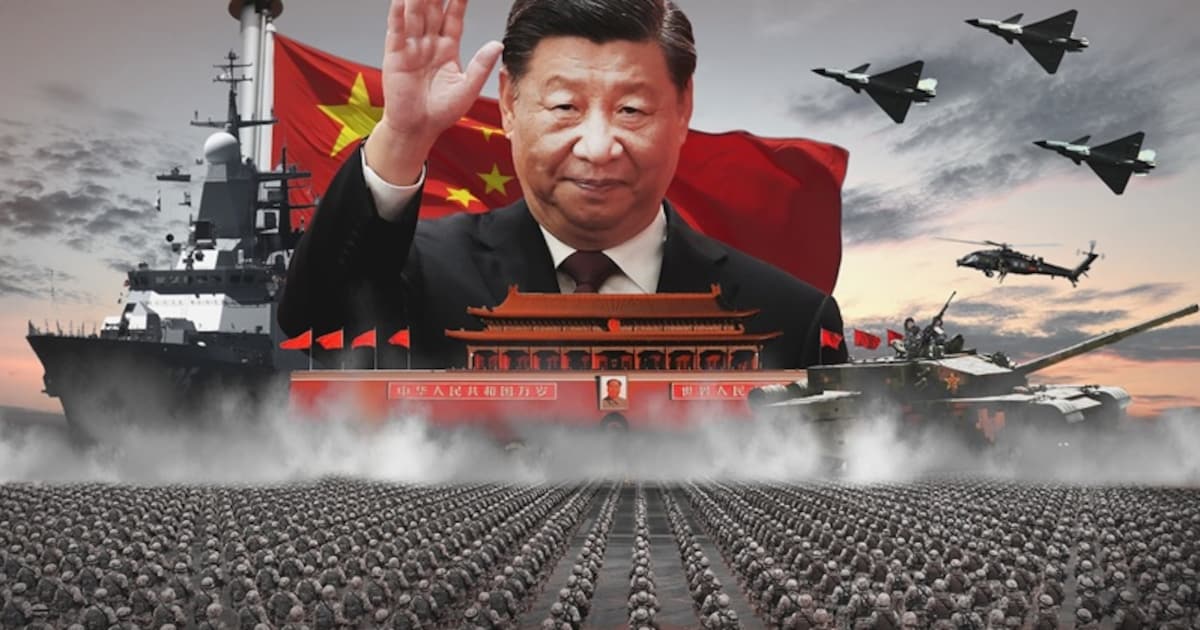
For Chinese leader Xi Jinping, the capture of Taiwan is a “historic inevitability.” He has ordered his military to be combat-ready by 2027. However, analysts believe Xi will only strike if he is certain of a swift, crushing victory; failure would mean the end of his power.
Xi Jinping
Xi Jinping © Corbis via Getty Images
Meanwhile, the US is grappling with its role. Trump takes a business perspective: he compares the US to an insurance company and believes Taiwan should pay for protection. But even his strategy centers on military overmatch: the idea that sheer American superiority should deter China.
The irony of the leaked memo is that it undermines precisely that assumption. The arms race is in full swing, but the US seems to be realizing that it is no longer the undisputed leader, but a giant with feet of clay.
Pete Hegseth
Pete Hegseth ©
How about, instead of relying on aircraft carriers to bail out Taiwan, we use large destroyers equipped with 10K RPM AA guns and hypersonic missiles of their own?
Combined with drones that explicitly send out signals impersonating real US naval assets, we could perhaps tip the balance of power in our favor again?


