The Worlds biggest ships are freighters
Nobody is talking about freighters except you.
Nobody here mentions quantum entanglement speeds except for me as well. You have no clue what that even means or how it applies to cryptography.
And as for freighters, I am just referencing the U.S. Naval Institute.
You really are not bright
In January, the U.S. Naval Institute published a proposal written by a team of defense experts that called on the United States to devise a method of

sofrep.com
In January, the U.S. Naval Institute published a proposal written by a team of defense experts that called on the United States to devise a method of
arming merchant container ships with missile defense platforms and even offensive
weapons. The concept was meant to relieve basic missile defense operations from the U.S.
Navy‘s fleet of Arleigh Burke-class destroyers,
freeing them up for more complex or dangerous operations elsewhere.
The concept, while economically sound, seems unlikely to ever come to fruition within the U.S.
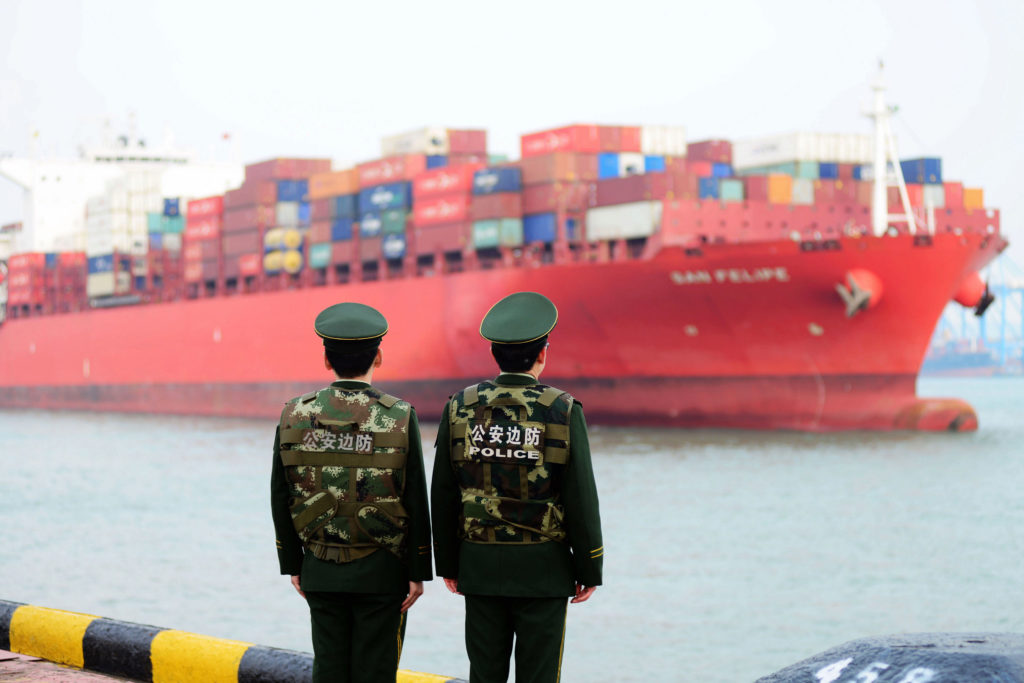
military unless a large-scale conflict were to arise, but now it seems China has a growing interest in fielding “missile merchant” vessels all its own.
The idea behind using containers to house long-range missiles is simple. Cargo and container ships are seen as non-combatant vessels, and while the U.S.
Navy‘s proposal would have included changing the ship designations on container ships purchased to serve as defensive platforms, China’s plan doesn’t include the same level of transparency. By
hiding weapons systems in containers that are identical to those found on civilian vessels, China can engage enemy assets from concealed positions that would not otherwise be deemed a threat.
Representing a far more pressing threat, the long-range cruise missiles housed within these shipping containers are reportedly a land attack variant of the YJ-18C anti-ship missile. That suggests this platform is intended not as a defensive weapon, but rather as an
offensive one meant to be snuck into foreign ports to be used for surprise attacks against land-based targets.
“It fits with China’s penchant for seeking asymmetric advantages against its enemies,”
said Rick Fisher, a senior fellow at the International Assessment and Strategy Center that specializes in studying the Chinese
military. He went on to explain these platforms are also in keeping with China’s penchant for deniable
weapons systems that are difficult to identify or track.