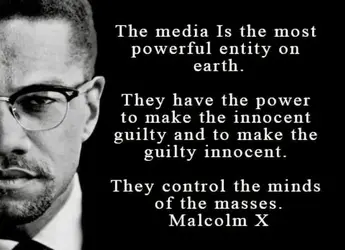
If the rest of the world has a negative view of the United States it's not Trump's fault. It's our biased media.
The American media dominates communications around the world--and if they don't like someone, they try to make sure everyone else doesn't.
I asked AI what causes other countries to dislike America.
AI says this:
What directly affects the way the world views the United States
Several major factors directly shape how the world views the United States— and they often interact with each other:
1. Foreign Policy & Military Actions
- Decisions about wars, alliances, and diplomacy strongly influence global perception.
- Examples include involvement in conflicts, peacekeeping, or international agreements.
- Cooperation vs. unilateral action changes whether the U.S. is seen as a partner or dominant power.
2. Political Leadership & Stability
- The tone, statements, and policies of U.S. presidents and government officials matter a lot.
- Political polarization, elections, and transitions affect credibility abroad.
- Respect for democratic norms is closely watched.
3. Economic Power & Trade
- The U.S. dollar, trade policies, sanctions, and economic growth influence global trust.
- Recessions or financial crises in the U.S. can reshape worldwide confidence.
- Trade disputes impact how allies and competitors view the country.
4. Culture & Media Influence
- Hollywood, music, fashion, and social media export American culture worldwide.
- This “soft power” often shapes perceptions more than politics.
- Both positive (innovation, creativity) and negative (stereotypes) images spread globally.
5. Human Rights & Social Issues
- How the U.S. handles civil rights, inequality, immigration, and justice affects credibility.
- Domestic events often receive international coverage.
- Progress or controversy quickly changes opinions abroad.
6. Technology & Innovation
- Leadership in tech, science, and education enhances global prestige.
- Companies and breakthroughs influence how modern and forward-thinking the U.S. appears.
7. Global Cooperation (or Lack of It)
- Participation in climate agreements, global health efforts, and humanitarian aid matters.
- Helping in crises improves perception; withdrawing can hurt it.
8. Public Opinion & People-to-People Interaction
In short:
- Tourism, students, businesses, and everyday Americans abroad also shape views.
- Personal experiences often outweigh political narratives.
The world’s view of the United States is shaped by what it does (policy), what it represents (values), and how it behaves (actions).
If you're asking this for a class, debate, or just curiosity, I can also:
- Rank these by importance
- Explain how views differ by region
- Give recent examples
Explain how views differ by region
Views of the United States vary widely depending on region— shaped by history, politics, economics, and culture. Here’s a clear breakdown:
- Western European countries like United Kingdom, Germany, and France often see the U.S. as a close ally, especially on defense and NATO.
- However, there can be criticism about foreign policy, climate policy, and political polarization.
- Eastern Europe (like Poland and Ukraine) tends to view the U.S. very positively because of security support.
Asia
- Countries like Japan and South Korea often have strong positive views due to military alliances.
- In India, views are generally positive, tied to economic and strategic partnerships.
- In China, opinions are more mixed to negative, shaped by trade disputes and geopolitical competition.
Latin America
- Countries like Mexico, Brazil, and Argentina often have mixed feelings.
- Positive: economic ties, migration opportunities, cultural influence.
- Negative: historical interventions and immigration policies.
- Allies like Israel and Saudi Arabia often view the U.S. as a key security partner.
- In other countries, opinions can be more critical due to military involvement and regional politics.
- Many countries like Kenya, Nigeria, and South Africa often hold generally positive views.
- U.S. education, aid programs, and cultural influence contribute to favorable perceptions.
- In Australia and New Zealand, the U.S. is usually seen as a strong ally, though sometimes criticized on policy differences.
Big Picture Summary
Global opinion shifts over time depending on leadership, world events, and policy changes.
Most positive: Eastern Europe, Japan, South Korea, Australia
More skeptical/competitive: China and some rivals
Want me to:
- Show which region likes the U.S. the most right now
- Explain why opinions changed recently
- Or compare U.S. vs other countries' global image


Wrong - The world only reacts the way our media tells them to react.
Repeat a lie often enough, it becomes a reality.
Our "Liberals" love trashing America. That's why the rest of the world thinks America sucks.
But why do they keep wanting to come there to live? Why do liberals move to Europe and everyone else seems to be moving here?
Is it because they want to experience racism and oppression?
No. They know that America is a great place to live (as long as you don't live in a Democrat controlled city).
The left wants to screw up America like liberals have screwed up Europe.