PS. The fact that those related to me are holding their own is actually something that I am proud of and is something that your boyfriends anus will never provide to you.
Cute. Sprinkling in some random homophobia too. As if you wanted me to think even less of you.
No one comes to you for help. Not anyone that actually needs it. You can’t help them.
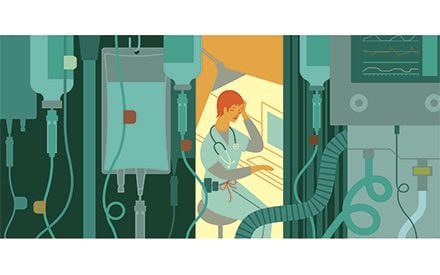
Doctors and nurses make deadly errors every day and are reprimanded for them. But don’t they also deserve some support?

www.rd.com
Kim Hiatt had worked as a nurse for 24 years when she made her first medical error: She gave a frail infant ten times the recommended dosage of a medication. The baby died five days later.
Kim’s mistake was an unnecessary tragedy. But what happened next was an unnecessary tragedy, too: Seven months after the error, Kim killed herself.
“She fell apart,” her mother, Sharon Crum, says. “I suppose it would be the same thing you would feel if you felt you were at fault for a child’s death.”
This is a story about Kim Hiatt, the mistake she made, and how she struggled with that tragedy. It is also a story about an open secret in American medicine: Medical errors kill more people each year than plane crashes, terrorist attacks, and drug overdoses combined. And there’s collateral damage that can go unnoticed: Every day, doctors and nurses quietly live with those they have wounded or even killed. Their ghosts creep into exam rooms, and seeing new patients can reopen old wounds.
It’s easy to write off the anguish of these health-care providers as insignificant next to that of the patients and families they’ve hurt. They made horrible, harmful mistakes. Maybe they should feel bad. But clinicians don’t exist in a vacuum. In the wake of an error, they have to keep seeing patients and performing surgeries. If they don’t regain confidence in their skills, other patients could suffer. Getting past this danger zone will require a shift in medicine, away from a culture that sees mistakes as unspeakable and toward one that recognizes that medical professionals suffer tremendously when they inadvertently run afoul of their sacred oath: “First, do no harm.”
“The best word I can use to describe that day, and really the first couple of days, is isolated,” says Rick van Pelt, an anesthesiologist at Brigham and Women’s Hospital in Boston who nearly killed a patient during a routine surgery in 1999. “There was no way to communicate effectively what had happened. What do you say when you almost killed a patient?”
OOPS, sorry about that, I didn't mean to insult your boyfriends anus