Ignoring how much of television is no longer broadcast over airwaves, what do you think should be done with those airwaves?
At the very very least we should have at least got a cut out of the ridiculous profits broadcasters made for going on a century for using our airwaves to profit on rent-free.
(If we imagine a random city that builds a commercial district full of storefronts and then gives them away for nothing to anybody who wants to run a business --- like that)
That horse left the barn a long time ago obviously. The idea of advertising on the people's airwaves was scandalous at first but the FCC was soon bribed into collusion and the populace soon soporified into submission, and now we think it's "normal". Which is how the commercial broadcast world would prefer we think of it, and forget the fact that they operate at our pleasure and not the other way around.
Who is the "we" that should get compensated, the government? Individual checks to anyone who watches broadcast television?
Do you feel the same way about radio?
What is your rationale behind this idea, are you equating the various broadcast frequencies to property, or land, and saying that the citizens of the US own those frequencies?
Is it different when television is sent through landlines?
Excellent questions sir.
"We" own the airwaves, that is the general public. That was established as the national attitude back at the beginning of broadcasting (radio). "We" however get nothing, literally nothing, for allowing commercial entities to use our resources to make themselves rich --- nothing except the loss of air space that could have been used for broadcasting that would be of actual use to the community instead of a cash cow for Clear Channel. A little alliteration there, hee hee.
So yes, I'm equating the various broadcast frequencies to property ---
public property. The airwaves are akin to a town bulletin board where common info might be shared. We have the FCC which is supposed to act as our custodian but in practice acts in collusion with the moneychangers and gives that property away, for nothing. In a more perfect world where they at least leased some of those channels for a rental fee, that revenue could fund public broadcast outlets that actually do serve the community with useful resources. That would be my approach. We invest far, far less on our public broadcasting resources than our contemporaries such as Germany or Japan. And a common theory holds that the reason much of the good public broadcasting we do have comes from places like Minnesota and Wisconsin and New York, is that those places are close enough to Canada, where they take it more seriously, to hear what decent public broadcasting sounds like.
Now FCC does reserve some space for noncommercial broadcast, but the volume is heavily heavily skewed against the public part in favor of the moneychangers, and then what little there is on the radio is increasingly clogged with "godcasters" buying up what little slices of space there is, and shutting others out.
And yes I absolutely include radio. If I ever tune into a radio station and hear a notice about a lost dog or a square dance, I rejoice at the rare gem of what that medium should be doing rather than pissing our resources away on some self-infatuated ego trying to see how fast he can talk.
Landlines (cable) and satellite, and internet streaming being more modern technological paradigms, are different in that they're not nearly as finite as the space on the broadcast band is. And I don't know that those systems have been defined as public property. But I'll wager that if we had long ago established rental fees for commercial broadcasters on the airwaves... we could have easily carried that paradigm over.
"We" however get nothing, literally nothing, for allowing commercial entities to use our resources to make themselves rich --- nothing except the loss of air space that could have been used for broadcasting that would be of actual use to the community
Excuse me? Have you truly not noticed that "we" get information of all stripes delivered via the airwaves?
Information is not nothing. It is among the most useful things one can receive.
In addition to information, we receive entertainment via the airwaves. That too is not nothing.
I'm sorry we aren't so advanced as "Star Trek" and can have tangible items beamed to us via the airwaves....I can assure you, however, that if or when the day comes that such a thing is possible, though one will receive it, one will not receive it for free as one does today receive content over the portions of the EMS that the FCC manages.
would be of actual use to the community instead of a cash cow for Clear Channel. A little alliteration there, hee hee.
By me, the alliteration went neither unnoticed nor unappreciated.
The airwaves are akin to a town bulletin board where common info might be shared.
And they are used thus. Perhaps the EMS isn't used that way where you are, but I assure you they are so used, by both public television channels (they purchase content from a host of producers, but mostly from PBS and public access television channels.
I don't know where you live, but perhaps you should seek out your local public access television and radio stations. Assuming there are some, I think you'll find they function very much as a "town bulletin board." You must seek them out; they are not going to "beat you over the head" to get you to tune in, nor will they literally or figuratively fall into your lap.
You do realise the EMS is extant regardless of how or whether anyone uses or manages it, right?
We have the FCC which is supposed to act as our custodian but in practice acts in collusion with the moneychangers and gives that property away, for nothing.
Well, you're entitled to have that normative view of the FCC's role and mission. I don't.
The FCC does exactly what, IMO, it should:
manage the efficient use and apportionment of the EMF so that competing users of it don't "step on" one another's signals/messages. I don't want the FCC to do more than that.
In a more perfect world where they at least leased some of those channels for a rental fee, that revenue could fund public broadcast outlets that actually do serve the community with useful resources. That would be my approach..
Well, that is the extant approach. Others agree and/or acquiesce to that being the approach.
The FCC does "lease" the channels for a fee:
The actual process isn't as simple as your phrasing suggests, but in essence, that's exactly what happens when a broadcaster applies for a licence to tansmist content using a given piece of the EMS.
I don't know how the FCC uses the revenue it collects from "leasing" the EMS, but I know damn well that it "leases" it. (The FCC calls it "licensing," but they with mean with that term what anyone else would mean by "lease" or "sell." The use the term "license" because of that word's authorization context.)
We invest far, far less on our public broadcasting resources than our contemporaries such as Germany or Japan.
I wouldn't know. I know
what the CPB receives/collects, ditto for
PBS, and I can look up what various individuals and organizations donate to public broadcasting networks, public broadcasting stations/channels and public access stations and channels, but that's more work than I'm going to undertake for there are thousands of them to examine.
How those sums compare with that is collected and spent in Germany, Japan or any other nation is something I don't know and, while you made the claim you did, you didn't see fit to share any quantitative information that would allow one to assess (and presumably accept) the veracity of your claim. I know that in terms of what governments spend on public funding that, on a per capita basis, the U.S. spends less than do many other OECD nations.


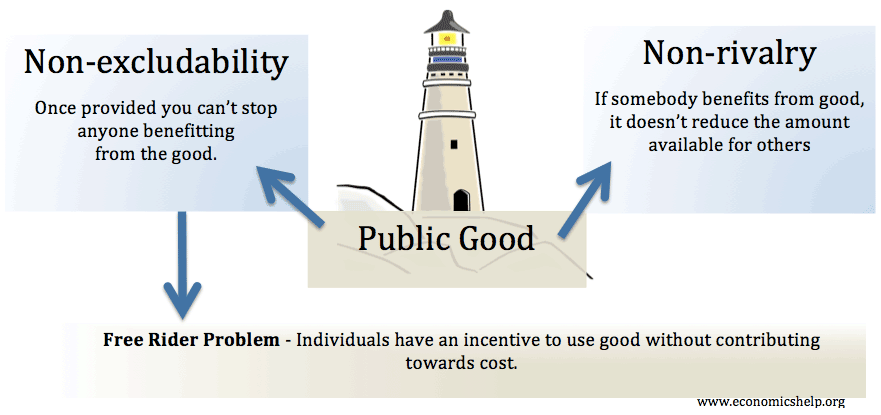
The thing to keep in mind is that regardless of one's position on the overall quantity of public broadcasting and publicly broadcast content, because it is a public good [2], per capita public (governmental) funding isn't terribly useful (though it has some use) as a measure of the sufficiency of the public funding made available to public broadcasters and content producers. [1]
So while it may well be that total U.S. spending on public broadcasting and thus delivered content may be less than or more than the same metric for other nations, merely knowing the comparative extent of that spending isn't particularly useful for evaluating the normative merits and/or demerits of the sums spent.
FWIW:
At the national level, NPR increased its total operating revenue in 2016 to $213 million, up 9% from 2015 levels. PRI saw gains as well, rising 26% to about $22 million in total revenue for 2016. APM’s total revenue, on the other hand, went down 6% year over year, accounting for $126 million in 2016. (
Source)
Notes:
- Take roads for example. Even if the U.S. spends more per capita than does any other country, the U.S. could still have "not enough" roads and/or worse quality roads than some or all other countries. That can happen for one or a combination of a variety of reasons. Some of those reasons are:
- More people using the roads.
- Not enough money being allocated to maintain them all to as high a standard as other countries do.
- Population size relative to total sums spent.
- Public broadcasting and content so delivered is what economics calls a "public good."
Because it/they are public goods, it's a safe bet that no mater where they are offered, they are likely undersupplied. That's just a near ubiquitous consequence of something being a public good, be it public broadcasts of content, education or roads, for example. Consequently:
- Providing public goods is primarily something governments do. Good governments (or more precisely, the leaders of them) endeavor to provide enough public goods (and services) to satisfy most people, but they know they won't satisfy all people.
- There will always be someone who wants more of a given public good than is provided. Such individuals have one option: pony up their own resources to fully or in part provide/obtain the incremental increase in the amount of the public good/service they desire more of.
That is simply the reality of public goods in any economy faced with existential resource scarcity and having to choose how to use resources achieve multiple objectives.
We invest far, far less on our public broadcasting resources than our contemporaries such as Germany or Japan. And a common theory holds that the reason much of the good public broadcasting we do have comes from places like Minnesota and Wisconsin and New York, is that those places are close enough to Canada, where they take it more seriously, to hear what decent public broadcasting sounds like.
What?
- All of the public broadcasting we have comes from whatever be one's public broadcasting station/channel. There are literally thousands of those broadcasters and they are dispersed all over the country.
- "Decent public broadcasting," like all broadcasting, looks and sounds clear and is bereft of static and other intrusions.
I don't see how. I've seen many an episode of M*A*S*H as it was a favorite of my mother. Never saw politics in it.
What is one to say about that?
Anyone can stand next to a tall-enough tree and see its leaves. Similarly, one can fly over a green area, know it's covered with plant life and still not know whether it's trees or grass one sees.
The fact that you didn't see politics in the dialogue on M*A*S*H doesn't mean it wasn't there. I am, however, willing to accept that the politics in it didn't obtain your notice.
The "right" referred to here is the invasion of my personal space.
Are you among the folks who complain about what's currently on their TV screen while also refusing to change the channel, leave the room, or turn off the television?
The world is full of stimuli that will approach you. Some of them one can hold at bay and others one cannot. One's sanity is best preserved by knowing which of them one cannot aptly parry and, with regard to them, undertaking non-parrying tactics. Accordingly, I suggest you stand farther away from the pump/TV screen/speaker(s) than you have been. The pump and the TV screen aren't moving, but you can; thus that is your solution for preserving the sanctity of your personal space. Another solution option is , to try wearing earplugs or larger blinders.
The "right" referred to here is the invasion of my personal space. Particularly considering the reason I'm standing there is that I'm taking delivery of a product I've already paid for, and that safety concerns with that product dictate that I have to hang around.
Why do you need to be so close to the pump that you can't observe your vehicle from a greater distance? Last I checked, nobody is forced to remain at a gas pump while the pump is operating. What one is implored to do is turn off the car's engine while the gas is pumping. Lock the care and take key with you when you exit the vehicle if you're concerned about someone steeling the vehicle or breaking into it or stealing it. There are myriad solution options for allowing you to maintain a reasonable measure of obliviousness to the TV audio and video content being aired at a gas pump. Surely you can identify at least one that'll work for you.