
playtime
Diamond Member
- Aug 18, 2015
- 65,656
- 58,063
- 3,645
Follow along with the video below to see how to install our site as a web app on your home screen.
Note: This feature may not be available in some browsers.

Passing the buck

According to the so-called 'economists', tariffs were supposed to have crashed the economy, greatly escalated inflation, and swelled the deficit by now. None of that has happened. No only have billions and billions been pouring in to the U.S. treasury, but one by one trade deals are putting America on an equal and profitable footing with countries that have been exploiting us and taking advantage of us for many years.
No longer is America the world's patsy to give them free security, unfair (to us) trade, be their sugar daddy.

Don’t crush that dwarf, hand me the pliers.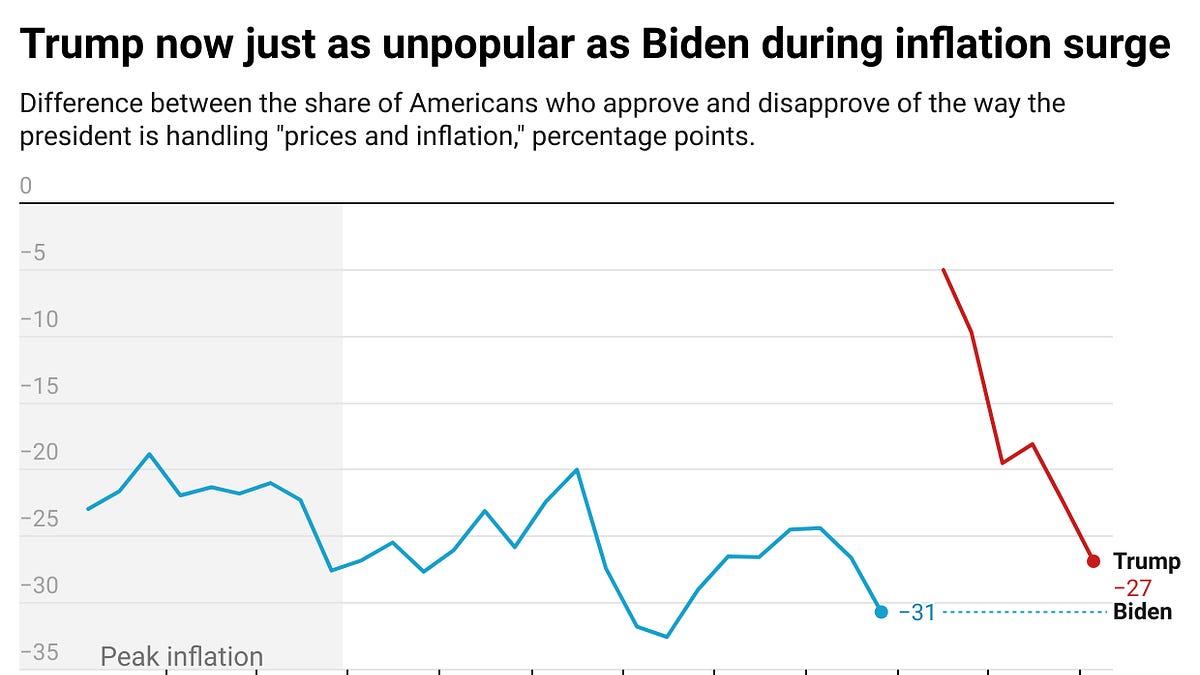
Trump is as unpopular on inflation as Biden was in 2022
The president’s approval rating on prices and the economy is approaching Joe Biden’s low point during peak inflationwww.gelliottmorris.com
We generate basically zero electricity from oil.
Link?We generate basically zero electricity from oil.

Electricity bills at our house are almost double what they were before Biden took office. He had four years to screw everything up. Trump can be forgiven if it takes him more than eight months to fix that.Household electricity bills have already shot up nearly 10% since Trump took office, and a study by Climate Power and Energy Innovation warns they could climb even higher if his policies keep gutting clean energy.
When Trump takes money away from clean energy, it means fewer wind turbines, solar panels, and energy-saving programs get built. That makes us keep using more expensive old stuff, like coal and gas, which cost more to run when fuel prices go up. With less cheap clean energy in the mix, power companies have to charge you more for the electricity coming into your house...so your bill gets bigger.
#MAGA
Trump tariffs and green energy rollbacks push household electricity bills up 10%
US energy secretary said energy prices could hurt GOP in midterms, but blamed Democrats for price increaseswww.theguardian.com
When energy costs rise, the cost of all production follows. Inflation comes from money printing.
Montel | Blog - The Correlation Between Energy Prices and Inflation
When energy costs rise, inflation rates often follow, creating a ripple effect throughout the economy.montel.energy
Exploring the Connection Between Energy Costs, Inflationary Pressures, and Economic Ripple EffectsWe generate basically zero electricity from oil.
The big beautiful billWhen energy costs rise, the cost of all production follows. Inflation comes from money printing.
from AI right from the top of my link ...
Factors affecting electricity tariffs
- Cost of Generation: This includes the expenses associated with building, operating, and maintaining power plants.
- Transmission and Distribution Costs: The cost of delivering electricity to consumers through power lines and substations.
- Government Policies and Regulations: These can include tariffs on imported materials or energy sources, and policies that impact the development of different types of power generation.
And Biden did both.When energy costs rise, the cost of all production follows. Inflation comes from money printing.
The sun is in his eyesElectricity bills at our house are almost double what they were before Biden took office. He had four years to screw everything up. Trump can be forgiven if it takes him more than eight months to fix that.
The big beautiful billAnd Biden did both.
Biden policy. Stifling future fossil fuel while printing $1400 weekly Covid checks.The big beautiful bill
ExcusesElectricity bills at our house are almost double what they were before Biden took office. He had four years to screw everything up. Trump can be forgiven if it takes him more than eight months to fix that.
Biden policy. Stifling future fossil fuel while printing $1400 weekly Covid checks.
Energy stifling and money printing.

 theconversation.com
What is U.S. electricity generation by energy source?
Prices go up under threat of restriction. Basic economic shit.Under both Trump and Biden-Harris, US oil and gas production surged to record highs, despite very different energy goals
Trump aggressively supported fossil fuels. The Biden-Harris administration focused on replacing them with clean energy. Yet, data show the US oil and gas industries still thrived under both.


})
})

