A few individuals and organizations have shown largesse. Mark Zuckerberg and Priscilla Chan recently pledged $25 million of the couple’s Facebook fortune to the CDC Foundation to combat the virus. Earlier, the Bill & Melinda Gates Foundation committed $50 million to international efforts, and Microsoft co-founder Paul G. Allen’s family foundation donated at least $20 million. However, for most Americans, Ebola is "on our news radar, but it doesn’t seem to be on our philanthropic radar," said Patrick Rooney, associate dean of the Indiana University Lilly Family School of Philanthropy.
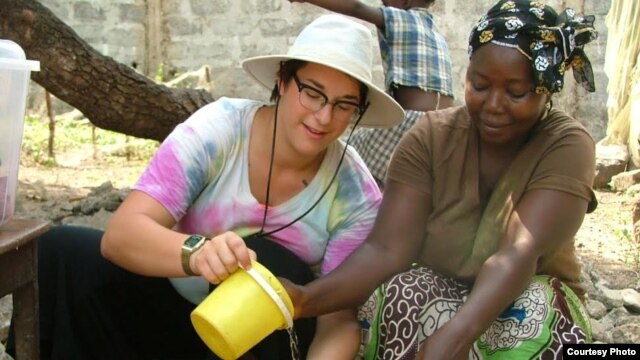
Sara Laskowski, left, gets a cooking lesson from her Peace Corps ‘host mother’ in Dubreka, Guinea. Pulled from the country because of Ebola fears, Laskowski promotes an Ebola relief fund for the region.
Since March, the virus ravaging West Africa has killed more than 4,500 and sickened at least twice as many, almost entirely in Guinea, Sierra Leone and especially Liberia. While recent infections in the United States have brought home the disease’s worldwide threat, to date “overall giving in this disaster has been pretty low – particularly by households and corporations,” Rooney said. He and other experts attribute the tepid response to several factors: Americans’ limited familiarity with the continent, uncertainty about how best to help, and a perception among some potential donors that the U.S. government already is responding sufficiently on their behalf.
A billion-dollar battle
The World Health Organization estimates it will take almost $1 billion to halt the epidemic. The leaders of Guinea, Liberia and Sierra Leone have begged the international community for more funding, physicians and care facilities. One indication of individuals’ restrained giving comes from the American Red Cross. Of the $2.9 million it has raised to combat Ebola in West Africa, all but $100,000 has come from Allen’s foundation. In contrast, the aid organization generated $486 million to assist Haiti after a devastating earthquake in January 2010 – most of it within the first six months, spokeswoman Jana Sweeny said. Americans gave more than $1.4 billion overall for Haiti earthquake relief, according to evaluator Charity Navigator. They donated $1.6 billion to speed South Asia’s recovery after the 2004 Indian Ocean earthquake and tsunami. The Haiti earthquake triggered a barrage of queries from individuals offering help, Sweeny said. Not so this time.
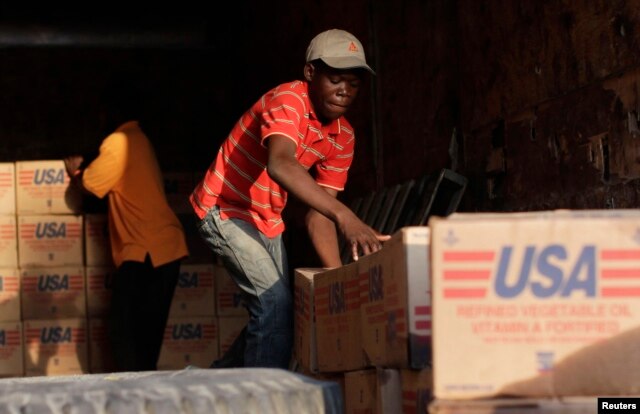
Americans donated more than $1.4 billion to nearby Haiti after a devastating earthquake in January 2010. Here, men stack supplies in Port-au-Prince
Nor has the aid organization solicited donations on its website’s home page. "We have a landing page specifically for Ebola,” she explained, adding that the International Federation of Red Cross and Red Crescent Societies is coordinating the response with the countries involved. The American operation has sent relief supplies and help with logistics. Without prominent fundraising campaigns, individual donors may not know the best way to channel support to West Africa. "I don’t know where I’d go to make a contribution to [fight] Ebola as a private citizen," said John Campbell, a former U.S. ambassador to Nigeria and a senior fellow for African policy studies at the Council on Foreign Relations in Washington. "There is no highly publicized appeal. There’s no ‘call 1-800’ message." The U.S. Agency for International Development’s Center for International Disaster Information does have a list of nongovernmental organizations providing disaster relief, but it can be hard to find.
Some businesses bemused