
C_Clayton_Jones
Diamond Member
‘Seventh-generation farmer Brian Harbage grows corn, soybeans and grass, and runs a cattle operation across five counties in western Ohio. In the world of agriculture, his work makes up a large business. And still, the past two years have been immensely challenging amid the twin threats of the climate crisis and the Trump administration.
Last year, regions of the eastern corn belt saw just 20% of crops harvested due to a drought that brought little precipitation between June and October. It was part of a climatic cycle that involved drought, heat and wildfires that cost crop producers $11bn nationally. “Last year, we got a good crop started, and then it just quit raining. Our yields were definitely reduced by at least 25-30%,” says Harbage. This year, it’s been almost the complete opposite.
Excess rainfall has fueled severe disease and pest pressure on the several thousand acres of soybeans and corn he planted in the spring. “There were three-day windows, it seemed like. It would just start to get dried out and it would rain,” he says. “We finished up [planting] at the beginning of June. We like to be finished by 15 May. Anything that’s planted later means that it was probably planted in marginal conditions since we were rushing to get it in, and secondly, it doesn’t have near enough time to mature before harvest.”
With the 2025 harvest of corn and soybeans approaching – America’s biggest two crops and the linchpins of agriculture – crop growers are facing down the gauntlet. Climatic swings, rocketing operating costs and low international demand, caused, in large part, by government policy in the shape of tariffs, has created the perfect storm. “Farming is not for the worrisome,” says Harbage. “We always kid that we are crisis managers.” Suicide rates among farmers are 3.5 times the national level.’
 www.theguardian.com
Trump’s unwarranted, meritless tariffs and human-caused climate change Trump and Republicans refuse to do anything about.
Last year, regions of the eastern corn belt saw just 20% of crops harvested due to a drought that brought little precipitation between June and October. It was part of a climatic cycle that involved drought, heat and wildfires that cost crop producers $11bn nationally. “Last year, we got a good crop started, and then it just quit raining. Our yields were definitely reduced by at least 25-30%,” says Harbage. This year, it’s been almost the complete opposite.
Excess rainfall has fueled severe disease and pest pressure on the several thousand acres of soybeans and corn he planted in the spring. “There were three-day windows, it seemed like. It would just start to get dried out and it would rain,” he says. “We finished up [planting] at the beginning of June. We like to be finished by 15 May. Anything that’s planted later means that it was probably planted in marginal conditions since we were rushing to get it in, and secondly, it doesn’t have near enough time to mature before harvest.”
With the 2025 harvest of corn and soybeans approaching – America’s biggest two crops and the linchpins of agriculture – crop growers are facing down the gauntlet. Climatic swings, rocketing operating costs and low international demand, caused, in large part, by government policy in the shape of tariffs, has created the perfect storm. “Farming is not for the worrisome,” says Harbage. “We always kid that we are crisis managers.” Suicide rates among farmers are 3.5 times the national level.’
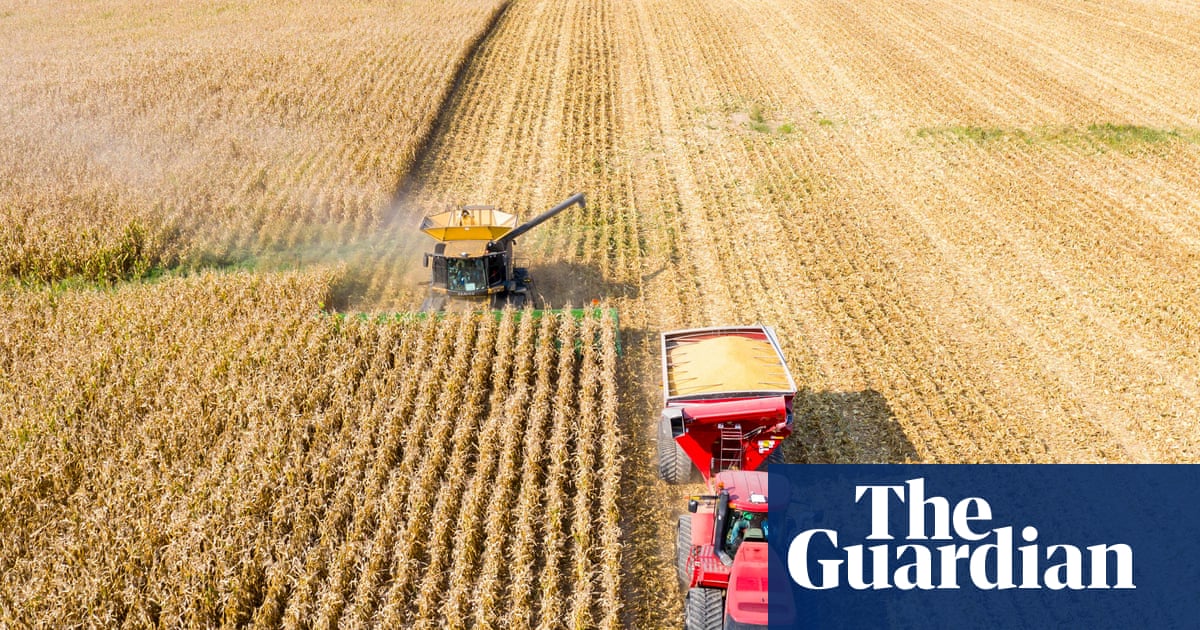
Farmers in US midwest squeezed by Trump tariffs and climate crisis
Excess rainfall has fueled disease and pest pressure in Ohio’s soybean fields as a trade war with China puts farmers’ biggest export market in doubt
www.theguardian.com
Trump’s unwarranted, meritless tariffs and human-caused climate change Trump and Republicans refuse to do anything about.


