Part 4
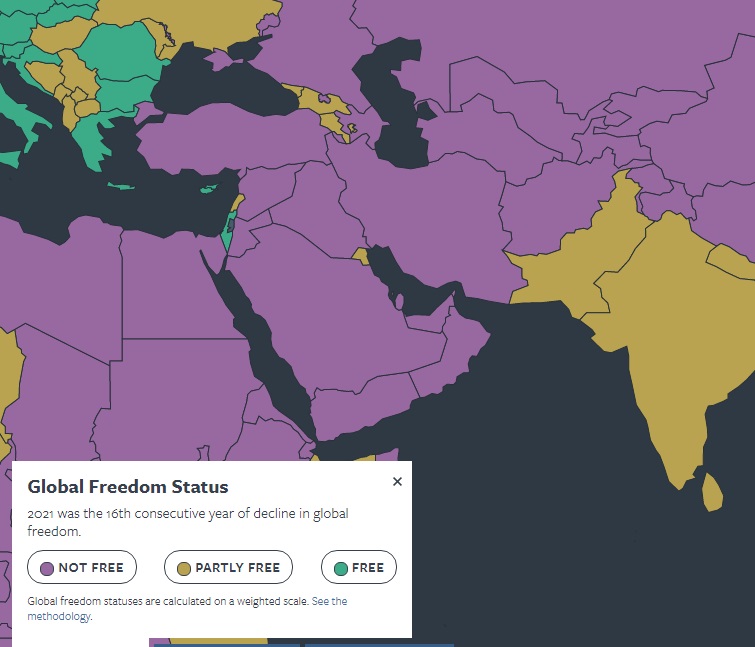
Then there are the domestic achievements of Israeli Arabs within Israeli society. Consider Mansour Abbas, who leads the United Arab List Party (a conservative Islamist party, no less). He sits in the Knesset as a member of the national governing coalition and was the kingmaker responsible for the current premier’s ascension. There are Israeli Arab Supreme Court Justices Salim Joubran, George Karra, and now Khaled Kabub. Major General Ghassan Alian, the first Arab commander of the Israel Defense Force’s Golani Brigade, was embraced at the time of his appointment by now Prime Minister Naftali Bennet as “a brother.”
Sometimes, familial relationships between high-profile Israeli Jews and Arabs go beyond the metaphorical. Tzachi Halevy, a Jewish actor on Israel’s hit Netflix series
Fauda, married Israeli Arab TV news anchor Lucy Aharish in 2018. This is a strange expression of apartheid life if ever there was one. The couple had their first child last year.
Down at the level of ordinary, noncelebrity life, victims of South Africa’s old system would be shocked to learn what’s being labeled “apartheid” in Israel. Unlike the Johannesburg General Hospital, where my father was head of the Department of Gastroenterology, Israeli hospitals (staffed by Jews and Arabs alike) admit all, including both terrorists and their victims. Israelis are familiar with stories of organ transplants traversing one side of the national divide to provide life to the other and cases such as the bone-marrow transplant provided to the niece of Hamas terrorist leader Ismail Haniyeh. She was treated in an Israeli hospital during Operation Guardian of the Walls in May 2021, even as Hamas rained down rockets on civilian targets. Haniyeh’s daughter has also reportedly benefited from treatment in an Israeli hospital.
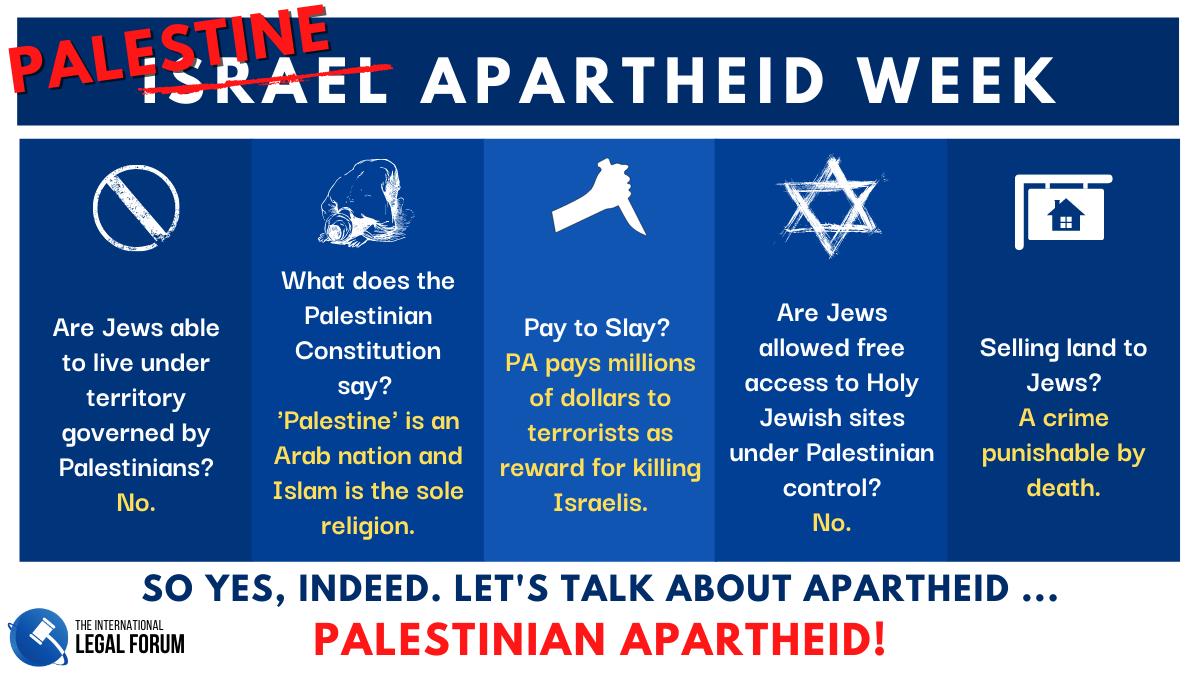
Despite such inconvenient facts, Amnesty accuses Israel of “consider[ing] and treat[ing] Palestinians as an inferior non-Jewish racial group,” with “segregation… conducted in a systematic and highly institutionalized manner through laws, policies and practices, all of which are intended to prevent Palestinians from claiming and enjoying equal rights to Jewish Israelis within the territory of Israel and within the OPT, and thus are intended to oppress and dominate the Palestinian people.”
This is, as we’ve seen, self-evidently false. As for Palestinians living “within the OPT,” it is true they do not share the rights and privileges of Israeli citizenship because, well, they are not Israeli citizens. Furthermore, unlike Israeli citizens, those Palestinians are, generally speaking, ideologically committed to Israel’s destruction with varying degrees of fervor. This, along with the Palestinians’ existence under an entirely different legal regime, means that Israel does, appropriately, treat those Palestinians differently than her own citizens. If this is apartheid, then so too is the United States’ failure to extend citizenship to the Taliban.
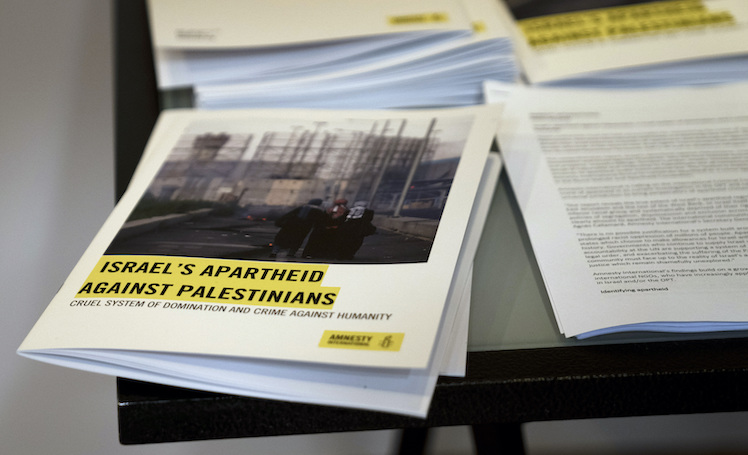
In March, the human-rights organization Amnesty International engineered a publicity stunt. It wasn’t aimed at condemning Vladimir Putin’s Russia, which had just sent roughly 150,000 troops into Ukraine to slaughter civilians

www.commentary.org

 www.camera.org

 www.jpost.com
 www.timesofisrael.com
 unitedwithisrael.org


 www.algemeiner.com