232 attoseconds, according to this paper.
 www.earth.com
Which means it's finite.
That's about 1/5 of a femtosecond.
"Not instantaneous". We have lasers that can keep up.
The experiment involves zapping an atom with so much energy that it kicks out an electron, AND forces the remaining electron into a higher orbital. The two electrons then turn out to be entangled.
Since it apparently takes a finite amount of time to entangle two quantum states, it is reasonable to conjecture that it also takes a finite amount of time to collapse them.
Which begs the question of ultra-fast measurements.
Quantum entanglement speed is measured for the first time, and it's too fast to comprehend
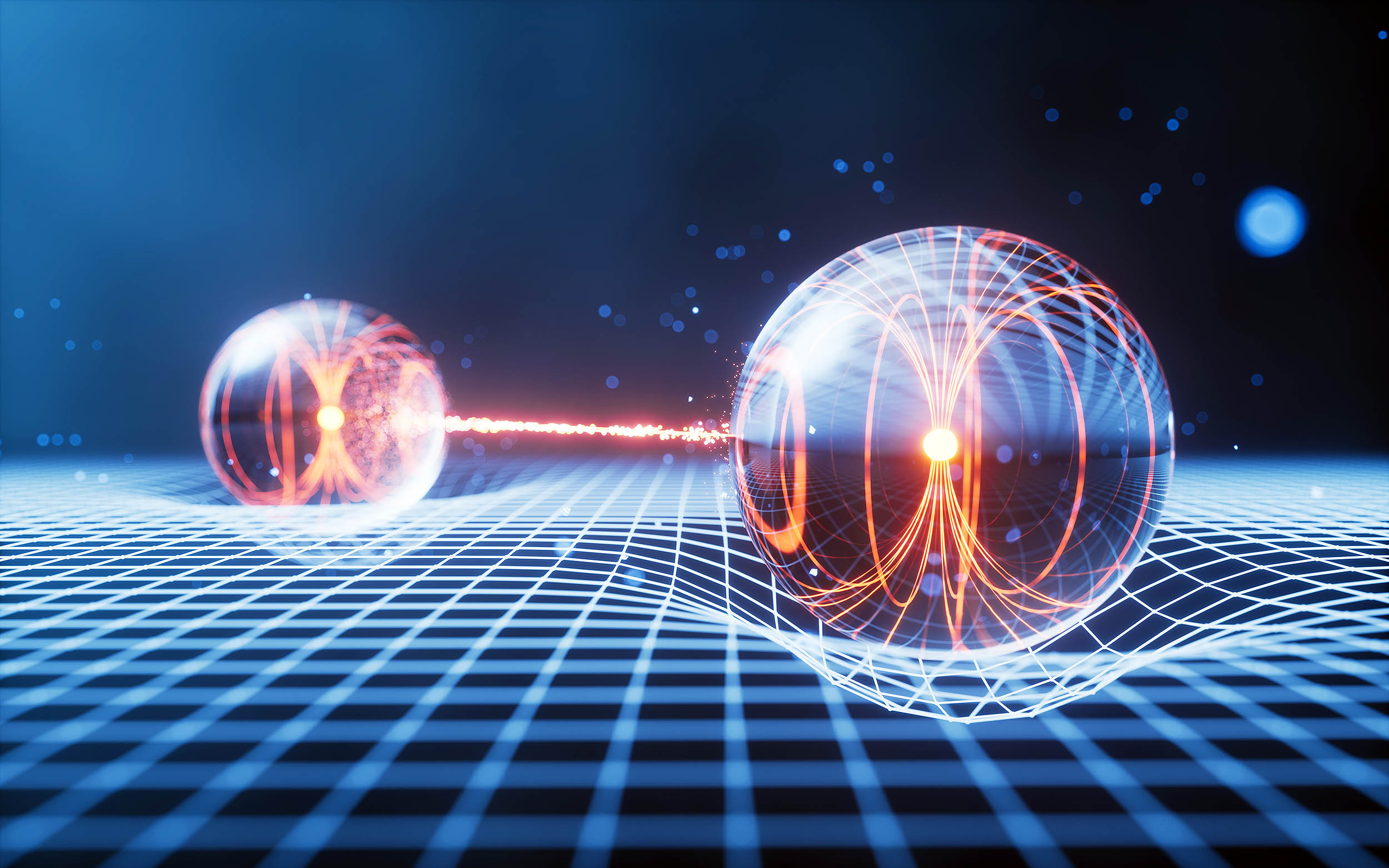
Quantum entanglement happens when two particles become interconnected and share a single state. Scientists have measured how fast it happens.
Which means it's finite.
That's about 1/5 of a femtosecond.
"Not instantaneous". We have lasers that can keep up.
The experiment involves zapping an atom with so much energy that it kicks out an electron, AND forces the remaining electron into a higher orbital. The two electrons then turn out to be entangled.
Since it apparently takes a finite amount of time to entangle two quantum states, it is reasonable to conjecture that it also takes a finite amount of time to collapse them.
Which begs the question of ultra-fast measurements.


