
montelatici
Gold Member
- Feb 5, 2014
- 18,686
- 2,133
- 280
Non sequitur.
Follow along with the video below to see how to install our site as a web app on your home screen.
Note: This feature may not be available in some browsers.

Get over it dipstick, your own site very clearly states that the Ottomans did not recognize a Palestine or Palestinians for the last 700. It was all Syria or Southern Syria to them. Even Arabs leaders acknowledged that.It's another fraud that Monty tried to perpetrate.Wait a minute.

Thats a very recently doctored map. As in your own non verifiable link/video shows nothing previous to about 1875 ish. Which is very modern history and exactly what Roudy is saying
Afternoon Map: Ottoman and Arab Maps of Palestine, 1880s-1910s
Ottoman and Arab Maps of Palestine, 1880s-1910s
A map produced by the Arab invaders / colonizers.
Bingo. I'll have to include it in the false claims against Israel thread unless they can come up with examples from say 1300 to say 1900 with everything being in the last 30 years or so hardly counting as representative of the entire period
The Hasbara Fellow happily ignoring the 1331 Ottoman Military map and the various maps from the 1800s.
Dig....

Let us go over it again from the site you refer to:
"The first map in this collection was published in Filastin Risalesi, an official publication of the Ottoman army intended to be used as an officer’s manual for the Palestine region.The manual itself is a social, topographical, demographic and economic survey of Palestine circa its time of publication, 1331 "
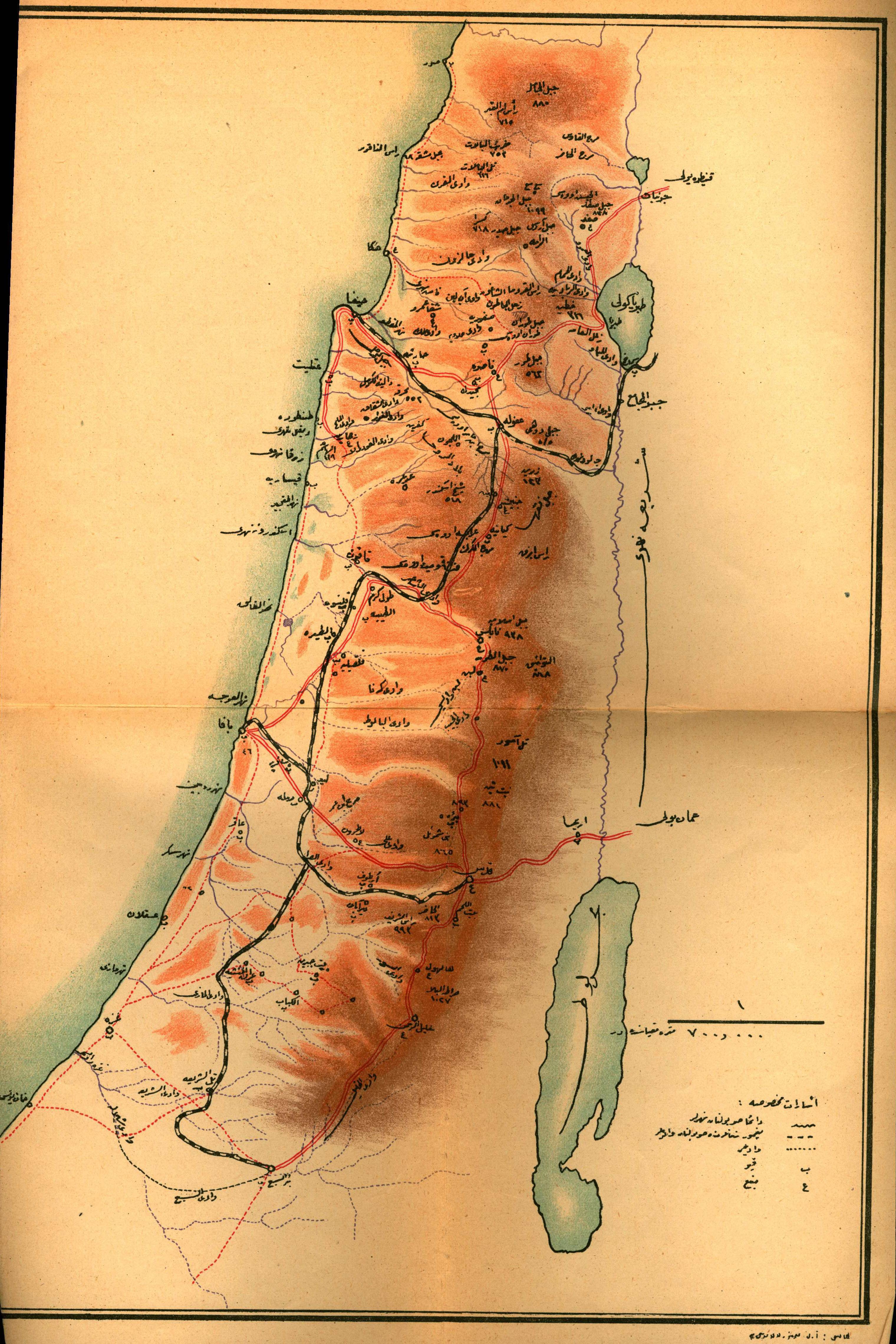

The name doesn't change the fact that there were people who had been living there for generations and they have rights.OK so there we have it. So you are admitting that Roudy is right and that the Ottomans rarely if ever used the term palestine, instead considering the area as part of southern Syria. And you are now saying that it doesn't matter.
Brilliant argument
It most certainly matters since the entire conversant is in reference to the invention of a place called palestine in the early 20th century. In which case you just admitted the claim does appear to be accurate.
Said the Muslim / Nazi / antisemite internet troll who masturbates to the imminent destruction of Israel five times a day.
The Ottomans also didn't believe in the Palestine myth, nor did the Arab leaders.
Something wrong with this picture methinks.
The name doesn't change the fact that there were people who had been living there for generations and they have rights.OK so there we have it. So you are admitting that Roudy is right and that the Ottomans rarely if ever used the term palestine, instead considering the area as part of southern Syria. And you are now saying that it doesn't matter.
Brilliant argument
It most certainly matters since the entire conversant is in reference to the invention of a place called palestine in the early 20th century. In which case you just admitted the claim does appear to be accurate.
The lost Palestinian JewsThe name doesn't change the fact that there were people who had been living there for generations and they have rights.OK so there we have it. So you are admitting that Roudy is right and that the Ottomans rarely if ever used the term palestine, instead considering the area as part of southern Syria. And you are now saying that it doesn't matter.
Brilliant argument
It most certainly matters since the entire conversant is in reference to the invention of a place called palestine in the early 20th century. In which case you just admitted the claim does appear to be accurate.

They really have made NO effort,prior to and after 1948 they eliminated most Palestinians,saying NO ONE lived in this area .......your hypocricy defies belief,you really are quite Shameful and a Bull Shit Artist to BOOT..steveThe name doesn't change the fact that there were people who had been living there for generations and they have rights.OK so there we have it. So you are admitting that Roudy is right and that the Ottomans rarely if ever used the term palestine, instead considering the area as part of southern Syria. And you are now saying that it doesn't matter.
Brilliant argument
It most certainly matters since the entire conversant is in reference to the invention of a place called palestine in the early 20th century. In which case you just admitted the claim does appear to be accurate.
If you are referring to the same rights enjoyed by Judaic people living in Arab countries then you are sadly mistaken. The Judaic people were expelled from most Arab countries previous to 67 but the Israeli's have made every effort to tolerate Arab presence in Israel.

Here's a little bit of information about how Palestine got it's name and where it's actually located. The link is the source of my finding.
Palestine From Roman to Ottoman Rule
About 61 B.C., Roman troops under Pompei invaded Judea and sacked Jerusalem in support of King Herod. Judea had become a client state of Rome. Initially it was ruled by the client Herodian dynasty. The land was divided into districts of Judea, Galilee, Peraea and a small trans-Jordanian section, each of which eventually came under direct Roman control. The Romans called the large central area of the land, which included Jerusalem, Judea. According to Christian belief, Jesus Christ was born in Bethlehem, Judea, in the early years of Roman rule. Roman rulers put down Jewish revolts in about A.D. 70 and A.D. 132. In A.D. 135, the Romans drove the Jews out of Jerusalem, following the failed Bar Kochba revolt. The Romans named the area Palaestina, at about this time. The name Palaestina, which became Palestine in English, is derived from Herodotus, who used the term Palaistine Syriato refer to the entire southern part of Syria, meaning "Philistine Syria." Most of the Jews who continued to practice their religion fled or were forcibly exiled from Palestine, eventually forming a second Jewish Diaspora. However, Jewish communities continued to exist, primarily in the Galilee, the northernmost part of Palestine. Palestine was governed by the Roman Empire until the fourth century A.D. (300's) and then by the Byzantine Empire. In time, Christianity spread to most of Palestine. The population consisted of Jewish converts to Christianity and paganism, peoples imported by the Romans, and others who had probably inhabited Palestine continuously.
During the seventh century (A.D. 600's), Muslim Arab armies moved north from Arabia to conquer most of the Middle East, including Palestine. Jerusalem was conquered about 638 by the Caliph Umar (Omar) who gave his protection to its inhabitants.Muslim powers controlled the region until the early 1900's. The rulers allowed Christians and Jews to keep their religions. However, most of the local population gradually accepted Islam and the Arab-Islamic culture of their rulers. Jerusalem (Al-Quds) became holy to Muslims as the site where, according to tradition, Muhammad ascended to heaven after a miraculous overnight ride from Mecca on his horse Al-Buraq. The al-Aqsa mosque was built on the site generally regarded as the area of the Jewish temples.
The Seljuk Turks conquered Jerusalem in 1071, but their rule in Palestine lasted less than 30 years. Initially they were replaced by the Fatimid rulers of Egypt. The Fatimids took advantage of the Seljuk struggles with the Christian crusaders. They made an alliance with the crusaders in 1098 and captured Jerusalem, Jaffa and other parts of Palestine.
Brief History of of Palestine, Israel and the Israeli Palestinian Conflict (Arab-Israeli conflict, Middle East Conflict) Note
I just know you read "my" prose, Digger. Open the link.Here's a little bit of information about how Palestine got it's name and where it's actually located. The link is the source of my finding.
Palestine From Roman to Ottoman Rule
About 61 B.C., Roman troops under Pompei invaded Judea and sacked Jerusalem in support of King Herod. Judea had become a client state of Rome. Initially it was ruled by the client Herodian dynasty. The land was divided into districts of Judea, Galilee, Peraea and a small trans-Jordanian section, each of which eventually came under direct Roman control. The Romans called the large central area of the land, which included Jerusalem, Judea. According to Christian belief, Jesus Christ was born in Bethlehem, Judea, in the early years of Roman rule. Roman rulers put down Jewish revolts in about A.D. 70 and A.D. 132. In A.D. 135, the Romans drove the Jews out of Jerusalem, following the failed Bar Kochba revolt. The Romans named the area Palaestina, at about this time. The name Palaestina, which became Palestine in English, is derived from Herodotus, who used the term Palaistine Syriato refer to the entire southern part of Syria, meaning "Philistine Syria." Most of the Jews who continued to practice their religion fled or were forcibly exiled from Palestine, eventually forming a second Jewish Diaspora. However, Jewish communities continued to exist, primarily in the Galilee, the northernmost part of Palestine. Palestine was governed by the Roman Empire until the fourth century A.D. (300's) and then by the Byzantine Empire. In time, Christianity spread to most of Palestine. The population consisted of Jewish converts to Christianity and paganism, peoples imported by the Romans, and others who had probably inhabited Palestine continuously.
During the seventh century (A.D. 600's), Muslim Arab armies moved north from Arabia to conquer most of the Middle East, including Palestine. Jerusalem was conquered about 638 by the Caliph Umar (Omar) who gave his protection to its inhabitants.Muslim powers controlled the region until the early 1900's. The rulers allowed Christians and Jews to keep their religions. However, most of the local population gradually accepted Islam and the Arab-Islamic culture of their rulers. Jerusalem (Al-Quds) became holy to Muslims as the site where, according to tradition, Muhammad ascended to heaven after a miraculous overnight ride from Mecca on his horse Al-Buraq. The al-Aqsa mosque was built on the site generally regarded as the area of the Jewish temples.
The Seljuk Turks conquered Jerusalem in 1071, but their rule in Palestine lasted less than 30 years. Initially they were replaced by the Fatimid rulers of Egypt. The Fatimids took advantage of the Seljuk struggles with the Christian crusaders. They made an alliance with the crusaders in 1098 and captured Jerusalem, Jaffa and other parts of Palestine.
Brief History of of Palestine, Israel and the Israeli Palestinian Conflict (Arab-Israeli conflict, Middle East Conflict) Note
Far To BRIEF Hoss,
You omitted the Hittites...........very important error,moreover much of your prose is completely erroneous as you know Hoss,but keep trying mate.

Who gave you my address??
I did actually,for about 10 Minutes then stopped as it was riddled with errors,I note it is a Pro Jewish site,and left it at that........never mentioned where the Palestinians came from ect,.steve...........I just know you read "my" prose, Digger. Open the link.Here's a little bit of information about how Palestine got it's name and where it's actually located. The link is the source of my finding.
Palestine From Roman to Ottoman Rule
About 61 B.C., Roman troops under Pompei invaded Judea and sacked Jerusalem in support of King Herod. Judea had become a client state of Rome. Initially it was ruled by the client Herodian dynasty. The land was divided into districts of Judea, Galilee, Peraea and a small trans-Jordanian section, each of which eventually came under direct Roman control. The Romans called the large central area of the land, which included Jerusalem, Judea. According to Christian belief, Jesus Christ was born in Bethlehem, Judea, in the early years of Roman rule. Roman rulers put down Jewish revolts in about A.D. 70 and A.D. 132. In A.D. 135, the Romans drove the Jews out of Jerusalem, following the failed Bar Kochba revolt. The Romans named the area Palaestina, at about this time. The name Palaestina, which became Palestine in English, is derived from Herodotus, who used the term Palaistine Syriato refer to the entire southern part of Syria, meaning "Philistine Syria." Most of the Jews who continued to practice their religion fled or were forcibly exiled from Palestine, eventually forming a second Jewish Diaspora. However, Jewish communities continued to exist, primarily in the Galilee, the northernmost part of Palestine. Palestine was governed by the Roman Empire until the fourth century A.D. (300's) and then by the Byzantine Empire. In time, Christianity spread to most of Palestine. The population consisted of Jewish converts to Christianity and paganism, peoples imported by the Romans, and others who had probably inhabited Palestine continuously.
During the seventh century (A.D. 600's), Muslim Arab armies moved north from Arabia to conquer most of the Middle East, including Palestine. Jerusalem was conquered about 638 by the Caliph Umar (Omar) who gave his protection to its inhabitants.Muslim powers controlled the region until the early 1900's. The rulers allowed Christians and Jews to keep their religions. However, most of the local population gradually accepted Islam and the Arab-Islamic culture of their rulers. Jerusalem (Al-Quds) became holy to Muslims as the site where, according to tradition, Muhammad ascended to heaven after a miraculous overnight ride from Mecca on his horse Al-Buraq. The al-Aqsa mosque was built on the site generally regarded as the area of the Jewish temples.
The Seljuk Turks conquered Jerusalem in 1071, but their rule in Palestine lasted less than 30 years. Initially they were replaced by the Fatimid rulers of Egypt. The Fatimids took advantage of the Seljuk struggles with the Christian crusaders. They made an alliance with the crusaders in 1098 and captured Jerusalem, Jaffa and other parts of Palestine.
Brief History of of Palestine, Israel and the Israeli Palestinian Conflict (Arab-Israeli conflict, Middle East Conflict) Note
Far To BRIEF Hoss,
You omitted the Hittites...........very important error,moreover much of your prose is completely erroneous as you know Hoss,but keep trying mate.
They came from Syria, Jordan, Egypt. Can you tell me where the Australians come from or are they indigenous?I did actually,for about 10 Minutes then stopped as it was riddled with errors,I note it is a Pro Jewish site,and left it at that........never mentioned where the Palestinians came from ect,.steve...........I just know you read "my" prose, Digger. Open the link.Here's a little bit of information about how Palestine got it's name and where it's actually located. The link is the source of my finding.
Palestine From Roman to Ottoman Rule
About 61 B.C., Roman troops under Pompei invaded Judea and sacked Jerusalem in support of King Herod. Judea had become a client state of Rome. Initially it was ruled by the client Herodian dynasty. The land was divided into districts of Judea, Galilee, Peraea and a small trans-Jordanian section, each of which eventually came under direct Roman control. The Romans called the large central area of the land, which included Jerusalem, Judea. According to Christian belief, Jesus Christ was born in Bethlehem, Judea, in the early years of Roman rule. Roman rulers put down Jewish revolts in about A.D. 70 and A.D. 132. In A.D. 135, the Romans drove the Jews out of Jerusalem, following the failed Bar Kochba revolt. The Romans named the area Palaestina, at about this time. The name Palaestina, which became Palestine in English, is derived from Herodotus, who used the term Palaistine Syriato refer to the entire southern part of Syria, meaning "Philistine Syria." Most of the Jews who continued to practice their religion fled or were forcibly exiled from Palestine, eventually forming a second Jewish Diaspora. However, Jewish communities continued to exist, primarily in the Galilee, the northernmost part of Palestine. Palestine was governed by the Roman Empire until the fourth century A.D. (300's) and then by the Byzantine Empire. In time, Christianity spread to most of Palestine. The population consisted of Jewish converts to Christianity and paganism, peoples imported by the Romans, and others who had probably inhabited Palestine continuously.
During the seventh century (A.D. 600's), Muslim Arab armies moved north from Arabia to conquer most of the Middle East, including Palestine. Jerusalem was conquered about 638 by the Caliph Umar (Omar) who gave his protection to its inhabitants.Muslim powers controlled the region until the early 1900's. The rulers allowed Christians and Jews to keep their religions. However, most of the local population gradually accepted Islam and the Arab-Islamic culture of their rulers. Jerusalem (Al-Quds) became holy to Muslims as the site where, according to tradition, Muhammad ascended to heaven after a miraculous overnight ride from Mecca on his horse Al-Buraq. The al-Aqsa mosque was built on the site generally regarded as the area of the Jewish temples.
The Seljuk Turks conquered Jerusalem in 1071, but their rule in Palestine lasted less than 30 years. Initially they were replaced by the Fatimid rulers of Egypt. The Fatimids took advantage of the Seljuk struggles with the Christian crusaders. They made an alliance with the crusaders in 1098 and captured Jerusalem, Jaffa and other parts of Palestine.
Brief History of of Palestine, Israel and the Israeli Palestinian Conflict (Arab-Israeli conflict, Middle East Conflict) Note
Far To BRIEF Hoss,
You omitted the Hittites...........very important error,moreover much of your prose is completely erroneous as you know Hoss,but keep trying mate.


