Coffee -- Even Decaf -- Could Help Cut Diabetes Risk

longknife

Diamond Member
Joined
Sep 21, 2012
Messages
42,221
Reaction score
13,121
Points
2,250
Location
Sin City
n-COFFEE-large570.jpg


By Don Rauf @ 50 – HuffPost Coffee -- Even Decaf -- Could Help Cut Diabetes Risk

Drinking six cups of coffee a day may seem extreme to some, but it could cut the risk of getting diabetes. For those worried about caffeine intake, decaf may work just as well.

Studies have found that a combination of chemicals in coffee beans may affect metabolism — the chemical processes in the body that converts or uses energy. One chemical, chlorogenic acid, Acute Effects of Decaffeinated Coffee and the Major Coffee Components Chlorogenic Acid and Trigonelline on Glucose Tolerance may lower blood sugar levels. Caffeine, however, might not make a difference.

Researchers recently discovered that both caffeinated and decaffeinated coffee are tied to reducing diabetes risk, and the more people drink, the lower their risk appears to be.
If this is true, why, after years and years of drinking 6 – 8 cups of coffee every day do I have Type-II diabetes? :eusa_whistle::eusa_whistle::eusa_whistle:
 
Better and safer ways thand ecaf. The decaf process involves chemicals so I'd think while it might reduce diabetes chances, it probably increases other risks.
 
Coffee...there's nothing it can't do!

Coffee IS God.
 
Amputations fall too...
:eusa_clap:
Study: Diabetic heart attacks and strokes falling
Apr 16,`14 -- In the midst of the diabetes epidemic, a glimmer of good news: Heart attacks, strokes and other complications from the disease are plummeting.
Over the last two decades, the rates of heart attacks and strokes among diabetics fell by more than 60 percent, a new federal study shows. The research also confirms earlier reports of drastic declines in diabetes-related kidney failure and amputations. The drop is mainly attributed to better screening, medicines and care. The improvements came even as the number of U.S. adults with diabetes more than tripled in those 20 years. "It is great news," said Dr. John Buse, a University of North Carolina diabetes specialist, of the drop in rates. "The prognosis for folks with diabetes has improved dramatically over the last two decades, at least for those with good access to care," Buse said in an email. He was not involved in the study. The Centers for Disease Control and Prevention research is reported in Thursday's New England Journal of Medicine.

Diabetes is a disease in which sugar builds up in the blood. The most common form is tied to obesity, and the number of diabetics has ballooned with the rise in obesity. Today, roughly 1 in 10 U.S. adults has the disease, and it is the nation's seventh leading cause of death, according to the CDC. The obese are already at higher risk for heart attacks and strokes. But diabetics seem to have more narrowing of their blood vessels - a condition that can further foster those problems. In the 1990s, key studies showed that diabetics could keep their blood sugar, blood pressure and cholesterol under control. The research suggested that vision and heart problems, leg and foot amputations and other diabetes complications were not necessarily inevitable. Meanwhile, insurance programs expanded coverage of blood sugar monitors and diabetes treatment. Gradually, larger numbers of diabetics were diagnosed earlier and with milder disease.

For the new study, the CDC tallied complication rates from 1990 to 2010 for diabetics ages 20 or older. During that time, the heart attack rate fell 68 percent, from 141 to 45.5 per 10,000 diabetics, according to hospital records. The decline was so great that, despite the growing ranks of diabetics, the actual number hospitalized with heart attacks dropped from more than 140,000 to about 136,000. The stroke rate fell less dramatically - but still declined by more than half, finishing at 53 per 10,000. The heart attack and stroke rates for diabetics are essentially even now, lead author Edward Gregg noted. The researchers saw declines in hearts attack and stroke rates for non-diabetics as well, but those improvements weren't nearly as big as they were for diabetics. Amputation rates also fell by more than half. However, like strokes, the actual number increased over the two decades.

The growth in the number of diabetics "wiped out most of the gains" from the declining rates, so the number who ended up in the hospital for strokes or amputations swelled, said Dr. Robert Gabbay, of Boston's Joslin Diabetes Center. The study also found that the rate of kidney failure dropped by 28 percent. But that wasn't true for all ages - the rate in those 65 and older actually increased, for reasons that aren't clear. That could be a sign diabetics are living longer - long enough to get kidney disease, Gregg speculated. The researchers also looked at a less common complication, death caused by dangerous levels of blood sugar. The rate of such deaths dropped by 64 percent; the numbers also declined by 18 percent. In 2010, those deaths totaled 2,361.

AP Newswire | Stars and Stripes
 
Granny says dat's a lotta money..
eek.gif

Cost of Diabetes Epidemic Reaches $850 Billion a Year
November 13, 2017 - The number of people living with diabetes has tripled since 2000, pushing the global cost of the disease to $850 billion a year, medical experts said Tuesday.
The majority of those affected have type 2 diabetes, which is linked to obesity and lack of exercise, and the epidemic is spreading particularly fast in poorer countries as people adopt Western diets and urban lifestyles. The latest estimates from the International Diabetes Federation mean that one in 11 adults worldwide have the condition, which occurs when the amount of sugar in the blood is too high.

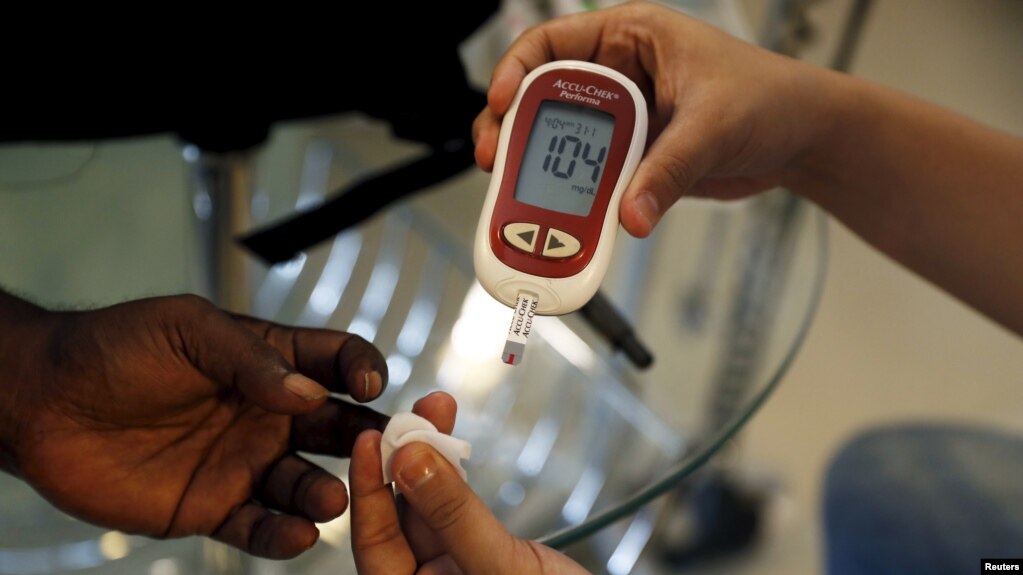
7D08D9F3-088B-41BC-98D9-ECD66BB5C1CD_w1023_r1_s.jpg

A paramedic checks the blood sugar level of a patient at a diabetes clinic in Jakarta, Indonesia​

The total number of diabetics is now 451 million and is expected to reach 693 million by 2045 if current trends continue. The high price of dealing with the disease reflects not only the cost of medicines but also the management of a range of complications, such as limb amputations and eye problems.

Cost of Diabetes Epidemic Reaches $850 Billion a Year
 
Well I must be winning because I have about 6500 plants of it ! Are eggs still good for you or are they bad again this week ? I need to be told what I should make at breakfast
 
n-COFFEE-large570.jpg


By Don Rauf @ 50 – HuffPost Coffee -- Even Decaf -- Could Help Cut Diabetes Risk

Drinking six cups of coffee a day may seem extreme to some, but it could cut the risk of getting diabetes. For those worried about caffeine intake, decaf may work just as well.

Studies have found that a combination of chemicals in coffee beans may affect metabolism — the chemical processes in the body that converts or uses energy. One chemical, chlorogenic acid, Acute Effects of Decaffeinated Coffee and the Major Coffee Components Chlorogenic Acid and Trigonelline on Glucose Tolerance may lower blood sugar levels. Caffeine, however, might not make a difference.

Researchers recently discovered that both caffeinated and decaffeinated coffee are tied to reducing diabetes risk, and the more people drink, the lower their risk appears to be.
If this is true, why, after years and years of drinking 6 – 8 cups of coffee every day do I have Type-II diabetes? :eusa_whistle::eusa_whistle::eusa_whistle:
It's not going to do it alone. Has to do with weight, lifestyle, diet, exercise and genes.
 
Well I must be winning because I have about 6500 plants of it ! Are eggs still good for you or are they bad again this week ? I need to be told what I should make at breakfast
Muesli or oatmeal, low fat yogurt, fresh fruit, and COFFEE. :)
 
Well I must be winning because I have about 6500 plants of it ! Are eggs still good for you or are they bad again this week ? I need to be told what I should make at breakfast
Muesli or oatmeal, low fat yogurt, fresh fruit, and COFFEE. :)
No Barley ?
Not for breakfast. But I'm serious about the breakfast: low sugar, low fat, high fiber. That's after taking the dog for an hour long morning walk. :)
 
Back
Top Bottom