Breakdown of BBB

Votto

Diamond Member
Joined
Oct 31, 2012
Messages
68,606
Reaction score
77,128
Points
3,605
We all need to know what is in the BBB. So this can be one of many articles to try and figure it all out.


High-income earners (>$217,000)

For taxes filed in 2026, households making between $217,000 and $318,000 would see their after-tax income raise 2.6 percent, a tax break of about $5,400. For Americans making $318,000 to $460,000 — in the 90th to 95th percentile — that cut would be about $8,900, or a 3.1 percent increase to their after-tax income.

Those making between $460,000 and $1.1 million would receive the biggest break: a $21,000 change, increasing their after-tax income by 4.4 percent.

The top 1 percent and the top 0.1 percent — households making more than $1.1 million or $5 million — would see their after-tax incomes increase 3.5 percent and 3.2 percent, respectively.

Middle-income earners ($50,000-$200,000)

The tax breaks for the rest of Americans are far less substantial, according to the center’s estimates.

Households making between $100,000 and $200,000 a year would see their after-tax income increase by 2.5 percent, about a $3,000 tax break. For those making between $75,000 and $100,000, the tax cut as a percentage of income is similar — at about $1,700 or 2.3 percent.

Americans earning between $50,000 and $75,000 will have a $1,000 tax break.

Low-income earners (<$50,000)

For those making between $40,000 and $50,000, that cut will be about $630. Those are after-tax boosts of 1.9 percent and 1.5 percent, respectively.

Those in the bottom quintile of incomes, making below $34,600 a year, would see their taxes decrease by about $150, or a 0.8 percent increase in their after-tax income.

However, benefits that low-income Americans could see in tax breaks could be offset by the bill’s sweeping cuts to Medicaid and food stamps.

Federal Medicaid spending is estimated to decrease by about $1 trillion, resulting in about 12 million low-income Americans losing their health insurance by 2034, according to the nonpartisan Congressional Budget Office.

The bill also includes work requirements for Medicaid and for Supplemental Nutrition Assistance Program benefits, also known as food stamps, which could disenroll millions from both programs.

Other new tax cuts

Many of the bill’s tax deductions will start in 2025, and some of them will be permanent. That includes a permanent increase in the child tax credit to $2,200 and an increase in the standard deduction by $750.

Other new tax cuts, especially those core to Trump’s campaign promises, are set to expire in a couple of years. A new $6,000 deduction for Americans over 65 will last only through 2028. A $25,000 deduction designed to eliminate taxes on tips will also only last for three years. The same goes for another $12,500 deduction meant to curb taxes on overtime.

The amount that households can deduct in state and local taxes on their federal returns, known as the SALT cap, will also increase to $40,000. Previously capped at $10,000, SALT deductions were a major sticking point among House Republicans during the first rounds of negotiations on the bill in May.
 
Last edited by a moderator:
That's a typical ridiculous (generalized) commeee red yahoo trying to show the rich get richer. Misleading much? I would Delete it.
Did they not get the tax breaks right? If so, how?

Personally, I think it's good everyone gets a tax break, even the rich.

After all, the government will spend the same amount regardless of how much tax revenue they take in.

They always have, yet the Left makes it sound like there won't be enough revenue for the poor folk if the rich are not taxed to death. The truth is, it does not effect them in the least.
 
The top bracket gets 2.6% after tax income, and the middle gets 2.5%.

By percentage, the tax cut is equal. Of course the rich get a bigger cut, because in math, 2.6% of a million is bigger than 2.5% of 100,000.

There went the talking point.
 

High-income earners (>$217,000)

For taxes filed in 2026, households making between $217,000 and $318,000 would see their after-tax income raise 2.6 percent, a tax break of about $5,400. For Americans making $318,000 to $460,000 — in the 90th to 95th percentile — that cut would be about $8,900, or a 3.1 percent increase to their after-tax income.

Those making between $460,000 and $1.1 million would receive the biggest break: a $21,000 change, increasing their after-tax income by 4.4 percent.

The top 1 percent and the top 0.1 percent — households making more than $1.1 million or $5 million — would see their after-tax incomes increase 3.5 percent and 3.2 percent, respectively.

Middle-income earners ($50,000-$200,000)

The tax breaks for the rest of Americans are far less substantial, according to the center’s estimates.

Households making between $100,000 and $200,000 a year would see their after-tax income increase by 2.5 percent, about a $3,000 tax break. For those making between $75,000 and $100,000, the tax cut as a percentage of income is similar — at about $1,700 or 2.3 percent.

Americans earning between $50,000 and $75,000 will have a $1,000 tax break.

Low-income earners (<$50,000)

For those making between $40,000 and $50,000, that cut will be about $630. Those are after-tax boosts of 1.9 percent and 1.5 percent, respectively.

Those in the bottom quintile of incomes, making below $34,600 a year, would see their taxes decrease by about $150, or a 0.8 percent increase in their after-tax income.

However, benefits that low-income Americans could see in tax breaks could be offset by the bill’s sweeping cuts to Medicaid and food stamps.

Federal Medicaid spending is estimated to decrease by about $1 trillion, resulting in about 12 million low-income Americans losing their health insurance by 2034, according to the nonpartisan Congressional Budget Office.

The bill also includes work requirements for Medicaid and for Supplemental Nutrition Assistance Program benefits, also known as food stamps, which could disenroll millions from both programs.

Other new tax cuts

Many of the bill’s tax deductions will start in 2025, and some of them will be permanent. That includes a permanent increase in the child tax credit to $2,200 and an increase in the standard deduction by $750.

Other new tax cuts, especially those core to Trump’s campaign promises, are set to expire in a couple of years. A new $6,000 deduction for Americans over 65 will last only through 2028. A $25,000 deduction designed to eliminate taxes on tips will also only last for three years. The same goes for another $12,500 deduction meant to curb taxes on overtime.

The amount that households can deduct in state and local taxes on their federal returns, known as the SALT cap, will also increase to $40,000. Previously capped at $10,000, SALT deductions were a major sticking point among House Republicans during the first rounds of negotiations on the bill in May.
An extra $630 - $21,000 (depending on income), how awful.
 
The top bracket gets 2.6% after tax income, and the middle gets 2.5%.

By percentage, the tax cut is equal. Of course the rich get a bigger cut, because in math, 2.6% of a million is bigger than 2.5% of 100,000.

There went the talking point.


You're right. If shown in dollar amounts, the left would really be howling.

Still it makes little sense since $1million is taxed at 39% vs. $100K at 25%

2.6% increase? Huh? Cut of what? .compared to what the old tax rates were? $7600 old age deduction is not a ripple in $1 million pond.
 
Last edited:
You're right. If shown in dollar amounts, the left would really be howling.

Still it makes little sense since $1million is taxes at 39% vs. $100K at 25%

2.6% increase? Huh? Cut of what? .compared to what the old tax rates were? $7600 old age deduction is not a ripple in $1 million pond
It's all a percentages game. Trying to tax in real dollar amounts would be too imprecise and unwieldy.
 
Last edited:

The IRS’s Statistics of Income division provides detailed data on the distribution of income tax liability across filing statuses. For Tax Year 2022, of the 161.3 million tax returns filed, approximately 50.7 million returns (or 31.42%) were classified as non-paying. Non-paying returns include filers whose earnings fell below taxable thresholds or who qualified for credits that offset their liabilities.
 
All an irrelevant distraction, debating degrees of slavery to the State.

If the feds can print up the money at will, why the hell are any of our incomes taxed at all?


FarTaxZERO.webp
 
I believe What red Yahoo is doing is going back to the old tax rates in 2017 and rolling that into the BBB stuff.

While maybe true? We are already a decade into the changed rates.

The new deductions affect the low end mostly. But yahoo adds old tax rates to tarnish the new bill.

Going back to old rates was not going to happen? We know why they keep on it.
 
Obiden could have raised the top bracket to say....50% any time they wanted almost? A single page bill. 1 hour voting. One day.

They had 12 years. Before and after the 2017 changes in ALL brackets.
 

High-income earners (>$217,000)

For taxes filed in 2026, households making between $217,000 and $318,000 would see their after-tax income raise 2.6 percent, a tax break of about $5,400. For Americans making $318,000 to $460,000 — in the 90th to 95th percentile — that cut would be about $8,900, or a 3.1 percent increase to their after-tax income.

Those making between $460,000 and $1.1 million would receive the biggest break: a $21,000 change, increasing their after-tax income by 4.4 percent.

The top 1 percent and the top 0.1 percent — households making more than $1.1 million or $5 million — would see their after-tax incomes increase 3.5 percent and 3.2 percent, respectively.

Middle-income earners ($50,000-$200,000)

The tax breaks for the rest of Americans are far less substantial, according to the center’s estimates.

Households making between $100,000 and $200,000 a year would see their after-tax income increase by 2.5 percent, about a $3,000 tax break. For those making between $75,000 and $100,000, the tax cut as a percentage of income is similar — at about $1,700 or 2.3 percent.

Americans earning between $50,000 and $75,000 will have a $1,000 tax break.

Low-income earners (<$50,000)

For those making between $40,000 and $50,000, that cut will be about $630. Those are after-tax boosts of 1.9 percent and 1.5 percent, respectively.

Those in the bottom quintile of incomes, making below $34,600 a year, would see their taxes decrease by about $150, or a 0.8 percent increase in their after-tax income.

However, benefits that low-income Americans could see in tax breaks could be offset by the bill’s sweeping cuts to Medicaid and food stamps.

Federal Medicaid spending is estimated to decrease by about $1 trillion, resulting in about 12 million low-income Americans losing their health insurance by 2034, according to the nonpartisan Congressional Budget Office.

The bill also includes work requirements for Medicaid and for Supplemental Nutrition Assistance Program benefits, also known as food stamps, which could disenroll millions from both programs.

Other new tax cuts

Many of the bill’s tax deductions will start in 2025, and some of them will be permanent. That includes a permanent increase in the child tax credit to $2,200 and an increase in the standard deduction by $750.

Other new tax cuts, especially those core to Trump’s campaign promises, are set to expire in a couple of years. A new $6,000 deduction for Americans over 65 will last only through 2028. A $25,000 deduction designed to eliminate taxes on tips will also only last for three years. The same goes for another $12,500 deduction meant to curb taxes on overtime.

The amount that households can deduct in state and local taxes on their federal returns, known as the SALT cap, will also increase to $40,000. Previously capped at $10,000, SALT deductions were a major sticking point among House Republicans during the first rounds of negotiations on the bill in May.
Let's start with the basic according to the Constitution. There are 30 duties for the federal government to do. Have you noticed while you drive to work on a federal holiday you have no traffic? That is because the government has over 200 agencies and departments. I don't think anyone knows the exact number, including the government. Thanks to obama all have been armed on our dime. Anyone that has delt with any of these government agencies know they have made any problem ten times worse if not causing the problem in the first place. OSHA, IRS, Department of Labor, EPA, and many others can, on a whim put a company out of business and even jail you. If government was serious about reducing taxes they would start where the problem is, these government agencies who employ total idiots to create problems instead of solving them.
 
Let's remember this is MY F'ING MONEY not the governments money, not the mooching sponge government workers money, MINE! I don't want to hear any shit about the 'rich' don't pay their share you...(trails off into profanity laced tirade)
 
So what's next for Trump? Holy shit he's crushed it the first 6 months, now the BBB is a done deal. He's got another 3.5 years to beat on the Democrats.
 

High-income earners (>$217,000)

For taxes filed in 2026, households making between $217,000 and $318,000 would see their after-tax income raise 2.6 percent, a tax break of about $5,400. For Americans making $318,000 to $460,000 — in the 90th to 95th percentile — that cut would be about $8,900, or a 3.1 percent increase to their after-tax income.

Those making between $460,000 and $1.1 million would receive the biggest break: a $21,000 change, increasing their after-tax income by 4.4 percent.

The top 1 percent and the top 0.1 percent — households making more than $1.1 million or $5 million — would see their after-tax incomes increase 3.5 percent and 3.2 percent, respectively.

Middle-income earners ($50,000-$200,000)

The tax breaks for the rest of Americans are far less substantial, according to the center’s estimates.

Households making between $100,000 and $200,000 a year would see their after-tax income increase by 2.5 percent, about a $3,000 tax break. For those making between $75,000 and $100,000, the tax cut as a percentage of income is similar — at about $1,700 or 2.3 percent.

Americans earning between $50,000 and $75,000 will have a $1,000 tax break.

Low-income earners (<$50,000)

For those making between $40,000 and $50,000, that cut will be about $630. Those are after-tax boosts of 1.9 percent and 1.5 percent, respectively.

Those in the bottom quintile of incomes, making below $34,600 a year, would see their taxes decrease by about $150, or a 0.8 percent increase in their after-tax income.

However, benefits that low-income Americans could see in tax breaks could be offset by the bill’s sweeping cuts to Medicaid and food stamps.

Federal Medicaid spending is estimated to decrease by about $1 trillion, resulting in about 12 million low-income Americans losing their health insurance by 2034, according to the nonpartisan Congressional Budget Office.

The bill also includes work requirements for Medicaid and for Supplemental Nutrition Assistance Program benefits, also known as food stamps, which could disenroll millions from both programs.

Other new tax cuts

Many of the bill’s tax deductions will start in 2025, and some of them will be permanent. That includes a permanent increase in the child tax credit to $2,200 and an increase in the standard deduction by $750.

Other new tax cuts, especially those core to Trump’s campaign promises, are set to expire in a couple of years. A new $6,000 deduction for Americans over 65 will last only through 2028. A $25,000 deduction designed to eliminate taxes on tips will also only last for three years. The same goes for another $12,500 deduction meant to curb taxes on overtime.

The amount that households can deduct in state and local taxes on their federal returns, known as the SALT cap, will also increase to $40,000. Previously capped at $10,000, SALT deductions were a major sticking point among House Republicans during the first rounds of negotiations on the bill in May.

Completely false based on numerous other sites information.


15th post
Completely false based on numerous other sites information.


Ok, from your web site

Rising Childcare Costs are Squeezing Low-and Middle-Income Families

  • In the U.S., 65 percent of children under five live in a household where both parents work, and 70 percent of parents experience difficulty in paying for childcare.
    • American families spend up to $15,600 on daycare each year for just one child.
  • Over 47 million American families claim the Child Tax Credit.
    • Bidenflation increased the cost of raising a child by over 21%.
  • For families ready to open their hearts and homes to a child in need, adoption can come with a heartbreaking price tag, as high as $60,000.
The One, Big, Beautiful Bill delivers critical relief to working families

  • The typical family will get up to $10,900 in additional take-home pay.
  • Workers will see increased wages up to $7,200.
  • Households earning less than $100,000get at least a 12 percent tax cut compared to today. People who make over $1 million annually, will pay a greater share of the tax burden than they do now.
  • Up to 7.2 million jobs protected and created, and 1 million new jobs annually by small businesses.
  • No tax on tips, overtime pay, car loan interest, and tax relief for seniors will put more money annually in Americans’ pockets, $1,300 per tipped worker specifically, and up to $1,400 for hourly workers.
  • Locks in and further boosts the doubled Child Tax Credit to $2,200 for more than 40 million American families.
  • Locks in and further boosts the doubled Standard Deduction, increasing it to $31,500 for families.
  • Expands 529 education savings accounts to empower American families and students to choose the education that best fits their needs, whether it is K-12 materials or obtaining a postsecondary trades credential.
  • Supports working families and small businesses by expanding access to the childcare credit and making permanent the paid leave tax credit. Enhances the Adoption tax credit and indexes it for inflation to help more families experience the joy of adoption and grows the child and dependent care credit as well as FSAs.
  • Puts American families in control of their health care by expanding health savings accounts.
  • Eliminates fraud and waste in Obamacare and blocks access to taxpayer-funded health benefits for illegal immigrants.
  • Starts building financial security for America’s children at birth with the creation of new Trump savings accounts.
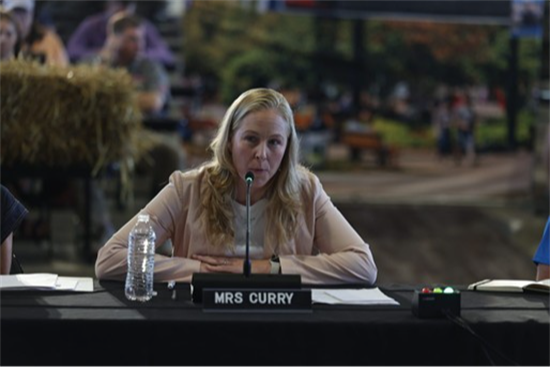
The Doubled Standard Deduction Is A Tax Cut for Working Families: The One, Big, Beautiful Bill increases and makes permanent the doubled standard deduction from the 2017 Trump tax cuts, helping the 91 percent of taxpayers who take advantage of this tax relief. During a Ways and Means hearing in Iowa, one mother warned lawmakers that allowing the tax cut to expire would have a disastrous effect on her family:

Sarah Curry, Iowa mother: “First and foremost…reducing the standard deduction would negatively impact my family because it would raise my taxable income both at the federal and the state level. We experienced benefits from tax simplicity. I didn’t have to have receipts all over the floor, trying to itemize all this stuff, trying to save a buck. We were able to take the standard. Iowa and many states use the federal taxable income as the starting point for state tax that is owed. With the reduction in the federal standard deduction, my state taxes will also go up. I’m not going to be hit once with this tax increase; I’m going to get hit multiple times over.”
The Doubled Child Tax Credit Helps Parents and Kids: The Trump tax cuts doubled the Child Tax Credit, providing $2,000 per child for families. The tax credit also included a Social Security Number requirement, ensuring its benefit went to American families, not illegal immigrants. The One, Big, Beautiful Bill strengthens the SSN protection even further, makes these pro-family policies permanent, and expands the Child Tax Credit to $2,200, further helping working mothers and fathers. As one mother told the Committee during a hearing:
 
All an irrelevant distraction, debating degrees of slavery to the State.

If the feds can print up the money at will, why the hell are any of our incomes taxed at all?


View attachment 1132268
They either will tax you or inflate it away as they print money out of thin air.

Or both which is what they do now.
 
So what's next for Trump? Holy shit he's crushed it the first 6 months, now the BBB is a done deal. He's got another 3.5 years to beat on the Democrats.


Remove any FED taxes on $150K income and below is next. That would uncomplicated a lot of lives.
 
If the feds can print up the money at will, why the hell are any of our incomes taxed at all?
Well. You already know the answer to that question, I'm sure.

But..it's because the monetary policy itself has placed the country into a position where it needs taxation just to have a monetary policy.

The monetary system is designed to require ever-increasing levels of debt just to continue. And that's why politicians will always kick the can down the road and raise the so-called debt ceiling over and over again until the whole system finally collapses under its own weight. They just donlt want it to happen on their watch, so they put it on future generations like the common, pointy toe shoe wearing chislers they are.

What would happen if the government stopped borrowing to do deficit spending? Are the payments on those Treasury bonds going to stop? What would happen if the public stopped borrowing and going deeper into debt? Are your house and car payments going to stop? No. They're not. There is a payment due every month on the principal plus the interest on every dollar in existence and those payments do not stop. If we stop borrowing, then no new currency ..which is not money...because money has to be a stroe of value to actuall be money...is created to replace the currency...which is basically just a claim check on an IOU in the form of Federal Reserve Notes that we use to make those payments. Whether you're making a payment on a loan or paying a tax to make a payment on a Treasury bond, the portion of the payment that goes to pay off the principal extinguishes that portion of the debt. BUT...the debt also extinguishes the currency. When currency and debt meet, they destroy each other. If we just pay off the principal only, all of the loans and Treasury bonds that exist, the entire currency supply vanishes. So, if we don't go deeper into debt every year, the whole thing goes into a deflationary collapse under the weight of those payments.

So far as bringing down the debt, and living within our means, so to speak, it is impossible to do under the current monetary system without collapsing the entire economy.

That's how bad it is now.

Of course, that's a long, drawn out explanation. I've explained it before in a long wall of text.

But...it's literally like talking to the wall.

So it's kind of a waste of time now.

There has to be a collective understanding of what kinds of policies we actually have. And there just isn't.
 
Last edited:

New Topics

Back
Top Bottom