IM2
Diamond Member
- Mar 11, 2015
- 117,313
- 153,135
- 3,645
Don't try using that Rassmussen poll. This is something that has been said here; ironically, it always comes from the far right.
So, how about we look at the facts and not feelings?
Are black people considered to be the most racist of all groups in America?
No, major sociological research, public opinion polling, and demographic data do not support the conclusion that Black people are considered the most racist group in America.
When discussing this topic, it helps to separate interpersonal prejudice (individual attitudes or bias) from structural/institutional racism (how power and discrimination operate on a larger scale).
1. Interpersonal Bias vs. Institutional Power
Interpersonal Bias: Psychologists and sociologists generally agree that individuals of any racial or ethnic background are capable of holding racial prejudice, stereotyping others, or exhibiting bias. It is a human trait, not one exclusive to or dominant in any single demographic.
Institutional and Structural Racism: In academic and sociological contexts, racism is usually defined as prejudice combined with systemic power. Because Black Americans are a minority demographic (representing roughly 12-13% of the U.S. population) and have historically lacked proportional representation in major institutions—such as the legal system, government, banking, and corporate leadership—they do not hold the structural leverage required to enact systemic racism against other groups.
Racism: Interpersonal vs. Systemic Realities
Gemini - direct access to Google AI
Are black people considered to be the most racist of all groups in America?
No, major sociological research, public opinion polling, and demographic data do not support the conclusion that Black people are considered the most racist group in America.
When discussing this topic, it helps to separate interpersonal prejudice (individual attitudes or bias) from structural/institutional racism (how power and discrimination operate on a larger scale).
1. Interpersonal Bias vs. Institutional Power
Interpersonal Bias: Psychologists and sociologists generally agree that individuals of any racial or ethnic background are capable of holding racial prejudice, stereotyping others, or exhibiting bias. It is a human trait, not one exclusive to or dominant in any single demographic.
Institutional and Structural Racism: In academic and sociological contexts, racism is usually defined as prejudice combined with systemic power. Because Black Americans are a minority demographic (representing roughly 12-13% of the U.S. population) and have historically lacked proportional representation in major institutions—such as the legal system, government, banking, and corporate leadership—they do not hold the structural leverage required to enact systemic racism against other groups.
2. What the Data and Polls Show
Data from organizations like the Pew Research Center and Gallup consistently show that Americans across various demographics perceive the weight of racial discrimination quite differently:
 news.gallup.com
Perception of Discrimination: Extensive polling shows that a majority of Americans acknowledge that Black, Hispanic, and Asian people face significant levels of ongoing discrimination. For instance, data indicates that the vast majority of Black adults (and significant shares of other minorities) report experiencing interpersonal bias or unfair treatment regularly.
 www.pewresearch.org
 www.kff.org
Systemic Realities: Study after study across sectors like housing (e.g., historical redlining and modern loan disparities), the criminal justice system, healthcare, and employment show that Black Americans remain primarily the targets of systemic disparities rather than the perpetrators of them.
Summary
While individuals within any group can harbor racial prejudice or behave in discriminatory ways, there is no factual data or societal consensus suggesting that Black people as a whole are the "most racist" group in America. Societal focus remains heavily concentrated on addressing the widespread, documented effects of historical and systemic racism that disproportionately impact minority communities.

So, how about we look at the facts and not feelings?
Are black people considered to be the most racist of all groups in America?
No, major sociological research, public opinion polling, and demographic data do not support the conclusion that Black people are considered the most racist group in America.
When discussing this topic, it helps to separate interpersonal prejudice (individual attitudes or bias) from structural/institutional racism (how power and discrimination operate on a larger scale).
1. Interpersonal Bias vs. Institutional Power
Interpersonal Bias: Psychologists and sociologists generally agree that individuals of any racial or ethnic background are capable of holding racial prejudice, stereotyping others, or exhibiting bias. It is a human trait, not one exclusive to or dominant in any single demographic.
Institutional and Structural Racism: In academic and sociological contexts, racism is usually defined as prejudice combined with systemic power. Because Black Americans are a minority demographic (representing roughly 12-13% of the U.S. population) and have historically lacked proportional representation in major institutions—such as the legal system, government, banking, and corporate leadership—they do not hold the structural leverage required to enact systemic racism against other groups.
Racism: Interpersonal vs. Systemic Realities
Gemini - direct access to Google AI
Are black people considered to be the most racist of all groups in America?
No, major sociological research, public opinion polling, and demographic data do not support the conclusion that Black people are considered the most racist group in America.
When discussing this topic, it helps to separate interpersonal prejudice (individual attitudes or bias) from structural/institutional racism (how power and discrimination operate on a larger scale).
1. Interpersonal Bias vs. Institutional Power
Interpersonal Bias: Psychologists and sociologists generally agree that individuals of any racial or ethnic background are capable of holding racial prejudice, stereotyping others, or exhibiting bias. It is a human trait, not one exclusive to or dominant in any single demographic.
Institutional and Structural Racism: In academic and sociological contexts, racism is usually defined as prejudice combined with systemic power. Because Black Americans are a minority demographic (representing roughly 12-13% of the U.S. population) and have historically lacked proportional representation in major institutions—such as the legal system, government, banking, and corporate leadership—they do not hold the structural leverage required to enact systemic racism against other groups.
2. What the Data and Polls Show
Data from organizations like the Pew Research Center and Gallup consistently show that Americans across various demographics perceive the weight of racial discrimination quite differently:
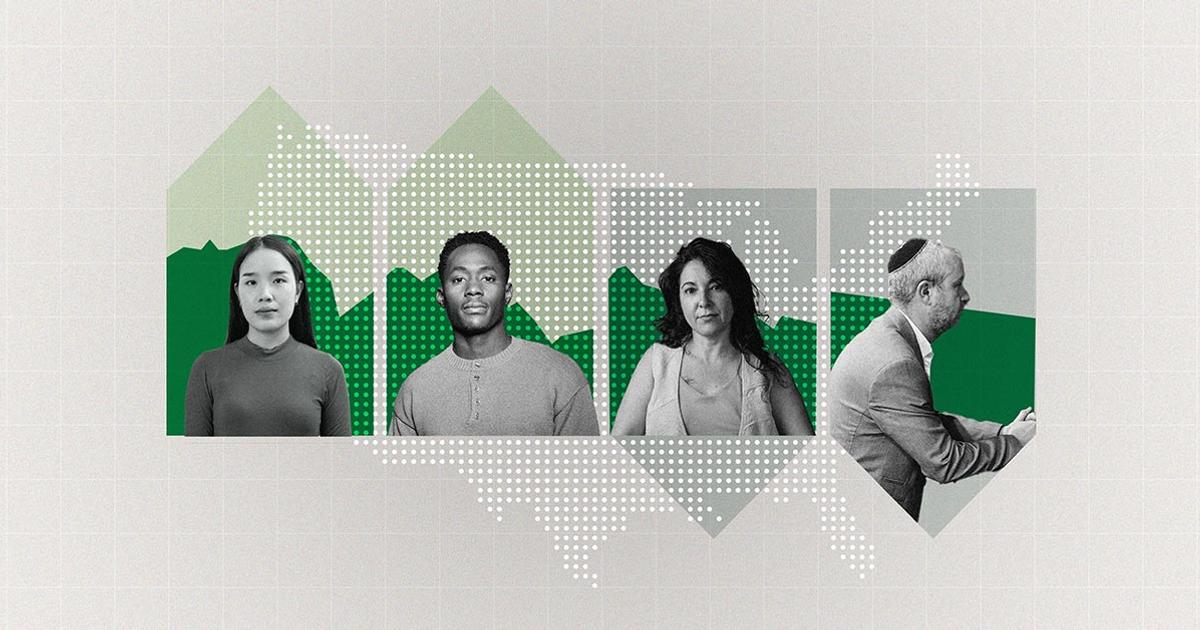
How Americans Perceive Treatment of Racial, Ethnic Groups
Less than half of Americans are satisfied with the way immigrants and Black, Hispanic, Jewish and Arab people are treated in the U.S.
news.gallup.com
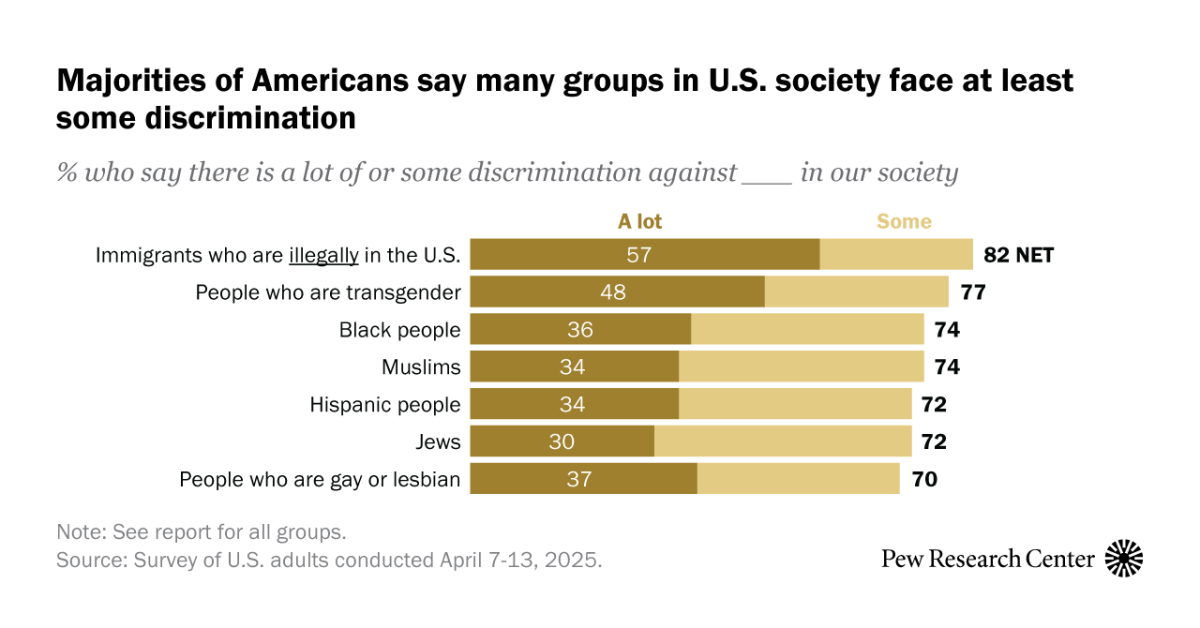
Perception of Discrimination: Extensive polling shows that a majority of Americans acknowledge that Black, Hispanic, and Asian people face significant levels of ongoing discrimination. For instance, data indicates that the vast majority of Black adults (and significant shares of other minorities) report experiencing interpersonal bias or unfair treatment regularly.
1. Views of how much discrimination racial and ethnic groups in the U.S. face
Most Americans say there’s at least some discrimination against Black, Hispanic and Asian people; fewer than half say this about White people.
www.pewresearch.org
Survey on Racism, Discrimination and Health
Survey on Racism, Discrimination and Health from KFF.
www.kff.org
Systemic Realities: Study after study across sectors like housing (e.g., historical redlining and modern loan disparities), the criminal justice system, healthcare, and employment show that Black Americans remain primarily the targets of systemic disparities rather than the perpetrators of them.
Summary
While individuals within any group can harbor racial prejudice or behave in discriminatory ways, there is no factual data or societal consensus suggesting that Black people as a whole are the "most racist" group in America. Societal focus remains heavily concentrated on addressing the widespread, documented effects of historical and systemic racism that disproportionately impact minority communities.