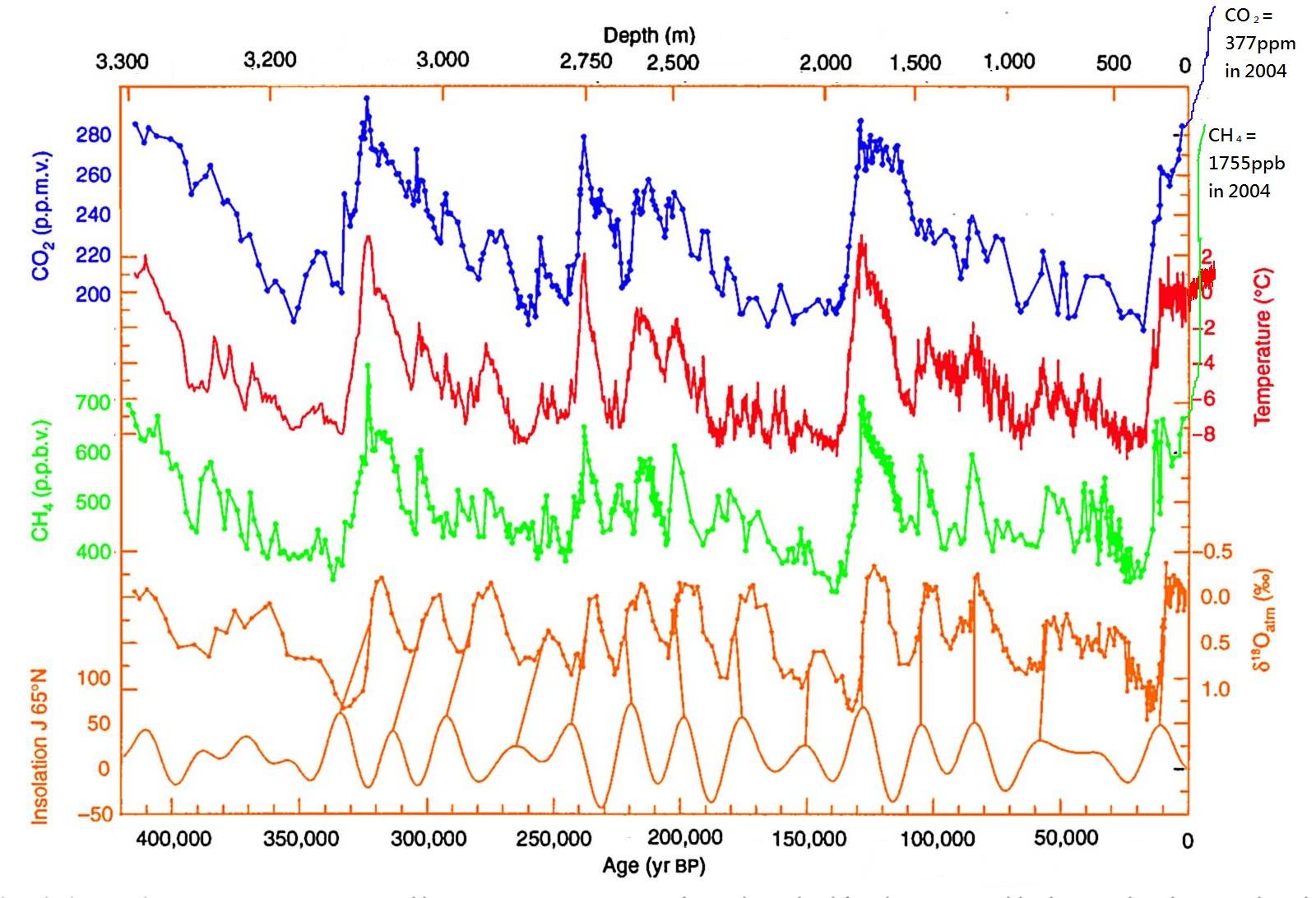
From recent research of drilling ice cores-
But Schaefer found cosmogenic nuclides in the bedrock, indicating it had been exposed at some point in the relatively recent past. The specific timing of this exposure is still uncertain. In the most stable scenario, Greenland was nearly ice-free for 280,000 years, before it started freezing over again about 1.1 million years ago. But the data collected by Schaefer and colleagues could also indicate that the ice sheet melted and refroze more than once over the past few million years, which might mean the ice sheet is far less stable than previously assumed.
and this-
Greenland’s ice has grown and shrunk over time, driven by variations in the climate, but mapping out the history of those changes is a remarkably difficult task. The deeper that researchers dig into Greenland's past, the more tangled the icy narrative becomes.
Two new studies published today in Nature illustrate the complexity that faces scientists studying changes to the Greenland ice sheet. One study led by Joerg Schaefer finds that Greenland was almost entirely ice free for extended periods of time during the last 2.6 million years. The other study, led by Paul Bierman, finds that there has been a stable ice sheet over East Greenland for the past 7.5 million years.
So anyone trying to blame the recent icemelt on agw is full of themselves. There have been cycles, always will be cycles. Can we change those cycles? No. It is what it is, whether anyone likes it or not.
Can the modles accurately predict the future? Noo, particularly because they like to play with the datasets to try to show agw. Each threshold they have predicted has been wrong.
The mystery of Greenland’s icy history could help us survive climate change
“It is certainly surprising,” Schaefer says of his results. “Most importantly, there is not a single model that can show that Greenland’s ice sheet has been gone several times over the past few million years or for one period over that time”
The fact that the current models used by glaciologists appear to be too stable and conservative could be bad news for future estimates of ice loss and sea level rise, which rely on models of what happened in the past to figure out what will happen in the future.

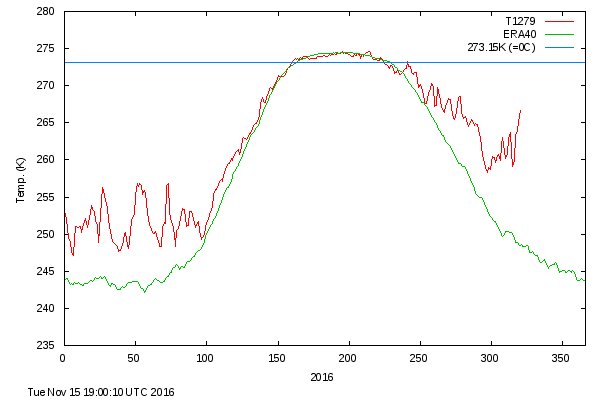
Zack Labe