This is correct, food stamps boost the economy because without them, people would quit eating and no money would be going towards food. They would just starve to death.
Weird reply.
Food stamps improve the economy because they pump money into it.
The only way that could happen is if people who couldn't afford food didn't eat. But if people are still eating, then food stamps doesn't do squat because people are eating using their own money instead of ours.
See, that's the thing the theory is they need assistance because the don't have the money to buy food at least not without sacrificing other things like school clothes and supplies, transportation, doctors visits, what have you. The money goes back into the economy, are you saying it doesn't? That's also a weird stance, have any source to back that up with?
I don't think you can source common sense. Bottom line: people still eat even if they are poor. If they don't buy food themselves, they go to pantries where other people buy food and donate it, homeless shelters which work the same way, religious organizations which work the same way. One way or another, food is still purchased with or without food stamps.
For the most part, food stamps just replace people working, or people working enough hours to feed themselves. It's like what they did in Maine. If you were on food stamps with no dependents, you had to meet one of three qualifications to continue getting food stamps: work a job a minimum 20 hours per week, be enrolled in a vocation program, volunteer 20 hours a month. Bottom line is that these people were not that hungry after all. Most of them dropped out of the program.
Most people on food stamps either work or are children. I'm sorry you don't understand the very simple concept that you give people money to buy food and surprisingly enough that money ends in the economy.
Anyway when you claim there isn't a source for common sense that usually means you don't have either.
CHARTS: The hidden benefits of food stamps
The Economic Benefits of Food Stamps
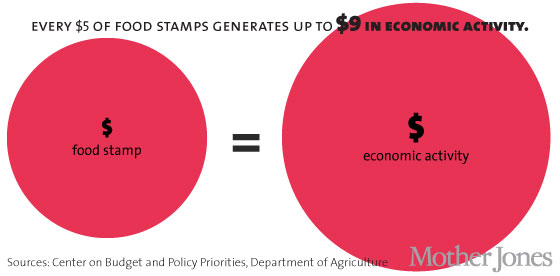
When food stamps get spent, we all benefit. Despite critics’ focus on the costs of SNAP,
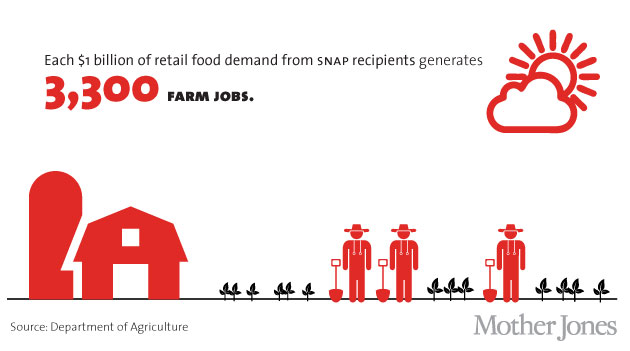
research has shown that these dollars are among the best forms of government stimulus. Food stamp spending generates local economic activity, jobs in the farm and retail sectors and beyond.
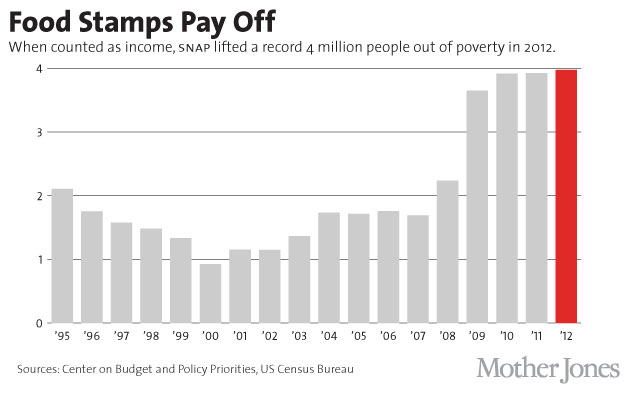
Food Stamps Lift Millions Out of Poverty
In addition to boosting the economy and job creation, food stamps have helped millions of Americans climb out of poverty and away from hunger. The dollars put food on the table, and by covering much of poor people’s food expenses, free up vitally needed cash to cover rent and other necessities. That can help people stabilize their lives and get back on their feet. Since SNAP expanded in 2009, according
to the USDA, “food insecurity among likely SNAP-eligible households declined by 2.2 percent, and very low food security declined by 2 percent; food spending rose by 4.8 percent.”
Food Stamps Improve Kids’ Health
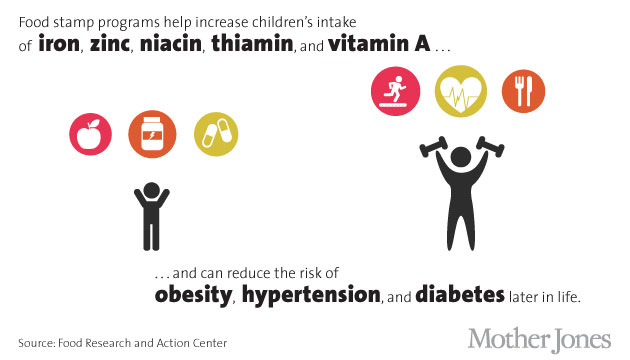
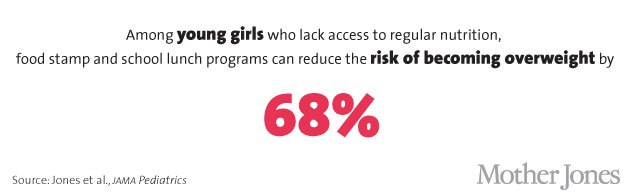
Children are especially vulnerable to the lifelong ripple effects of poverty—exposed to hunger, under-nourishment, and a greater likelihood of chronic illnesses and disease. But studies show that when poor families get food stamps, kids’ nutrition and health improve. This can be particularly critical during infancy and early childhood, when brain development and metabolic health get their start. The added food and nutrition from food stamps has been shown to create marked health improvements both in childhood and later years.
Who Gets Food Stamps?
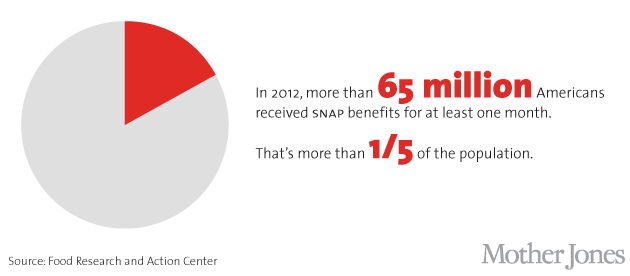
An extraordinary number of Americans have benefited or will benefit directly from food stamps.
Half of all adults (pdf) will receive SNAP benefits at some point between the ages of 20 and 65, while half of all children will receive them at some point during their childhood. In 2012, nearly 1 in 7 adults received food stamps.