Advances in Computers thread

New microprocessor claims 10x energy improvement
AmbiqMicro1-640x353.jpg

As power consumption has become one of the most important metrics of CPU design, we’ve seen a variety of methods proposed for lowering CPU TDP. Intel makes extensive use of dynamic voltage and frequency scaling, ARM has big.Little, and multiple companies are researching topics like near threshold voltage (NTV) scaling as well as variable precision for CPU and GPU operations. Now, one small embedded company, Ambiq Micro, is claiming to have made a breakthrough in CPU design by building a chip designed for subthreshold voltage operation — with dramatic results.

Ambiq’s new design strategy could be critical to the long-term evolution of the wearables market, the Internet of Things, and for embedded computing designs in general — if the company’s technology approach can scale to address to a wide range of products.
 
Google Fiber set to launch in four more US cities

Google is set to announce the expansion of its Google Fiber internet service to four new cities, The Wall Street Journal reports, with the details of the new rollout coming in the next few days. According to the publication's sources, the company will start to offer the one-gigabit broadband network in Atlanta, Nashville, and in two cities in North Carolina — Raleigh-Durham and Charlotte.


http://www.theverge....leigh-charlotte
 
Scientists give graphene one more quality – magnetism
By Ben Coxworth

January 27, 2015


A diagram of the magnetized graphene (Image: Shi Lab, UC Riverside)
Graphene is extremely strong for its weight, it's electrically and thermally conductive, and it's chemically stable ... but it isn't magnetic. Now, however, a team from the University of California, Riverside has succeeded in making it so. The resulting magnetized graphene could have a wide range of applications, including use in "spintronic" computer chips.

While other groups have previously magnetized graphene, they've done so by doping it with foreign substances, and the presence of these impurities has negatively affected its electronic properties. In this case, though, the graphene was able to remain pure.

Led by professor of physics and astronomy Jing Shi, the UC Riverside team laid a sheet of regular graphene down on an atomically smooth layer of magnetic yttrium iron garnet. That material then simply magnetized the graphene as it lay against it. Yttrium iron garnet was used due to the fact that certain other magnetic materials could disrupt the graphene’s electrical transport properties.
 
FCC raises broadband definition to 25Mbps, Chairman mocks ISPs
The FCC voted to greatly increase its definition of broadband service, from the previous definition of 4Mbit down and 1Mbit up to the new standard of 25Mbps down and 3Mbps up. According to FCC Chairman Tom Wheeler, this move reflects the tremendous growth in consumer data consumption, the growing popularity of services like Netflix, and the need to create a future-proof standard that won’t be obviated in a handful of years.

Wheeler also pointed out that consumer demand for 25Mbps service is robust, with 29% of Americans currently opting for that tier of service, up from 7% in 2011, and that many companies only certify lower-end plans as minimally effective or efficient for users. Netflix, for example, recommends a minimum of 5 Mbps for HD quality and 25MBps for 4K service. With VoIP services and 4K streaming coming on fast, US consumers are going to demand higher-end services for the foreseeable future.
 
Comparing the original iPhone to the iPhones 6 and 6 Plus
By Will Shanklin

January 30, 2015
19 Pictures

Gizmag takes a look back at the original iPhone, to see how it compared to today's models

Image Gallery (19 images)
Normally we compare smartphones to help you make the best buying decision. But this time we're going to line up the original 2007 iPhone with Apple's latest handsets, the iPhone 6 and iPhone 6 Plus – because, hey, isn't it fun to see how far we've come?

Release date

We're looking at more than seven years of mobile evolution here, so adjust your expectations accordingly.

For some pop culture perspective, the number one Billboard song when the first iPhone hit store shelves was Rihanna's "Umbrella." The number one movie at the US box office was Ratatouille.

Size

If you want an illustration of how smartphones have changed in the last 7+ years, look no further. The original iPhone is tiny even compared to the iPhone 6 – and next to the 6 Plus it's downright puny.

Another standout spec is just how ridiculously thick that first iPhone was. It's 63 percent thicker than the 6 Plus, and 68 percent beefier than the iPhone 6.

Weight

Despite being a much smaller device, the original iPhone is 5 percent heavier than the iPhone 6.

Build

You could say that the three things that best describe Apple products today are "light," "thin" and "aluminum." Back in '07, the company only had one out of three covered.

... though, even then, the first iPhone's backing had a plastic bar on its lower end. For its next two iPhones (3G and 3GS), Apple went all plastic. For the two after that (4 and 4s) it used a glass back with stainless steel edges. From late 2012 to today, it's been all aluminum.

Colors

Apple didn't start offering different color options for iPhones until the iPhone 3G arrived (you had the option of buying strange black front/white back options). You couldn't buy an iPhone with a different front color until the white iPhone 4 arrived in early 2011.

Display (size)

Here's another visual that tells us a lot about the evolution of smartphones. The original iPhone's screen was 60 percent as big as the iPhone 6's – and only 44 percent as big as the iPhone 6 Plus'.

This is one change that didn't happen so gradually though. Apple stuck with the first iPhone's 3.5-in screen until late 2012, and even then it was still a relatively small 4 inches. These latest models gave us by far Apple's biggest leap forward in screen size.

Display (resolution)

Those were some pixelated devices we were staring at in 2007! Apple didn't give us the "Retina Display" (Apple's branding for "sharp enough that most people won't notice any pixels") until mid-2010.

Cameras

All the first iPhone got you was a 2 MP rear-facing camera. At the time this was considered pretty solid for a phone camera, but you wouldn't want to snap any pics with that sucker today.

Front-facing cameras didn't start showing up until the iPhone 4 in 2010. Today the iPhones not only have much higher-resolution sensors, but they also have dual-LED flashes, good low-lit performance and, in the case of the iPhone 6 Plus, Optical Image Stabilization. That's a lot of ground covered in less than eight years.

Battery

This original iPhone was only rated for about 6 hours of internet use. Today's iPhones are rated for up to 10 hours over 3G or 4G networks and up to 11 hours over Wi-Fi.

App Store

It's easy to forget, but the App Store didn't launch until 2008, after this first iPhone had already been around for a year. It did receive the update then, but for that first year, early adopters were limited to web apps (remember those?).

Chip

Apple didn't start naming its custom system-on-a-chip hardware until the "A4" found in the iPhone 4. With the first iPhone, we had to rely on teardowns – which told us that it was running a custom Samsung-made processor (620 MHz, but underlocked to 412 MHz).

RAM

When's the last time you saw a mobile device with 128 MB of RAM? Even most smartwatches today have 4x that.

Storage

Apple did a bit of a shuffle here during its first year. The iPhone launched in 4 GB and 8 GB options, but the 4 GB model was discontinued a couple months after launch. The company then added a 16 GB option in February of 2008, five months before the second-generation iPhone (3G) launched.

Mobile data

Blazing-fast 3G speeds (ahem) were still a year away back in 2007. For that first year, iPhone owners were limited to painfully slow ~2G speeds.

If you're too young to remember 2G, try driving through rural areas until your phone shows "Edge" in its signal bar. Those are the painfully slow speeds iPhone early adopters paid for.

Touch ID

Well, considering the original iPhone didn't have 3G data, an App Store or a camera that would be remotely usable by today's standards ... no, it didn't have a fingerprint sensor.

Software

Interestingly, Apple branded the first version of iOS as "OS X." It did share a core with the Mac's operating system, so in a way this made sense ... but a year later Apple re-branded the iPhone (and iPod touch) software as "iPhone OS."

It wasn't until after the iPad launched in 2010 that Apple started calling it iOS – retroactively making that first iPhone's software known as iOS 1.0.

This first iPhone ultimately maxed out on iOS 3.1.3, released in early 2010, a few months before the iPhone 4 launched. If you still have one of these first-gen iPhones lying around, that's the software it will be running today – and forevermore.

Starting price (on-contract)

Holy cow – this is what happens when you're an early adopter and the innovation you're trying to buy has no direct competitors. Apple and AT&T were charging an insane US$500 for the first iPhone – with a two-year contract! And that was only for the 4 GB version: at launch, the 8 GB model cost $600.

When Apple ditched the 4 GB model a couple of months later, the 8 GB iPhone got dropped down to a somewhat more reasonable (by today's standards) $400 – also with a two-year contract.

Starting price (full retail)

And in case you're wondering, there was no option to buy that first iPhone without a contract. Reports from back in '07 say the 8 GB iPhone was selling for around $1,000 on eBay and Craigslist.

Going back to the original iPhone would be a pretty unbearable experience today, but we still can't overstate how much of a breakthrough it was. Even before the App Store arrived, its multitouch interface was a mobile innovation like no other, ushering in the modern era of smartphones – all of which owe an immeasurable debt to Apple's thick, slow and pixelated $500 on-contract handset.
 
http://www.slashgear...-free-31366926/

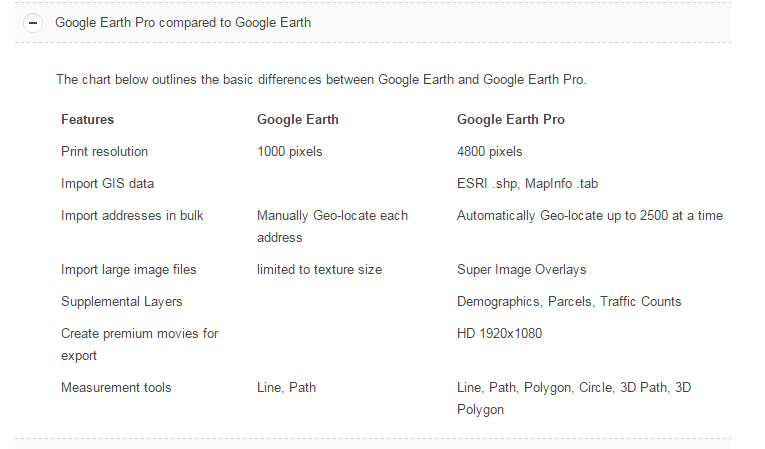
Google Earth Pro builds on the amazing functionality of Google Earth with even more powerful tools. Some of the most compelling features of Earth Pro include:
Advanced Measurements: Measure parking lots and land developments with polygon area measure, or determine affected radius with circle measure.
High-resolution printing: Print Images up to 4800x3200 px resolution.
Exclusive Pro data layers: Demographics, parcels, and traffic count. Spreadsheet Import: Ingest up to 2500 addresses at a time, assigning placemarks and style templates in bulk.
GIS import: Visualize ESRI shapefiles (.shp) and MapInfo (.tab) files.
Movie-Maker: Export Windows Media and Quicktime HD movies, up to 1920x1080 resolution.


qF7fd2Y.png
 
Dwave Systems will be commercially releasing a new 1152 qubit quantum annealing system in March 2015
Next Big Future Dwave Systems will be commercially releasing a new 1152 qubit quantum annealing system in March 2015
Dr. Colin P. Williams [CPW], Director of Business Development and Strategic Partnerships for D-Wave Systems provided answers in an email interview with Nextbigfuture.
1. How is Dwave doing with the 2048 qubit system ?

[CPW] D-Wave is making fantastic progress in fabricating ever-larger processors. In fact, we will be releasing our new 1,152-qubit “Washington” processor in March of this year. So we’re all very excited about that. However, size (i.e., qubit-count) is not the only aspect of the processor that has been improved. We have also lowered the noise and stretched the energy scale of the qubits (making them inherently more quantum mechanical), and we have strengthened our ability to create chains of qubits (making it easier to program the processor by locking qubits together to change the effective topology of the chip). Our initial performance tests have gone really well, and we are seeing some very exciting performance from the new processor. We are now perfecting new benchmark problems and new performance metrics that more clearly showcase the innate capabilities of the Washington system. These studies, and more, will be rolling out later in the year. So stay tuned for that.
 
Raspberry Pi 2 unveiled with faster processor and more memory

2 February 2015


_80718347_01749b0c-fec5-4504-a322-48243a5450e2.jpg


A new budget-priced Raspberry Pi computer has been unveiled, offering child coders and others a faster processor and more memory than before, but at about the same price.

The Raspberry Pi 2 Model B is roughly six times more powerful than the prior version, the Model B+, according to the British charity behind it.
Previous versions of the kit have been widely adopted by schools and enthusiasts across the world.
But the Pi faces increased competition.
Another UK-based firm, Imagination, recently released a bare-bones computer of its own, and the Arduino, Intel Galileo, Gizmo 2, BeagleBone Black and Hummingboard also form part of a growing list of rivals.
The Raspberry Pi 2 makes two major changes to the previous version, while leaving other components unchanged:
  • The CPU (central processing unit) is now quad-core rather than single-core. That means it can be programmed to use more of its cores to offer extra computing power, or made to use fewer to help save power consumption - useful if running as part of a battery-powered contraption. In addition, the Cortex A7 processor now runs at 800MHz rather than 700MHz
  • The board now features one gigabyte of RAM (random access) memory, double the amount that was previously included
As before, owners will need to add their own keyboard, a MicroSD card containing a copy of the Linux operating system, and television/monitor-connecting cables in order to start programming. Enclosures bought for earlier models will also fit the new one.
"We think it's about six times more powerful for most applications," Eben Upton, founder of Raspberry Pi, told the BBC.
"This means this is really a PC now.
The kit - most of which is manufactured at Sony's factory in Bridgend, South Wales - costs £22.85/$35.

http://www.bbc.co.uk...nology-31088908
 
Memcomputers: Faster, More Energy-Efficient Devices That Work Like a Human Brain
When we wrote the words you are now reading, we were typing on the best computers that technology now offers: machines that are terribly wasteful of energy and slow when tackling important scientific calculations. And they are typical of every computer that exists today, from the smartphone in your hand to the multimillion-dollar supercomputers humming along in the world's most advanced computing facilities.
 
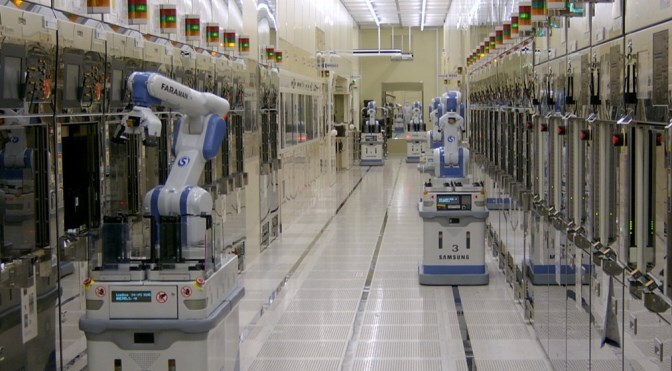
Samsung expected to manufacture 14nm chips for Qualcomm, Apple, possibly Nvidia in 2015
Samsung expected to manufacture 14nm chips for Qualcomm Apple possibly Nvidia in 2015 ExtremeTech

Samsung-Foundry-640x353.jpg

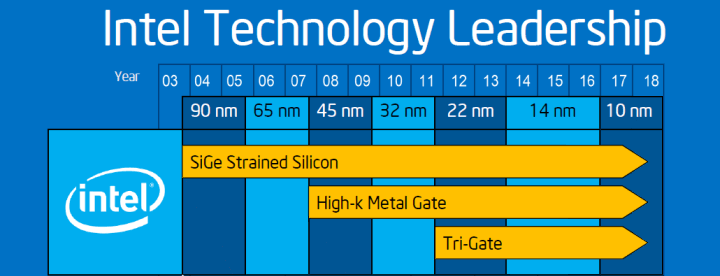
When Samsung and TSMC laid out their next-generation manufacturing plans, the two chip companies decided to pursue very different goals. TSMC opted for a 20nm half-step node that would shrink die sizes but retain conventional planar silicon, while Samsung decided it would leap straight for 14nm manufacturing and introduce FinFETs directly after the 28nm node. Now, that decision to skip 20nm altogether is paying dividends for the Korean manufacturer — it’s hitting its 14nm stride while TSMC is still ramping 20nm, and expecting to sign multiple new customers (and a few old ones) because of it.

We’ve previously discussed how Apple was expected to move manufacturing back to 14nm at Samsung after using TSMC’s 20nm node for the iPhone 6 and iPhone 6 Plus, but new information suggests that companies like Qualcomm and Nvidia are ramping hardware there as well. This isn’t the first time we’ve heard rumors of Samsung fabbing for Nvidia, but it’s been several years since they last cropped up. Nonetheless, the timing makes sense — TSMC’s 20nm node ultimately offered fairly incremental gains over 28nm. Its 16nm FinFET node will offer a much larger improvement, but won’t be available for volume production until 2016. given the inevitable lead times between the beginning of volume production and commercial shipments, we can expect Samsung to have a 9-18 month lead over its rival (depending on the exact components and cost structure for the parts).
 
Canadian Government annouces Wi-Fi through TV Airwaves for Rural Areas

Industry Minister announces new measures to bring "super Wi-Fi" Internet services to Canada

Spectrum is the oxygen that fuels our smartphones, tablets and wearable devices. It is a valuable but finite public resource that must be allocated in a way that benefits Canadian consumers foremost. Recently, the Government of Canada has been exploring new ways to access additional spectrum by using portions of television airwaves that are not being used in particular areas of Canada. This unused television spectrum is known as TV white space (TVWS).
 
IBM updates Watson with five new features, now better than ever
IBM updates Watson with five new features now better than ever ExtremeTech
IBM Watson, a cognitive computer that rose to fame by competing on Jeopardy, is doing much more than beating Ken Jennings these days. On IBM’s Bluemix cloud computing platform, registered developers can integrate Watson’s brainpower into their apps. And as of this past week, IBM has added five more features to the Watson Developer Cloud. From speech-to-text to image analysis, devs can now accomplish even more with Watson.

In a blog post, IBM vice president Jerome Pesenti details five new Watson services available on Bluemix. Speech-to-text, text-to-speech, visual recognition, concept insights, and tradeoff analytics join the Watson Developer Cloud. Combined with the eight existing services previously made available by IBM, there are now 13 different Watson-powered services on offer. It’s certainly not a turnkey solution for game show success, but there are countless possibilities in healthcare, businesses, and hobbies alike.
 
15th post
Energy-filtered cold electron transport at room temperature
Previous studies by others have demonstrated that it is possible to suppress electron thermal excitations, and thereby obtain low-temperature electrons, by utilizing discrete energy levels present in quantum dots (QDs)9, 10, 11. If electron transport is made to occur through a discrete energy level, it can serve as an energy filter (or thermal filter) as only those electrons whose energies match the discrete energy level are allowed to participate in the transport. This has been experimentally demonstrated using double QD systems, in which the first QD adjacent to the source electrode serves as an energy filter, passing only cold electrons to the second QD9, 10, 11. In a similar manner, it has also been demonstrated that the discrete energy levels or superconducting energy gaps can be utilized for quantum cooling of electron gases through energy-selective electron tunnelling12, 13, 14, 15, 16. Until now, studies have been focused on obtaining ultralow sub-Kelvin electrons and investigating their novel phenomena when the entire system is cooled to cryogenic temperatures, typically less than 1 K
 
AMD, Nvidia both skipping 20nm GPUs as TSMC plans $16 billion fab investment, report says
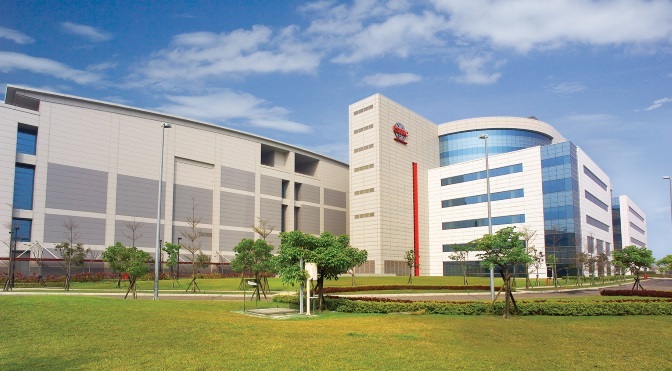
TSMC-HQ-640x353.jpg

Two interesting pieces of news regarding fabs and foundries today. First, TSMC is planning a $16B mega-fab installation at the Taichung science park in Central Taiwan. The planned investment would be even larger than the expected growth in fab costs through the 10nm node and suggests that TSMC is sending a message to its rivals at Samsung, GlobalFoundries, and to some extent, Intel — the company is willing to spend whatever it takes to regain its lost ground and grow its market share.

 
Phorm adds a disappearing tactile keyboard guide to the iPad mini
By Ben Coxworth
February 12, 2015
3 Pictures

Three years ago, California-based startup Tactus Technology unveiled a pretty nifty prototype – it was a touchscreen which featured clear round buttons that could rise up over top of the characters on a mobile device's virtual keyboard, giving users the tactile sensation of using a physical keyboard. When not needed, however, those buttons flattened down and the screen became entirely smooth again. Now, that prototype has become a product known as Phorm, designed for use with all versions of the iPad mini.
 

New Topics

Back
Top Bottom