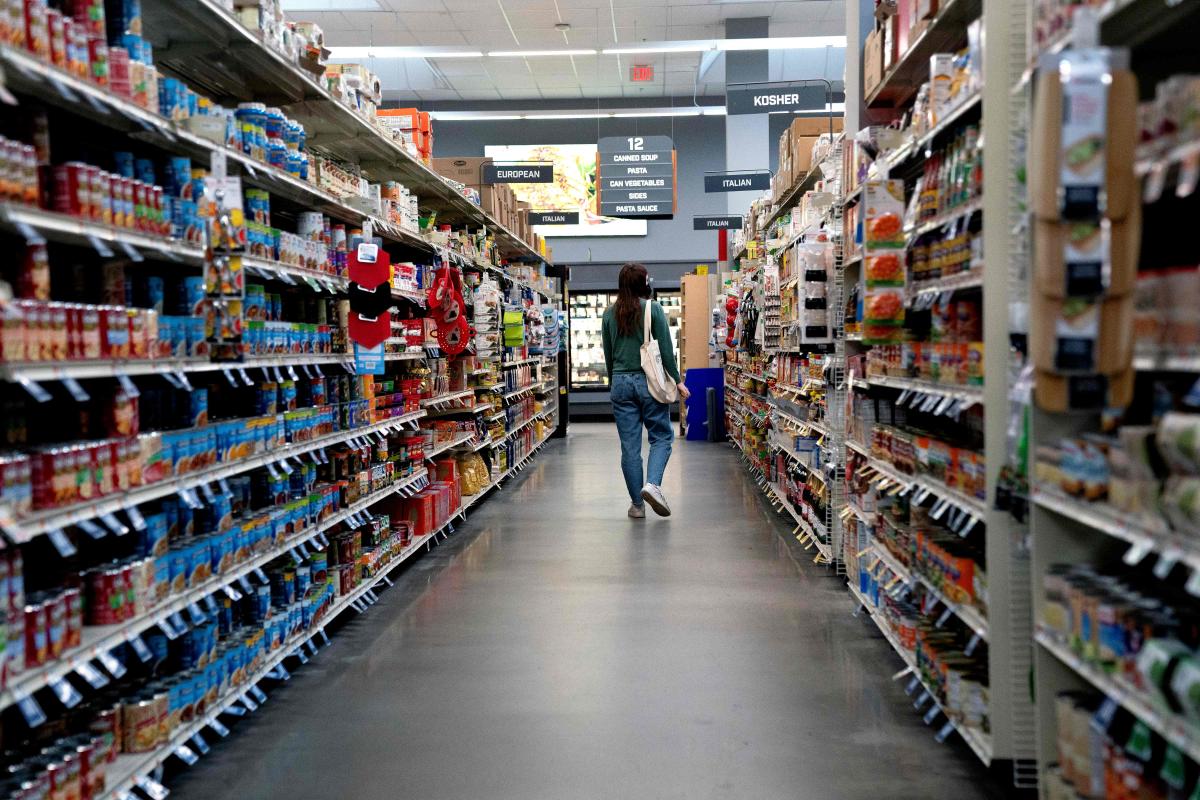
In an exclusive new poll, 70% say the economy is getting worse while 22% say it's improving.

www.yahoo.com
70% of Americans say that their economic future is abysmal and are giving up hope.
Even though in power, the Left will use this to try and push more government control and intervention because they are not the problem rather, the problem is they simply don'th have enough power over our lives.
I edited this so it's not so long
Rising morbidity and mortality in midlife among white non-Hispanic Americans in the 21st century."
unlike virtually every other demographic group in America (and other rich countries), the death rate of white, middle-aged Americans was rising instead of falling. And that trend was being driven largely by a rise in what they call "deaths of despair" — from suicides, drug overdoses, and alcohol abuse — especially in the population without a college degree.
After Donald Trump won the presidential election, many commentators cited the paper as
evidence that despair in white, working-class communities was a crucial reason why those voters helped put Trump into office.
When Deaton first came to America in 1983, he recalls being shocked by how indifferent his fellow economists were to rising inequality, and how ideologically opposed they were to government intervention in the economy.
"I was appalled when one of my colleagues proclaimed that 'government is theft. "I had grown up in a country where I saw the government as benevolent, a friend in times of trouble, and I found it hard to believe that a distinguished academic could be so cynical and so libertarian. I still do not agree with his sentiment, but I have come to understand the extent to which state and federal government in the United States often work, not to protect ordinary people but to help rich predators make ordinary people poorer."
From healthcare to taxation to poverty to regulations, Deaton sees a system that has increasingly served corporations and the rich over ordinary citizens.
"Less well-educated Americans have seen little or no improvement in their material circumstances for more than fifty years. For men without a four-year college degree, median real wages have trended downward since 1970."
"There are several million Americans who live in households with per capita income of a few dollars a day and whose living standards are arguably as bad as or worse than those in India or Ethiopia."
"The top 10 percent of incomes in the United States account for nearly half of all income
"Overall death rates in the United States have been rising, life expectancy has fallen for ten years for those without a four-year college degree."
The rise in deaths of despair amongst non-college-educated Americans — which accounts for
almost two-thirds of the adult population — is intimately related to their fading economic prospects. The decline of good jobs is a crucial driver of despair. "This decline, in response to globalization and, more importantly, technical change (robots), is made much worse in the United States than elsewhere by the grotesquely exorbitant cost of healthcare,"Beyond that, when bad things happen and people need help, the safety net in the United States sucks. Compared to other rich countries.
"They are apostles for the globalization and technical change that have enriched an elite and have redistributed income and wealth from labor to capital, all the while destroying millions of jobs, hollowing out communities, and worsening the lives of their occupants," Angus writes. "And when confronted with deaths of despair, they can blame the victims and those who try to help them."
Going forward, Deaton urges the economics profession to think more about "
predistribution — the mechanisms that determine the distribution of income in the market itself, before taxes and transfers — and less about a redistribution that is not going to happen and is not what people want in any case." That, he stresses, will force many economists into "uncomfortable territory: promoting unions, place-based policies, immigration control, tariffs, job preservation, industrial policy, and the like. We need to promote a more realistic understanding of how governments and markets work. We need to abandon our sole fixation on money as a measure of human wellbeing."
https://www.npr.org/sections/money/...inning-immigrants-view-on-american-inequality