Because one pole has a continent, the other a mostly landlocked ocean.
What does that have to do with the current global warming? We keep asking, you keep running.
No the question is WHAT DOES THAT HAVE TO DO WITH CO2, and the answer is NOTHING.
EARTH ICE has NOTHING TO DO WITH Co2, thanks for VALIDATING THAT....
Because northern Alaska gets limited precipitation. That means the snow melts out every year, so glaciers don't build up. Greenland gets a lot more precipitation.
LIE
Alaska precipitation
Western Regional Climate Center, providing climate services, data, and research for 13 western states

wrcc.dri.edu
In the maritime zone a coastal mountain range coupled with plentiful moisture produces annual precipitation amounts up to 200 inches in the southeastern panhandle, and up to 150 inches along the northern coast of the Gulf of Alaska. Amounts decrease to near 60 inches on the southern side of the Alaska Range in the Alaska Peninsula and Aleutian Island sections. Precipitation amounts decrease rapidly to the north, with an average of 12 inches in the continental zone and less than 6 inches in the arctic region.
Snowfall makes up a large portion of the total annual precipitation. For example, Yakutat averages 216 inches of snow annually and has a total annual precipitation (rain plus water equivalent of snow) of about 130 inches. Along the arctic slope, Barrow receives an average of 29 inches of snow annually and a total annual precipitation of slightly more than 4 inches. Total snow depths on the ground are controlled by the temperature of an area. Fortunately, most of the areas of heavy snow have relatively mild temperatures which prevent total depths from becoming excessive. Present-day snow removal equipment is able to keep highways and airports operational.
Precipitation extremes are of interest. With reference to total amounts (both rain and snow) and based on existing records, the greatest annual precipitation occurred at MacLeod Harbor on Montague Island in the Gulf of Alaska with 332.29 inches in 1976. This station also holds the record for monthly totals with 70.99 inches in November 1976.
The record maximum for 24 hours occurred on December 29, 1955, in the city of Cordova (North Gulf of Alaska coast) with a measured amount of 14.13 inches. Snowfall extremes are all credited to a station at Thompson Pass, which is on the highway north of Valdez. The record measurements are: season (1952-53) 974.5 inches; month (February 1953) 298 inches; and 24-hour (December 1955) 62 inches.
Greenland precipitation
Precipitation in Greenland increased to 526.22 mm in 2024 from 465.26 mm in 2023. This page includes a chart with historical data for Greenland Average Precipitation.

tradingeconomics.com
Precipitation in Greenland increased to 497.10 mm in 2022 from 493.07 mm in 2021. Precipitation in Greenland averaged 439.54 mm from 1901 until 2022, reaching an all time high of 535.30 mm in 1996 and a record low of 361.19 mm in 1985. source: Worldbank
One millimeter is eqaul to 1/25.4 of an inch
So Greenland averages 20 inches, Alaska at its lowest gets 60, highest gets more than 300
LOW END MOSSAD LIAR BUSTED AGAIN... Alaska gets WAY MORE PRECIPITATION THAN GREENLAND
TRY AGAIN!!!
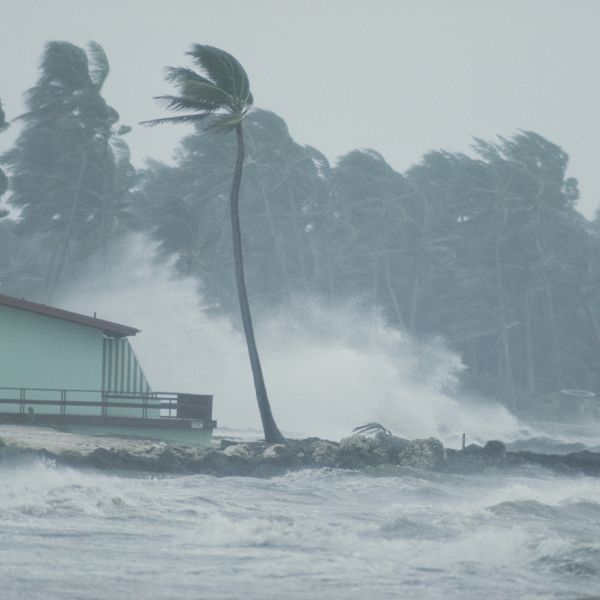
Notice no link, because she is busted immediately lying again by the FACT that the 1940s are the worst decade for canes, 1890s second place...
we have zillions of photos of land sinking.
POST ONE PHOTO OF LAND SINKING BECAUSE OF "OCEAN RISE". - she would if she could, she can't...
LOL!!
The OP documents and links all of it here...
What is an ICE AGE? Most apparently still believe it is a terrifying horror movie event where Earth all at once freezes up. The data has never supported such a scenario. Since 2010, there has been a massive effort to re-write Earth climate history into a series of rapid "glaciations" and ice...

www.usmessageboard.com
Typical, a blizzard of lies busted immediately by THE DATA....