Navigation
Install the app
How to install the app on iOS
Follow along with the video below to see how to install our site as a web app on your home screen.
Note: This feature may not be available in some browsers.
More options
Style variation
You are using an out of date browser. It may not display this or other websites correctly.
You should upgrade or use an alternative browser.
You should upgrade or use an alternative browser.
2025 a major year for solar and wind
- Thread starter Old Rocks
- Start date

toobfreak
Tungsten/Glass Member
- Apr 29, 2017
- 102,744
- 109,989
- 3,615
Even when corrupt politicians do all they can to impede the progress.
Such as... when?

I see how devoted you are to the false claim we are in danger of climate.And when that technology becomes much less costly than the old tech, then the old tech dies. Even when corrupt politicians do all they can to impede the progress.
Old Rocks
Diamond Member
- Thread starter
- #44
The land that wind and solar are on can be used for other purposes. East of The Dallas, Oregon are huge wind farms sitting in fields of wheat. Making the farmers about $5000 annually per wind turbine. Solar can be put over canals, buildings, and agrivoltaics are, like wind, making the farmer extra money.BS.
Gas plants and nuclear plants can operate at full nameplate capacity as needed. Neither solar nor wind can do that, and they both take up huge acres of land.
BS on batteries as well, that maybe give a few hours of backup. And solar and wind, plus batteries, CANNOT stand on their own without massive subsidies by governments and still rate payers rates go up.
Your point about government subsides, as pointed out by Lazard, renewables are less costly than fossil fuels even without subsidies. The subsidies are needed to accelerate the development of the power that we need. Nukes and gas take long building times because to the complex turbines and nuclear safety equipment needed. You can build out a wind farm or solar farm in a years time.
Old Rocks
Diamond Member
- Thread starter
- #45
"After earning the nickname "man who killed offshore wind," the strategist is now taking aim at Michigan's solar developments, wind projects, and clean energy laws from the platform of a much larger, better-funded think tank.Such as... when?
That shift could have real consequences for households already facing rising utility costs and for communities counting on cheaper, cleaner power in the years ahead, as fossil fuel companies stand to gain from any delays or cancellations of projects that yield effectively free energy from natural factors like wind and sunlight."
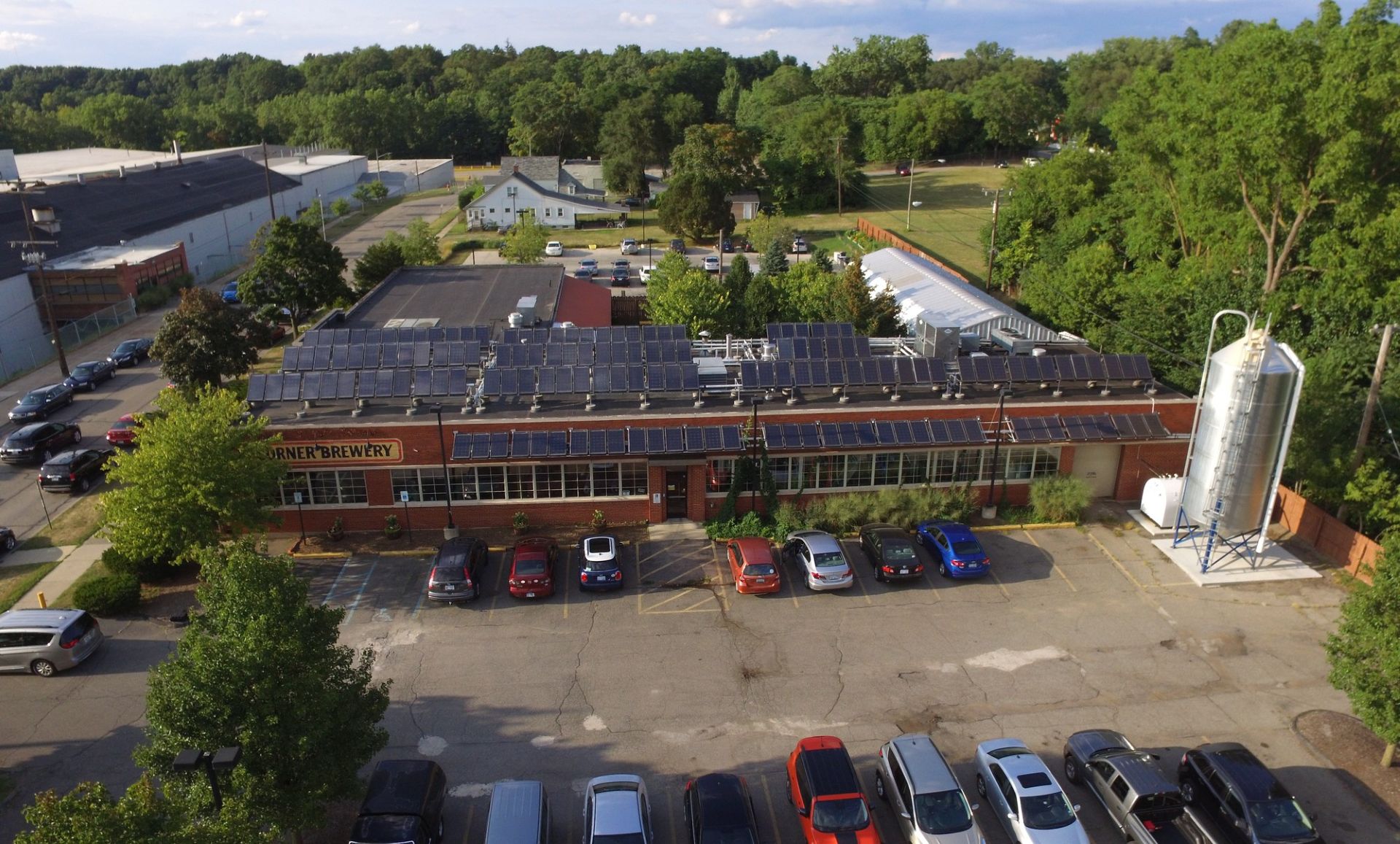
The 'man who killed offshore wind' now targets Michigan solar, wind, and clean energy laws
Michigan-based Mackinac Center for Public Policy has named David Stevenson its director of energy and environmental policy, according to the Energy and Policy Institute.
 www.thecooldown.com
"Trump administration pays TotalEnergies to abandon offshore wind projects, redirecting investment to fossil fuels as industry questions precedent
The Trump administration has reached an agreement with TotalEnergies that will see the French energy company halt construction of all new offshore wind projects in US waters, with the government reimbursing nearly US$1bn in lease fees from taxpayer funds.
The Paris-based firm had been planning two wind farms on the Eastern Seaboard: one off the coast of North Carolina and the other off the coast of New York.
Neither of these sites will now be completed following the settlement, which represents one of the most significant reversals in US renewable energy policy in recent years."
Why did Trump Pay TotalEnergies $1bn to Cancel Wind Plans?
Trump administration pays TotalEnergies to abandon offshore wind projects, redirecting investment to fossil fuels as industry questions precedent
 businesschief.com
Old Rocks
Diamond Member
- Thread starter
- #46
I see how devoted you are to lying about the increase in extreme weather events, about the increase in the area destroyed by wildfires, and the fact that solar and wind are now the least costly and fasted to install new energy. Of course, they spread out the profit among our citizens instead of sending it all to the top, and that offends you MAGAts as you scrounge for grocery and gas money. LOLI see how devoted you are to the false claim we are in danger of climate.
Lighting not climate ignites wildfires. Explain why in Democrat run areas, fires are raging all the time.I see how devoted you are to lying about the increase in extreme weather events, about the increase in the area destroyed by wildfires, and the fact that solar and wind are now the least costly and fasted to install new energy. Of course, they spread out the profit among our citizens instead of sending it all to the top, and that offends you MAGAts as you scrounge for grocery and gas money. LOL
Solar and wind is inferior so did you expect it to cost, more?
Trillions of taxpayers' dollars were spent on wind and solar and I believe all Solar and wind captured is under 10 percent of the needs. And you brag about that?

You’re ignoring the reliability costs because the sun isn’t shining 24 hours a day and the wind is always blowing. The problem is the need of the grid with backup generation, storage, transmission upgrades and reserve capacity when the weather doesn’t cooperate.The land that wind and solar are on can be used for other purposes. East of The Dallas, Oregon are huge wind farms sitting in fields of wheat. Making the farmers about $5000 annually per wind turbine. Solar can be put over canals, buildings, and agrivoltaics are, like wind, making the farmer extra money.
Your point about government subsides, as pointed out by Lazard, renewables are less costly than fossil fuels even without subsidies. The subsidies are needed to accelerate the development of the power that we need. Nukes and gas take long building times because to the complex turbines and nuclear safety equipment needed. You can build out a wind farm or solar farm in a years time.

Yeah, the problem is the government keeps rewarding failure, so the cost decreases never come.And when that technology becomes much less costly than the old tech, then the old tech dies. Even when corrupt politicians do all they can to impede the progress.
What "extreme weather events"?I see how devoted you are to lying about the increase in extreme weather events, about the increase in the area destroyed by wildfires, and the fact that solar and wind are now the least costly and fasted to install new energy. Of course, they spread out the profit among our citizens instead of sending it all to the top, and that offends you MAGAts as you scrounge for grocery and gas money. LOL
Nothing comes close to the pre SUV Great Flood of 1862.
Nothing.

Toddsterpatriot
Diamond Member
The land that wind and solar are on can be used for other purposes. East of The Dallas, Oregon are huge wind farms sitting in fields of wheat. Making the farmers about $5000 annually per wind turbine. Solar can be put over canals, buildings, and agrivoltaics are, like wind, making the farmer extra money.
Your point about government subsides, as pointed out by Lazard, renewables are less costly than fossil fuels even without subsidies. The subsidies are needed to accelerate the development of the power that we need. Nukes and gas take long building times because to the complex turbines and nuclear safety equipment needed. You can build out a wind farm or solar farm in a years time.
Your point about government subsides, as pointed out by Lazard, renewables are less costly than fossil fuels even without subsidies.
Lazard is full of shit.
toobfreak
Tungsten/Glass Member
- Apr 29, 2017
- 102,744
- 109,989
- 3,615
Even when corrupt politicians do all they can to impede the progress.
SUCH AS WHEN???
toobfreak
Tungsten/Glass Member
- Apr 29, 2017
- 102,744
- 109,989
- 3,615
I see how devoted you are to lying about the increase in extreme weather events,
SUCH
AS
WHEN?
Every time one of you doomsayers lectures us on the pending end of the world, someone easily points out both current trends bucking your doom predictions, right along with simply going back into the historical record and showing events just as bad or worse happening long before the industrialization of mankind.
The present epoch of the past 10,000 years though rebounding from a minor ice age, is actually still one of the cooler periods during the past 4.5 billion years overall.
For instance, despite not living in a particularly northern area like Montana, N. Dakota, Michigan or the like, just a couple days ago, our high temp here never even made it out of the Sixties.
For the most part, any apparent increase in "weather events" ties more closely with the fact that we monitor our weather more closely now in a year than all previous monitoring put together for the previous 500 years, so of course we record more weather events.
Old Rocks
Diamond Member
- Thread starter
- #54
My, my, another MAGAt that likes to lie about energy. 17% last year and rising rapidly;Lighting not climate ignites wildfires. Explain why in Democrat run areas, fires are raging all the time.
Solar and wind is inferior so did you expect it to cost, more?
Trillions of taxpayers' dollars were spent on wind and solar and I believe all Solar and wind captured is under 10 percent of the needs. And you brag about that?
Old Rocks
Diamond Member
- Thread starter
- #55
At present, renewables plus storage is still the least costly form of generation.You’re ignoring the reliability costs because the sun isn’t shining 24 hours a day and the wind is always blowing. The problem is the need of the grid with backup generation, storage, transmission upgrades and reserve capacity when the weather doesn’t cooperate.

Like
Dislike
Solar-Plus-Storage as the Least Costly Form of Electrical Generation
Recent analyses show that solar energy combined with battery storage is currently the fastest, cheapest, and most scalable way to add new electricity generation capacity in the U.S., outperforming even the lowest-cost fossil fuels.Cost competitiveness
Lazard’s 2025 Levelized Cost of Energy+ report found that unsubsidized utility-scale solar ranges from $0.038/kWh to $0.212/kWh, and onshore wind from $0.037/kWh to $0.086/kWh — the lowest among all new-build sources pv magazine USA. When paired with storage, solar-plus-storage systems have an LCOE of $0.05/kWh to $0.131/kWh, which is cheaper than new-build natural gas peaker plants at $0.138/kWh to $0.262/kWh pv magazine USA. Even without tax credits, solar and wind are more cost-effective than the marginal cost of the cheapest operating gas plants pv magazine USA.
Speed to build
Solar-plus-storage projects are among the fastest to deploy: solar projects take about 18 months to build, and battery storage facilities about 15 months, enabling utilities to respond quickly to surging demand Forbes.
Market adoption
In 2024, solar-plus-storage made up 84% of new U.S. grid capacity installed, adding 37 GW of solar and 10 GW of utility-scale storage Forbes. This reflects both cost advantages and the need for rapid capacity expansion to meet rising demand from data centers, manufacturing, EVs, and climate-driven cooling loads.
Storage economics
Battery storage costs have dropped sharply, with utility-scale systems now at $400–$600/kWh and residential at $800–$1,200/kWh, making them competitive with peaking gas plants solartechonline.com. Value stacking — generating revenue from multiple services like energy arbitrage, frequency regulation, and capacity payments — further improves economics solartechonline.com.
Conclusion
Based on current LCOE data, build speed, and deployment trends, solar-plus-storage is the least costly form of new electrical generation in the U.S., surpassing even the lowest-cost fossil fuels and offering a scalable, fast-to-deploy solution for meeting growing demand Forbes+2.
Old Rocks
Diamond Member
- Thread starter
- #56
LOL So your backyard represents the whole world. LOL However, as measured from satellites;SUCH
AS
WHEN?
Every time one of you doomsayers lectures us on the pending end of the world, someone easily points out both current trends bucking your doom predictions, right along with simply going back into the historical record and showing events just as bad or worse happening long before the industrialization of mankind.
The present epoch of the past 10,000 years though rebounding from a minor ice age, is actually still one of the cooler periods during the past 4.5 billion years overall.
For instance, despite not living in a particularly northern area like Montana, N. Dakota, Michigan or the like, just a couple days ago, our high temp here never even made it out of the Sixties.
For the most part, any apparent increase in "weather events" ties more closely with the fact that we monitor our weather more closely now in a year than all previous monitoring put together for the previous 500 years, so of course we record more weather events.
Like
Dislike
Munich Re on Extreme Weather Events
Munich Re, a leading global reinsurer, warns that extreme weather events are becoming more frequent, intense, and costly, with climate change intensifying storms, floods, and wildfires Munich Re+1.Current Trends and 2025 Data
- Global losses: In 2025, natural disasters caused US$224 billion in total losses worldwide, with US$108 billion insured Munich Re+1.
- Weather disasters: Accounted for 92% of all losses and 97% of insured losses, making them the dominant risk category The Straits Times.
- Non-peak perils: Floods, severe thunderstorms, hail, and wildfires — once considered secondary risks — are now the primary loss drivers The Straits Times.
- Deaths: Around 17,200 people died in 2025, with the Asia-Pacific region alone responsible for 13,600 of these The Straits Times.
- Notable events:
- Los Angeles wildfires (Jan 2025) caused US$53 billion total losses, US$40 billion insured France 24.
- Hurricane Melissa devastated Jamaica, with US$9.8 billion in losses France 24.
- Myanmar earthquake (Mar 2025) killed ~4,500 people The Straits Times.
Climate Change Link
Munich Re’s chief climate scientist, Tobias Grimm, describes the planet as “fevered by climate change” and notes that rising temperatures are fueling stronger storms, heavier rainfall, and more destructive weather The Straits Times. While not every storm is directly attributable to climate change, the overall trend is clear: climate change is amplifying extreme weather events www.bluewin.ch.Regional Impacts
- North America: High losses from hurricanes, tornadoes, and wildfires www.bluewin.ch.
- Asia-Pacific: Bore the brunt of deadly cyclones, floods, and earthquakes; large insurance protection gaps remain The Straits Times.
- Europe: Experiences increasingly severe floods (e.g., Valencia, Spain) and rare but costly events like Dubai flooding www.bluewin.ch.
Munich Re’s Approach
Munich Re promotes adaptation and mitigation to build resilience:- Physical measures: Strengthening building codes, restoring natural buffers (mangroves, coral reefs), and improving infrastructure Munich Re.
- Financial measures: Risk transfer and mitigation to reduce economic burdens Munich Re.
- Strategy: Under its Ambition 2030 plan, the company is expanding capacity to handle more natural disaster risks Munich Re.
My, my, another MAGAt that likes to lie about energy. 17% last year and rising rapidly;
View attachment 1270565
Old Rocks
Diamond Member
- Thread starter
- #58
SUCH AS WHEN???
Like
Dislike
David Stevenson’s Role in Opposing Michigan’s Renewables Push
David Stevenson, now the Director of Energy and Environmental Policy at the Mackinac Center for Public Policy in Michigan, has become a prominent figure in efforts to roll back the state’s clean energy mandates. Previously known as the “man who killed offshore wind” for his work at Delaware’s Caesar Rodney Institute, Stevenson has shifted his focus to solar, wind, and broader renewable energy policies The Cool Down+1.Current Position and Affiliations
Stevenson joined the Mackinac Center in 2026, replacing Jason Hayes. The Mackinac Center is affiliated with the State Policy Network (SPN), a national network of right-leaning think tanks that has long opposed state clean energy and climate policies. SPN is funded by corporate and right-wing donors, including fossil fuel interests Energy and Policy Institute.Legislative and Policy Targets
Stevenson has been a leading voice in support of Project Lighthouse, a legislative initiative aimed at:- Rolling back key 2023 clean energy laws.
- Reopening disputes over where wind and solar projects can be built.
- Weakening Michigan’s Healthy Climate Plan and the state’s 100% clean electricity by 2040 standard The Cool Down+1.
Arguments Against Renewables
In testimony before the Michigan House Energy Committee, Stevenson argued that:- Solar and wind are weather-dependent and less reliable than coal, oil, and gas.
- Increased renewables correlate with higher electricity prices; in Michigan, residential rates have risen 26% since 2019, with much of that tied to wind and solar Mackinac Center.
- He cited U.S. Energy Information Agency data showing a strong correlation (0.93) between rising renewable generation and higher prices Mackinac Center.
- He warned that early closures of dispatchable power plants could lead to blackouts during peak demand Mackinac Center.
Regional Impact
Stevenson has highlighted the Upper Peninsula’s higher energy costs as a result of meeting the state’s renewable mandates. The region’s natural gas generators, which produce about 17–19% of its power from renewables, now pay 40% more for electricity than Lower Michigan Michigan Capitol Confidential. He has criticized Governor Whitmer’s refusal to exempt the U.P.’s current generation mix from the clean energy law, calling it financially damaging Michigan Capitol Confidential.Funding and Influence
The Mackinac Center has received over $11 million in 2024 funding, with ties to the Koch network and other corporate donors The Cool Down+1. This funding supports lobbying and policy advocacy aimed at slowing or reversing Michigan’s renewable energy expansion.In summary: Stevenson’s work at the Mackinac Center positions him as a key opponent of Michigan’s renewable energy transition, advocating for fossil fuels and nuclear power while pushing to weaken state clean energy laws and increase electricity costs for some regions.
Read less
https://www.bing.com/ck/a?!&&p=cb78...uZXJneS1wb2xpY2llcy1vZmZzaG9yZS13aW5kLw&ntb=1
And then there is ol' Odiferous Mango giving back a billion dollars to prevent offshore wind;
You believe the world is facing a disaster due to climate. (Climate is weather over a 30-year time span)
We believe that is not true. It is laughable that 2 degrees will cause a disaster.
We believe that is not true. It is laughable that 2 degrees will cause a disaster.
Old Rocks
Diamond Member
- Thread starter
- #60
So the malodorous Mango's admin is preventing anyone from posting what their own analysts have researched. LOL However, many other sources for that information;
Like
Dislike
Renewables Supply 17% of U.S. Electricity in 2025
In 2025, wind and solar power together generated a record 17% of U.S. electricity, according to the U.S. Energy Information Administration (EIA) U.S. Energy Information Administration (EIA). This marks a dramatic increase from less than 1% in 2005, reflecting over two decades of rapid deployment of renewable capacity.U.S. Generation Breakdown
- Wind power: 464,000 GWh in 2025, up 3% from 2024 CleanTechnica.
- Utility-scale solar: 296,000 GWh, up 34% from 2024 CleanTechnica.
- Small-scale solar: 93,000 GWh, up 11% from 2024 CleanTechnica.
- Combined, utility-scale and small-scale solar with wind brings the total renewable share to 19% of net generation CleanTechnica.
Global Context
Globally, the International Energy Agency (IEA) projects that wind and solar PV together will provide about 17% of global electricity in 2025, up from 15% in 2024, and expected to exceed 19% by 2026 IEA – International Energy Agency. Hydropower remains the largest single renewable source worldwide at around 14%, while nuclear generation is also set to hit record levels IEA – International Energy Agency.Trends and Drivers
- Capacity growth: Solar PV is the dominant driver of renewable expansion, with global capacity expected to double by 2030 IEA – International Energy Agency.
- Policy and market factors: In the U.S., continued investment in wind and solar, along with supportive federal programs, has fueled growth. However, recent policy changes have slowed some capacity additions IEA – International Energy Agency.
- Intermittency: Wind and solar are intermittent sources, meaning they only generate when wind or sunlight is available, unlike dispatchable sources like natural gas, coal, and nuclear, which together accounted for 75% of U.S. utility-scale generation in 2025 CleanTechnica.
Significance
The 17% renewable share in 2025 is a milestone, showing that renewables are now a major pillar of the U.S. electricity mix. This growth is underpinned by falling technology costs, improved grid integration, and increasing public and policy support for clean energy.Read less
https://www.bing.com/ck/a?!&&p=27ca...eWluZW5lcmd5L2RldGFpbC5waHA_aWQ9NjczNjc&ntb=1
Similar threads

- Replies
- 7
- Views
- 309

- Replies
- 38
- Views
- 1K


- Replies
- 3
- Views
- 181

- Replies
- 3
- Views
- 175

New Topics
-
-
 PM Starmer under pressure from Labour MPs and ministers to set timetable for exit
- Started by shockedcanadian
- Replies: 1
-

-
 Voters Toss 4 Politicians From City Office, but They Just Vote Themselves Back In
- Started by Doc7505
- Replies: 3
-


