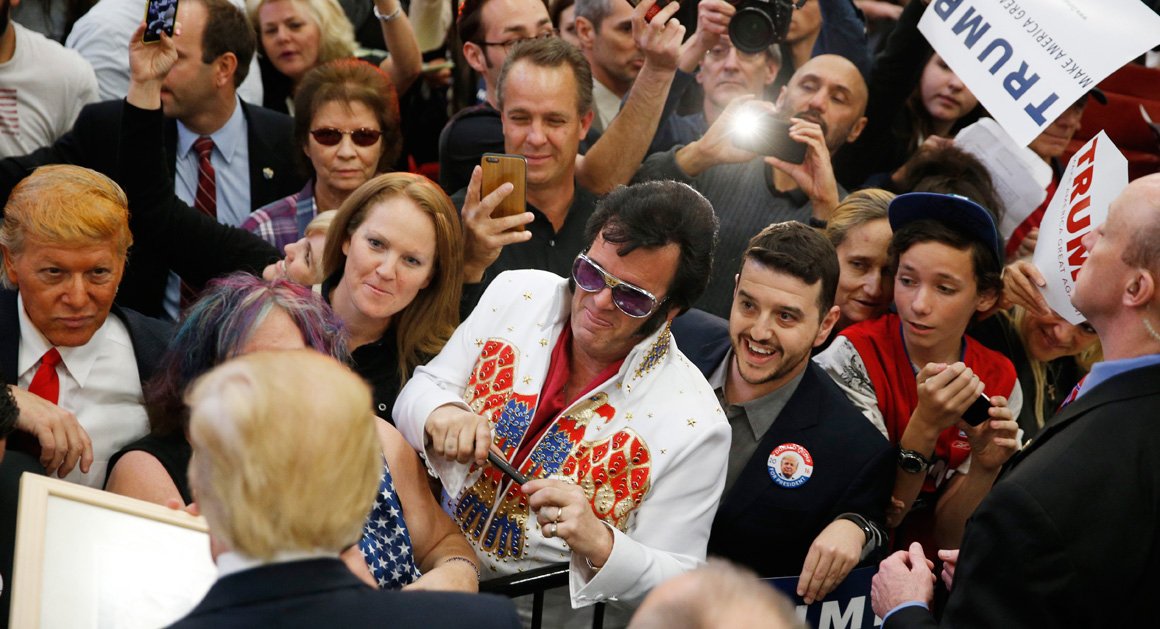
he's lost it.
the election i mean. he's already lost his mind!
The only reason he's doing it is to attempt to make the case among conscientious white voters that he's not a bigot. It's all about the numbers. White folks, because they are the majority race in the country have to be distinguished by some set of traits. This election cycle, the key trait for Trump is:
- Education level
- College educated whites
- Non-college educated whites
College educated folks -- white or black -- tend to, because they are generally better informed, understand the complexities of issues like economics, immigration and race. Non-college educated whites are the largest single bloc of voters in the country. Thus, Trump's only path to victory is to convince college educated whites that he is:
- Believable in general
- Not a bigot -- Trump is attempting to make this case with college educated whites via any and all of the following arguments:
- He's no more of one than they are.
- He's sympathetic to the human impacts of deporting illegal immigrants
- He's sympathetic to the plight of minorities in the U.S.
- At least he's trying to appeal to blacks/latinos whereas prior GOP candidates at best only halfheartedly tried to so, that is if they bothered at all. (This line relies on the bar for what "actually trying" entails being incredibly low to begin with.)
- The "little guy," the victim of "whatever he can get them to think he's the victim of" and thus the candidate for whom they should have sympathy/empathy -- "Come on, give me a chance." -- sympathy that would in no other situation be accorded to a billionaire or deserved by them, sympathy that no other billionaire would have the gall to solicit.
What astute observers will notice, however, is that the limit of Trump's argument is that he only states the nature of the situation; he does not identify specific approaches/policies that correspond to any of those three arguments. The thing is that many people, perhaps most people, fallaciously infer that because candidate describes the nature of a situation -- race relations, immigration, economic disparity, unemployment, etc. -- as s/he believes it to be, the candidate also intends to correct the problem.
Of course, nothing need be farther from the truth. For example:
- No Klansman will deny the circumstances of blacks or Latinos, but nary a one of them is interested in doing anything about them other than shipping blacks and Latinos to anyplace outside the U.S.' borders.
- Tobacco companies were well aware of the addictive and health harming nature of cigarette smoking, but that didn't mean they were of a mind to stop producing tobacco products.
Quite simply, recognizing the nature of a situation doesn't mean one wants to alter that situation. To be seen as credibly inclined to alter the situation, one needs to put forth a plan, but not a lot of people realize that in terms of political candidates. Their inferring that identification = desire for alteration, like the "trying" argument noted earlier, relies on bar for what Americans demand of their politicians being stupidly low.