Russia is sending signals to the U.S. and Saudi Arabia that it may allow Syria’s embattled leader Bashar al-Assad to be eased out of power as it seeks to forge a united front against Islamic State and retain influence in the region, officials and Syrian opposition leaders said. Officials from the three countries, as well as from the opposition, have been negotiating possible terms for sidelining Assad since at least June, when President Vladimir Putin hosted Saudi King Salman’s son, Deputy Crown Prince Mohammed, they said. Saudi Arabia is Assad’s main regional enemy, while Russia is his longtime ally. Since then, Russia’s whirlwind diplomacy has brought key officials from across the region to Moscow for talks.
Syria’s civil war has traumatized the Middle East, spilling into neighbors and enabling the rise of Islamic State amid the turmoil. The latest Russian-backed efforts to end the conflict come as its fallout spreads westwards, with hundreds of thousands of migrants seeking refuge in the European Union. Like every other aspect of the war in Syria, though, Russia’s policy isn’t straightforward. U.S. and Russian officials say they’re weighing a transition plan that would strip Assad of power while remaining interim head of state.
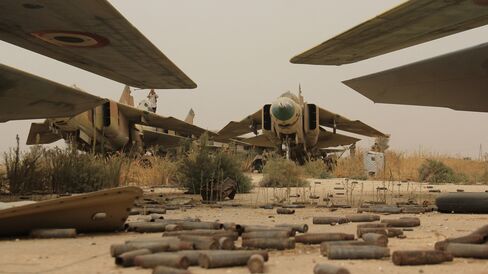
A view of former Syrian army MiG-23 fighter jets at the Abu Duhur military airport, the last regime-held military base in northwestern Idlib province.
Putin Gambit
“There’s a convergence on the threat of ISIS,” Paul Salem, vice president of the Middle East Institute in Washington, said by phone, using an acronym for Islamic State. “This convergence wasn’t there when they last tried diplomacy two years ago.” Yet at the same time, Russia is ramping up military aid to Syria, home to its only naval base outside the former Soviet Union. Big questions remain, the U.S. official stressed, including whether Putin really is prepared to see Assad marginalized and, if so, whether he can persuade him to go quietly.
U.S. intelligence agencies have concluded that Russia is set to start flying combat missions from a new air hub inside Syria, other American officials said. Putin may be betting that an increased military presence will either help Assad stay in power or give Russia more sway in influencing the outcome of the crisis if the Syrian leader is forced out. ISIS controls as much as half of the country, while rebel militias backed by the U.S., Saudi Arabia, Turkey and Qatar are gaining ground, leaving only about a fifth under the government’s firm control, according to Amos Gilad, a senior Israeli defense official. That area is home to most of the population, though, including key urban centers such as the capital, Damascus.
Diplomacy or War?